




Marketing Strategy vs Marketing Plan: What’s the Real Difference?
Introduction
Online marketing success is not just a matter of chance. Every successful brand has a clear direction and a practical roadmap to follow in order to have the results. This is where it is crucial to know the difference between Marketing Strategy and Marketing Plan.
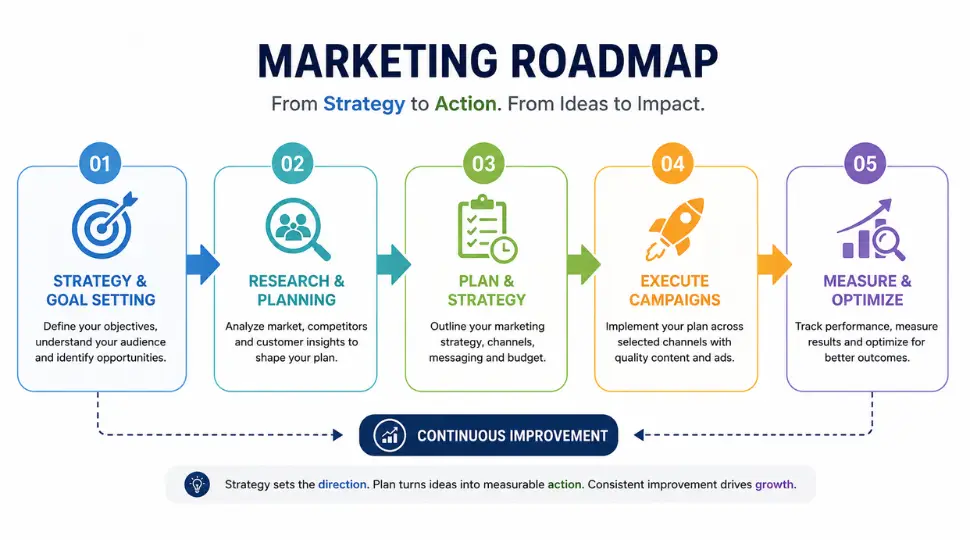
This is often where many business owners and marketers get confused and use them synonymously, but these two terms mean completely different things. A marketing strategy is a reason for marketing and a set of objectives you want to accomplish. A marketing plan is simply a plan that details your action plan for getting to those goals.
If you want to deepen your understanding of these concepts, then why not enhance your skills in a practical digital marketing course in Pune that is real-world orientated?
We'll explore some of the major differences in this guide, provide real-world examples, and show you how strategy and planning tie together to create measurable business growth.
What Is Marketing Strategy?
A marketing strategy is the plan of action that is used to carry out all the marketing activities that are related to the product. It's about long-term objectives, targeting, brand positioning, and overall business development.
Consider your strategy as the reason behind your marketing efforts.
The Key Elements of a Marketing Strategy
1. Business Goals
Your approach should complement your business goals with regard to:
- Increasing revenue
- Growing brand awareness
- Improving customer retention
- Going wider and deeper into new markets
2. Target Audience
A good strategy will identify:
- Customer demographics
- Interests
- Pain points
- Buying behavior
3. Brand Positioning
This is what your audience thinks of your brand vs your competition.
4. Competitive Analysis
Being familiar with your competitors can help you see what opportunities and market gaps are theirs.
What Is a Marketing Plan?
The marketing plan is the step-by-step programme to implement the marketing strategy. This encompasses campaigns, channels, budgets, timelines and resources.
When it comes to strategy, the plan is the roadmap that gets you there.
The Main Components of a Marketing Plan
- Content calendars
- Advertising schedules
- SEO activities
- Campaign timelines
- Budget allocation
- KPI tracking
A plan is a transformation of ideas to measurable action.
Marketing Strategy vs Marketing Plan: Key Differences
| Aspect | Marketing Strategy | Marketing Plan |
|---|---|---|
| Focus | Long-term vision | Execution & tactics |
| Goal Definition | Defines business goals | Defines specific actions |
| Purpose | Explains why marketing matters | Explains how marketing works |
| Decision Role | Guides decision-making | Manages implementation |
| Orientation | Audience-focused | Task-focused |
| Scope | Broader perspective | Detailed roadmap |
Why Businesses Need Both
Without strategy, a business is lost. You haven't got a plan; you don't have execution.
When Combined Properly, Strategy and Planning:
- Improve ROI
- Create brand consistency
- Increase marketing efficiency
- Deliver measurable growth
- Enhance customer engagement
HubSpot research shows that companies with established marketing plans are much more likely to succeed in reaching their goals on a regular basis.
Social Media Marketing: Strategy vs Plan
Social Media Marketing Strategy
The approach is to focus on:
- Building brand awareness
- Increasing engagement
- Creating community trust
- Improving customer retention
Example Goal
Grow Instagram engagement by 40% in 6 months.
Social Media Marketing Plan
The plan includes:
- Creating a content calendar
- Sharing content daily on Instagram, Facebook, TikTok and X
- To release publishing reels and short videos
- Running engagement campaigns
Recommended Content Mix
- Educational posts
- User-generated content
- Promotional offers
- Polls and quizzes
- Behind-the-scenes content
Email Marketing: Strategy vs Plan
Email Marketing Strategy
The aim is to foster lead nurturing and cultivate long-term customer relationships through targeted communication.
Email Marketing Plan
Execution steps include:
- Segmenting audiences
- Creating automation workflows
- Sending newsletters twice a month
- Keeping track of the number of clicks and impressions
Best Practices
- Personalize your subject line
- Optimize for mobile devices
- Ensure that CTA buttons are always visible
- A/B test e-mail campaigns
SEO Marketing: Strategy vs Plan
SEO Strategy
The aim is to boost organic visibility and bring reliable traffic from search engines.
Core Strategic Focus Areas
- Keyword targeting
- Technical SEO
- Authority building
- User experience optimization
SEO Plan
The following is a sample of the execution roadmap that may consist of:
- Conducting keyword research
- Updating meta tags
- Creating landing pages
- Building backlinks
- Posting blog posts on a weekly basis
Important SEO Metrics
- Organic traffic
- Bounce rate
- Keyword rankings
- Domain authority
- Conversion rate
PPC Advertising: Strategy vs Plan
PPC Strategy
The strategy is all about marketing targeted traffic with high intent ads.
Strategic Goals
- Increase conversions
- Lower acquisition cost
- Improve ROAS
PPC Plan
Execution activities include:
- Running Google Ads campaigns
- Optimizing bids weekly
- Refining ad copy
- Audience retargeting
- Monitoring campaign analytics
PPC Channels
- Google Ads
- YouTube Ads
- Meta Ads
- LinkedIn Ads
Influencer Marketing: Strategy vs Plan
Influencer Marketing Strategy
Brands work alongside creators to reach more people and instil trust in those audiences.
Influencer Marketing Plan
Execution includes:
- Finding niche influencers
- Creating sponsorship deals
- Running product collaborations
- Measuring campaign engagement
KPIs to Track
- Engagement rate
- Reach
- Referral traffic
- Sales conversions
Affiliate Marketing: Strategy vs Plan
Affiliate Marketing Strategy
The plan is to grow sales by leveraging affiliates.
Affiliate Marketing Plan
The plan includes:
- Recruiting affiliates
- Creating banners and creatives
- Managing commission structures
- Tracking affiliate performance
E-commerce brands and SaaS companies are the perfect fit for affiliate marketing.
Event Marketing: Strategy vs Plan
Event Marketing Strategy
The strategy is to build customer connections with events and experiences.
Event Marketing Plan
Practical execution includes the following:
- Hosting webinars
- Creating landing pages
- Running social promotions
- Emailing reminders about the event
Popular Event Types
- Webinars
- Product launches
- Workshops
- Trade shows
- Networking events
Content Marketing: Strategy vs Plan
Content Marketing Strategy
Its goal is to build the brand as an authority source on the back of valuable educational content.
Content Marketing Plan
Execution may include:
- The blog is posted twice a week
- Creating whitepapers quarterly
- Producing video content
- Email and social media are effective ways to share your content
High-Performing Content Formats
- Blogs
- Infographics
- Podcasts
- Case studies
- Short-form videos
Public Relations: Strategy vs Plan
PR Strategy
The main concern of PR strategy is to ensure that people have a positive impression of a company.
PR Plan
Execution includes:
- Writing press releases
- Pitching journalists
- Scheduling interviews
- Monitoring media coverage
Good PR enhances brand credibility and authority.
Direct Marketing: Strategy vs Plan
Direct Marketing Strategy
The objective is to communicate directly with the customers' segments, in a personalized way.
Direct Marketing Plan
A tactical execution can include:
- Personalized postcards
- SMS campaigns
- Direct mail promotions
- Customer loyalty offers
Common Mistakes Businesses Make
1. Mixing Up Strategy and Tactics
Many companies go into execution without objectives.
2. Ignoring Audience Research
If you don't know who you're marketing to, your campaigns are ineffective.
3. No KPI Tracking
Marketing activities have to be measurable.
4. Inconsistent Branding
The message should be the same everywhere.
5. No Budget Planning
Lack of budget planning results in a less efficient campaign.
How to Build an Effective Marketing Strategy
Step 1: Define Business Objectives
Set SMART goals:
- Specific
- Measurable
- Achievable
- Relevant
- Time-bound
Step 2: Research Your Audience
Use:
- Surveys
- Analytics tools
- Social listening
- Customer interviews
Step 3: Analyze Competitors
Study competitor strengths, weaknesses, and opportunities.
Step 4: Create a Unique Value Proposition
Explain why customers should choose your brand.
Step 5: Choose Marketing Channels
Select platforms where your audience spends time.
How to Create a High-Performance Marketing Plan
Create a Content Calendar
Schedule:
- Blogs
- Social posts
- Emails
- Ads
Assign Responsibilities
Make sure that each task has an owner associated with it.
Set Budgets
Optimize resources according to performance objectives.
Track KPIs
Measure:
- Traffic
- Leads
- Engagement
- Sales
Optimize Continuously
Check the analytics and optimize campaigns on a regular basis.
Best Tools for Marketing Planning
| Tool | Purpose |
|---|---|
| Google Analytics | Website analytics |
| SEMrush | SEO research |
| Canva | Design creation |
| HubSpot | CRM & automation |
| Trello | Project management |
| Mailchimp | Email marketing |
Real-World Example: Strategy vs Plan
Scenario: Fitness Company Launching a New Protein Powder
Marketing Strategy
- Target health-conscious millennials
- Increase brand trust with fitness influencers
- Position the product as 'clean' and 'affordable'
Marketing Plan
- Launch Instagram reels
- Run Google Ads
- Publish fitness blogs
- Send promotional emails
- Collaborate with fitness influencers
This example illustrates the fact that direction is determined by strategy and management is determined by the plan.
Final Thoughts
It is crucial to grasp the difference between Marketing Strategy and Marketing Plan in order to develop a long-term strategy for business growth. A strategy gives direction, and a plan makes ideas measurable.
When businesses align them both effectively, they can benefit a lot from enhancing customer engagement, branding, and long-term profitability.
Selecting an affordable digital marketing course in PCMC can aid you in establishing good groundwork without breaking the bank, regardless of whether you are looking into a digital marketing course in Thane or contrasting digital marketing classes in Pune.
"The best marketing doesn't feel like marketing."
— Tom Fishburne
FAQs
Is marketing strategy different from marketing plan?
A marketing plan is a set of actions designed to meet the marketing goals of a marketing strategy, whereas a marketing strategy outlines the direction and goals of a marketing plan.
When it comes to strategy versus plan, which one is first?
Strategies always precede action—they control how the action will be carried out.
Is it possible to do business without a marketing plan?
Firms can develop on a random basis for a time, but the only way to grow successfully is to plan and direct the growth.
What is the frequency of marketing plan update?
Businesses usually review marketing plans on a quarterly basis and marketing strategies on an annual basis.
Why is SEO important in the marketing strategy?
SEO enhances visibility, drives organic traffic, and fosters sustainable brand development.