




Performance Marketing Trends 2026: AI, Creatives & Data-Driven Growth
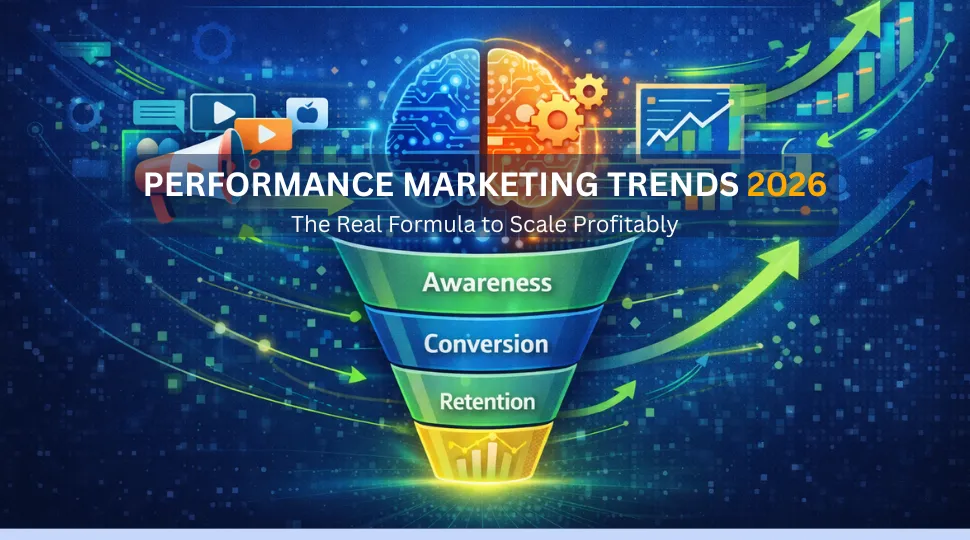
Introduction
By the year 2026, it will be possible to speak about performance marketing that involves not only manual bidding or simple targeting tricks. It is concerning artificial intelligence-driven decision-making, innovation-driven expansion, full-funnel metrics, and ownership of first-party data. Those brands that are aware of this change are growing bigger and more profitably than ever.
Although this guide is not an exhaustive list of the specifics of performance marketing, it will provide you with a clear vision of what does and does not work in the field of performance marketing nowadays, regardless of whether you are a business owner, marketer or a student enrolled in Digital Trainee in Pune taking the course on digital marketing.
What Is Performance Marketing in 2026?
In 2026, performance marketing will not be only about running advertisements and conversions anymore. It is a growing system that is data-driven and AI, creatives, and customer lifetime value are at the center of it.
The current performance marketing is based on:
- Not vanity measures, business profitability.
- Retained customer value rather than a one time sale.
- Strategic human decision automation.
Simply, performance marketing has shifted to execution to strategy.
Why Traditional Performance Marketing Metrics Are Failing
Marketers in years used to rely on:
- CTR (Click Through Rate)
- CPC (Cost Per Click)
- ROAS (Return on Ad Spend)
Although these measures are still important, they are no longer indicative of the whole narrative.
The Issue of Metrics of the Old School.
- The ROAS of high profit does not necessarily imply high profit.
- CTR does not show intent of purchase.
- Last-click attribution disregards touchpoints of brand-building.
By 2026, the metrics of a brand will focus on business-level performance indicators, such as:
- Customer Lifetime Value (LTV)
- Retention rate
- Contribution margin
- Whole funnel conversion effect.
Trend 1: AI-Driven Media Buying
Manual Bidding Nearly Becomes a Thing of the Past.
The trend of AI-driven media buying is no longer a choice in the case of the Performance Marketing Trends 2026.
Now such solutions as Google Ads and Meta Ads rely on sophisticated machine learning to:
- Auto-shift budgets.
- Grow audiences in real-time.
- Reward creatives on performance indicators.
- Optimize bids in real time
What Has Changed?
Earlier:
- Manual bidding
- Interest stacking
- Micro-optimizations
Now:
- AI-led campaign structures
- Targeting large groups with intelligent learning.
- Signal-based optimization
Marketer role in AI Campaigns.
Marketers no longer are button clickers. Their role is to:
- Interpret data
- Define business goals
- Guide AI with better inputs
- Performance analysis at a strategic level.
AI executes. Humans decide.
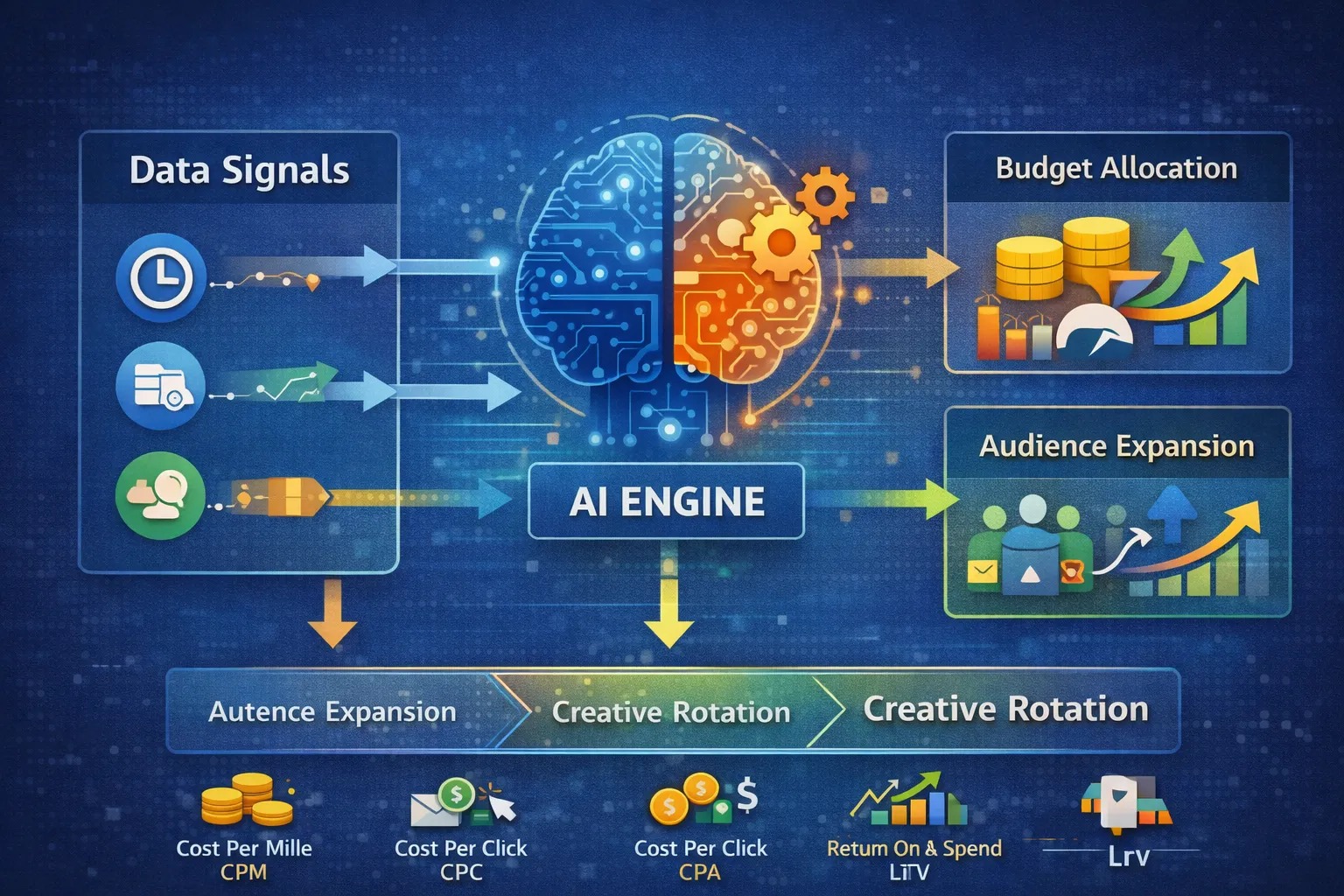
AI-Driven Media Buying
Trend 2: Creatives Decide ROAS
Innovative Is the New Targeting.
The fact that advertisements succeed or fail depending on creativeness and not targeting is one of the largest performance marketing trends in 2026.
Even with the same audience:
- The superior creatives = better conversions.
- Good hooks = reduced cost of acquisition.
- Real-life storytelling = increased trust.
The Future of Creatives in 2026.
- UGC-style videos
- Raw, unpolished content
- Founder-led storytelling
- Problem-solution narratives
- Social-proof driven ads
The importance of Creative Testing.
Targeting is now creative testing, as it was in 2018.
Brands that test:
- Multiple hooks
- Different opening frames
- Emotional messaging vs logical messaging.
...have been 2x-3x improving their conversion rates without adjusting the audiences.
Trend 3: Full-Funnel Tracking Over Last-Click Attribution
Why the Last-Click Attribution Is Dying.
The last-click attribution only rewards the last contact point prior to conversion. Buyers in real sense deal with:
- Ads
- Content
- Emails
- WhatsApp messages
- Retargeting campaigns
Overlooking such touchpoints is a reason behind making erroneous choices and squandering budgets.
Full-Funnel Tracking in 2026
KPIs of performance marketing currently monitors:
- First touch (discovery)
- Assisted conversions
- Retargeting impact
- Post-purchase behavior
- Repeat and retention purchasing.
What Marketers Measure Now
- CAC vs LTV ratio
- Funnel drop-offs
- Channel contribution
- Revenue per user
Profitability is now taken as a measure of performance, and not merely sales.
Trend 4: First-Party Data & Server-Side Tracking
Privacy Has Altered Everything.
Having more stringent privacy regulations and cookie restrictions:
- Pixels are going to be untrustworthy.
- The tracking of the browsers is becoming weak.
- Data loss is increasing
This is why first-party data will be the foundation of performance marketing in 2026.
What Does It Mean to Count as First-Party Data?
- CRM data
- Email subscribers
- WhatsApp engagement
- Website activity (server-side)
- Purchase history
Advantages of Server Side Tracking.
- More accurate data
- Better attribution
- Better campaign optimization.
- Future-proof tracking setup
Own data = the ability to control future ROAS.
The New Performance Marketing Formula for 2026
The Winning Formula Is Clear.
Performance marketing success in 2026 will be driven by a powerful combination:
- Artificial Intelligence
- Designers & Creative Thinking
- Data
- Wholeness of Thinking
Brands that successfully combine all four pillars will:
- Scale faster
- Minimize reliance on ad platforms
- Enhance long-term profitability
- Build engines of sustainable growth
When even one of these pillars is ignored, growth becomes limited and fragile.
Real-World Examples of Brands Winning with These Trends
Example 1: D2C Brand Scaling with UGC
A skincare D2C brand replaced polished ads with UGC-style videos:
- Same target audience
- New creative hooks
Result: 2.4× increase in conversions.
Example 2: Service Business Leveraging First-Party Data
A coaching business implemented CRM + WhatsApp tracking:
- Reduced cost per lead by 32%
- Improved lead quality
- Higher follow-up conversion rates
These brands didn’t just chase metrics — they built systems.
How Marketers Should Upskill for Performance Marketing 2026
To stay competitive, marketers must master:
- AI-led advertising strategy
- Creative psychology
- Data analysis beyond dashboards
- Funnel optimization
- Attribution modeling
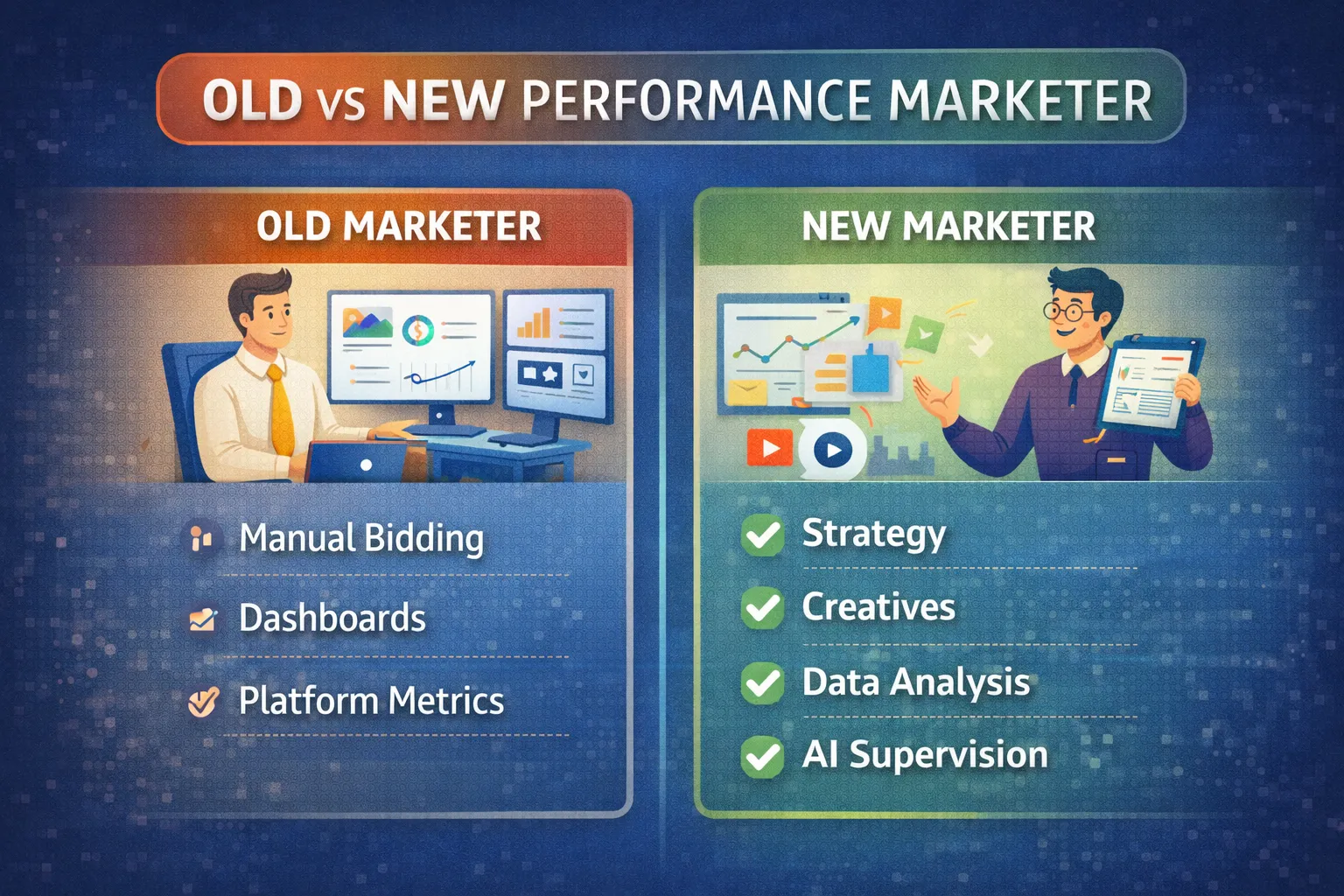
How Marketers Should Upskill for 2026
It is precisely to this end that the Digital Trainee’s digital marketing course in Pune is based: practical, industry-oriented, and execution-ready skills, which are nearest to the current trends in the industry.
“Good marketing makes the company look smart. Great marketing makes the customer feel smart.”
— Neil Patel (Digital Marketing Expert)
Conclusion
In 2026, performance marketing is no longer about pursuing clicks but the creation of profitable growth systems. The content version of AI-driven media purchasing, creative-driven strategies, full-funnel tracking, and ownership of first-party data is no longer a fad but a requirement.
Those marketers and companies that will adjust to this change will grow in a sustainable way, whereas others will find it hard to survive due to ad prices increasing and data visibility declining. The best way to learn these skills on the job would be to enroll in a structured online digital marketing course offered by Digital Trainee , which will provide you with the competitive advantage in this dynamic environment.
Before scaling ads in 2026, it’s important to know the difference between approaches—explained clearly in Performance Marketing or Brand Marketing: What Works Best for You?.
Frequently Asked Questions (FAQs)
Q1: What do you think are the largest performance marketing trends in 2026?
The biggest trends include AI-based media buying, creative-driven ROAS, full-funnel performance marketing, and a strong focus on first-party data.
Q2: Is ROAS still relevant in 2026?
Yes, ROAS is still important, but it should not be viewed in isolation. It must be evaluated alongside profitability, customer lifetime value (LTV), and retention.
Q3: What is more crucial than targeting, and why is creative so important?
Creative has become more crucial than targeting because modern ad platforms rely on broad targeting and AI optimization. It is the creative that ultimately influences user decisions and performance.
Q4: What is full-funnel performance marketing?
Full-funnel performance marketing tracks the entire customer journey—from awareness and consideration to conversion and retention—rather than focusing only on last-click conversions.
Q5: What should beginners learn to succeed in performance marketing in 2026?
Beginners should focus on learning AI-powered marketing tools, creative strategy, data analysis beyond dashboards, and funnel optimization through real-world training programs.