




Google Ads vs Meta Ads: How to Allocate Your Ad Budget
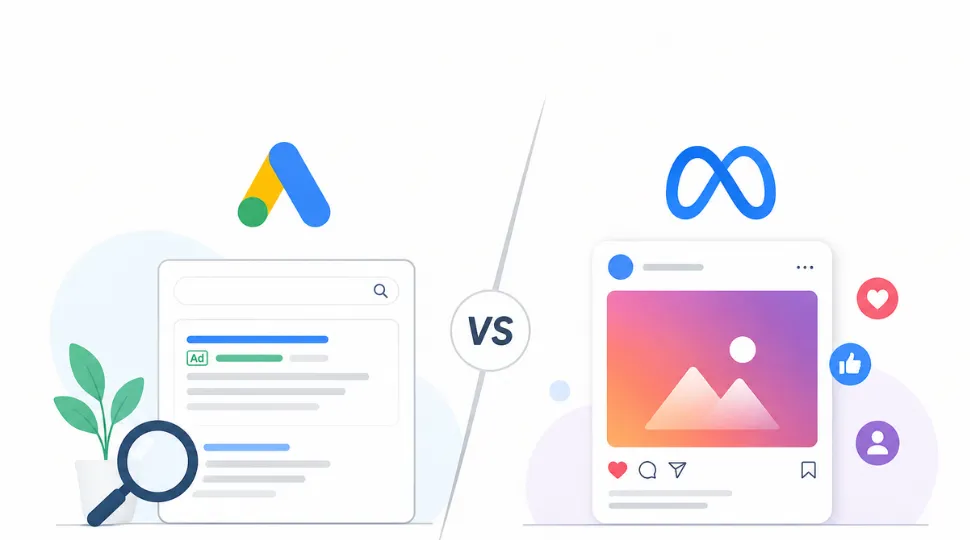
Choosing between Google Ads vs Meta Ads is not simply about identifying which advertising platform is better. The smarter question is: Which platform matches your customer's current buying mindset?
Google is particularly strong when people are actively searching for products, services, or solutions. Meta platforms such as Facebook and Instagram are powerful for introducing products, generating interest, and influencing customers before they begin searching. This intent-versus-discovery distinction remains one of the most important factors when deciding where advertising budgets should go.
To better understand the ideas discussed in Google Ads vs Meta Ads budget allocation, consider strengthening your skills with a practical digital marketing course in pune designed for real-world application.
Google Ads vs Meta Ads: The Main Difference
The biggest difference between the platforms is customer intent.
Google Ads Captures Existing Demand
When someone searches for:
- "best digital marketing agency near me"
- "emergency plumber"
- "buy running shoes online"
- "CRM software for small businesses"
They are already expressing a need.
Google's keyword-matching systems are designed to understand searches and connect advertisers with relevant users. This makes search campaigns particularly useful when buying intent already exists.
Meta Ads Helps Create Demand
Meta Ads works differently. People usually open Instagram or Facebook to consume content rather than search for a specific product.
Strong visuals, Reels, demonstrations, testimonials and user-generated content can interrupt scrolling and create interest in something the customer may not have previously considered.
This makes Meta especially useful for visually driven products, new brands and discovery-led purchases.
When Should You Invest More in Google Ads?
Consider giving Google a larger share of your PPC budget when customers already know what they want.
Google Ads may be particularly effective for:
- Local service businesses
- Professional services
- B2B companies
- High-intent e-commerce searches
- SaaS businesses
- Education and training services
- Healthcare and appointment-driven businesses
For example, someone searching "corporate lawyer in Pune" is considerably closer to contacting a provider than someone who happens to see a legal firm's Instagram Reel.
Google also considers factors including bids, ad quality, landing-page experience and relevance when determining which advertisements appear.
When Should You Invest More in Meta Ads?
Meta deserves more budget when the product benefits from visual storytelling, discovery or emotional appeal.
Common examples include:
- Fashion
- Beauty and skincare
- Food products
- Baby products
- Home décor
- Fitness products
- New ecommerce brands
- Events and entertainment
Meta's current Advantage+ sales campaigns use AI across areas such as audience selection, placements and budgets. Meta reports that advertisers using Advantage+ sales campaigns saw an average 9% improvement in cost per conversion; as with any platform-reported benchmark, individual performance will vary.
How to Divide Your Advertising Budget
There is no universal Google Ads vs Meta Ads budget split.
Use the following allocations as testing starting points rather than fixed rules.
High Search Intent Businesses
Google: 70% | Meta: 30%
Suitable for lawyers, consultants, repair services, B2B solutions and other businesses where customers actively search for help.
Use Meta primarily for remarketing, awareness and trust-building.
Visual or Impulse-Purchase Brands
Meta: 70% | Google: 30%
Suitable for fashion, skincare, jewellery, home products and visually attractive consumer products.
Meta can generate demand while Google Shopping, Search or Performance Max captures customers who later search for the product.
Ecommerce Brands
Google: 50% | Meta: 50%
Begin evenly, then adjust based on:
- Cost per acquisition
- Revenue
- ROAS
- Conversion rate
- New customer acquisition cost
A high-ticket product requiring research may eventually shift more towards Google, while a low-priced impulse product may scale faster through Meta.
Why a Hybrid Strategy Usually Works Better
Think of Google and Meta as different stages of the same customer journey rather than competing platforms.
A customer might:
See an Instagram Reel → Visit your website → Leave → Search your brand on Google → Click a Search ad → Purchase
In this situation, assigning the entire conversion to Google would ignore Meta's role in creating the original demand.
Google is also expanding AI-assisted Search capabilities. Google states that advertisers activating AI Max for Search typically see around 14% more conversions or conversion value at similar CPA/ROAS, although results will naturally depend on account conditions and implementation.
Meanwhile, Meta's Conversions API can create a direct connection between business data and Meta's optimization systems, helping advertisers improve measurement and campaign optimization.
Metrics to Track Before Moving Budget
Do not reallocate advertising spend based only on CPC.
Track business outcomes such as:
- CPA: Cost to generate one customer or qualified lead
- ROAS: Revenue generated from advertising spend
- Conversion Rate: Percentage of visitors completing the desired action
- Lead Quality: Whether enquiries become genuine opportunities
- Customer Lifetime Value: Long-term revenue generated by customers
- Assisted Conversions: Channels influencing conversions before the final click
Review performance regularly and move budget toward campaigns producing meaningful business results rather than vanity metrics.
Frequently Asked Questions
1. Is Google Ads better than Meta Ads?
Neither is universally better. Google generally works well for existing search demand, while Meta can be stronger for discovery and visually driven advertising.
2. Which platform is better for small budgets?
It depends on CPC, competition, conversion rates and the offer. Start with the platform closest to your strongest customer intent and expand after collecting reliable data.
3. Which platform is better for e-commerce?
Using both can be effective. Meta can generate product discovery, while Google Search and Shopping-style campaigns can capture purchase intent.
4. How often should advertising budgets be changed?
Review performance weekly, but avoid making major decisions from only a few days of data. Allow campaigns enough conversion volume to identify meaningful patterns.
5. Should I run Google and Meta Ads together?
Yes, when the budget allows. Using both platforms can cover discovery, consideration, remarketing and high-intent conversion stages.
Conclusion
The Google Ads vs Meta Ads debate does not need one winner.
Choose Google Ads when strong search intent already exists. Choose Meta Ads when you need to create demand, introduce a product or influence audiences through compelling creative.
For many businesses, the strongest paid advertising strategy combines both: Meta generates interest while Google captures demand.
Whether you're exploring a digital marketing course in delhi or comparing digital marketing classes in pune, choosing an affordable digital marketing course in pcmc can help you build strong fundamentals without overextending your budget.
"Your brand is what other people say about you when you're not in the room." — Jeff Bezos