




Why First-Party Data in Performance Marketing Is Becoming a Marketer's Superpower
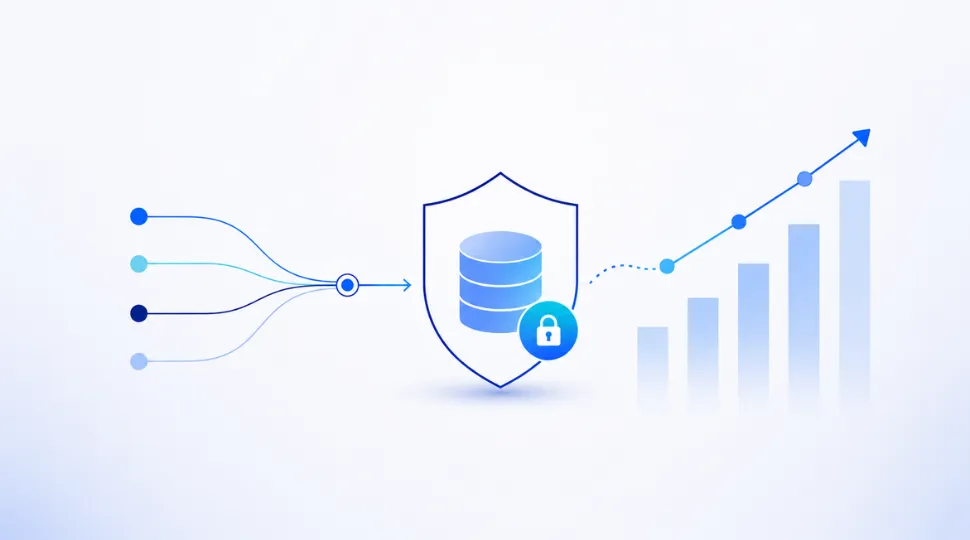
Performance marketing has always depended on data. The difference now is which data marketers can reliably use.
First-party data in performance marketing is becoming increasingly valuable because it comes directly from interactions between a business and its customers or prospects. Website purchases, CRM records, lead forms, email subscribers, app activity, loyalty information, offline sales, and customer preferences can all help marketers understand which audiences and actions actually create business value.
This matters as advertising measurement becomes more privacy-conscious and some traditional identifiers become less dependable. It is worth noting that Chrome has not simply eliminated third-party cookies for every user; Google confirmed that Chrome would maintain its existing user-choice approach. Even so, consent requirements, browser restrictions, platform policies, fragmented customer journeys, and signal loss continue to push advertisers toward more durable measurement methods.
To better understand the ideas discussed in this article, consider strengthening your skills with a practical digital marketing course in Pune designed for real-world application.
The real advantage of first-party data is not merely collecting more information. It is connecting reliable customer information with advertising, analytics, CRM systems, and business outcomes so campaigns can optimize toward what actually matters.
What Is First-Party Data in Performance Marketing?
First-party data is information a business collects directly through its own interactions with customers and prospects.
Unlike data purchased or obtained from external audience providers, first-party data comes from relationships the company controls.
Common examples include:
- Customer email addresses
- Phone numbers
- Website purchases
- Lead-form submissions
- CRM records
- App registrations
- Product preferences
- Newsletter subscriptions
- Loyalty-program activity
- Customer lifetime value
- Offline sales
- Qualified-lead status
- Repeat purchases
For a performance marketer, the most useful first-party data often goes beyond knowing who submitted a form. It explains what happened after the form was submitted.
For example, suppose a campaign generates 500 leads. Google Ads may initially see all 500 as conversions. But the CRM might reveal that only 75 became qualified opportunities and 12 eventually became customers.
Connecting those outcomes back to advertising provides much better optimization signals than simply telling the platform to generate more forms.
| Area | First-Party Data | Third-Party Data |
|---|---|---|
| Source | Direct customer interactions | External providers |
| Ownership | Collected by the business | Provided by another organization |
| Relevance | Usually highly specific | Often broader |
| Typical uses | Measurement, CRM, remarketing, personalization | Audience discovery and targeting |
| Examples | Sales, leads, customer lists, app users | External audience segments |
Key Principle
The goal is not necessarily to eliminate every other data source. It is to make direct customer relationships the strongest layer of your measurement strategy.
Why First-Party Data Is Becoming More Valuable
Three major changes are increasing its importance.
1. Measurement Signals Are Becoming Less Predictable
Performance marketers increasingly deal with consent choices, browser restrictions, mobile privacy controls, cross-device journeys, cookie limitations, and gaps between online advertising and offline sales.
First-party customer information can help reconnect some of those fragmented interactions.
Google, for example, describes enhanced conversions as a method of supplementing existing conversion tracking with hashed first-party customer information to improve measurement accuracy and bidding.
2. Advertising Platforms Need Better Business Signals
Advertising algorithms are powerful, but the quality of their optimization depends partly on the signals advertisers provide.
If the platform only knows:
Lead submitted = success
it may optimize toward people who frequently complete forms.
If you can instead send:
Qualified lead = ₹5,000 estimated value
Sales opportunity = ₹20,000 estimated value
Customer = ₹80,000 actual revenue
the bidding system receives much richer information.
This is why first-party data is closely connected with value-based bidding, offline conversion tracking, lead-quality optimization, and customer lifetime value.
3. Better Data Can Improve Marketing Economics
Google has cited BCG research showing that companies connecting first-party data sources generated up to 2X incremental revenue from a single advertising placement, communication, or outreach and a 1.5X improvement in cost efficiency compared with companies with limited data integration. These figures describe research findings, not guaranteed results for individual advertisers.
The lesson is important: simply possessing customer information is not the competitive advantage. Connecting and activating it is.
How First-Party Data Improves Campaign Performance
Better Audience Targeting
Customer data can help marketers differentiate between:
- New prospects
- Existing customers
- Repeat purchasers
- High-value customers
- Lost customers
- Qualified leads
- Unqualified leads
- Product-category buyers
Google Customer Match, for example, allows advertisers to use customer information shared directly with the business to reach and re-engage audiences across eligible Google properties.
This can help prevent situations such as aggressively advertising a new-customer discount to someone who purchased yesterday.
More Accurate Conversion Tracking
A common situation marketers encounter is a difference between an online conversion and the actual business result.
Imagine a real-estate company running Google Ads.
The funnel might look like:
Ad click → Website enquiry → Sales call → Site visit → Booking
Optimizing only for the enquiry means Google cannot distinguish between a casual enquiry and someone who eventually books a property.
Sending qualified or closed-sale information back into the advertising platform gives the campaign a better representation of business value.
Google's enhanced conversions for leads specifically supports offline outcomes originating from website leads using first-party information. Google also updated its workflow in April 2026 by unifying enhanced-conversion settings and expanding first-party data connections through Data Manager and related methods.
Stronger Remarketing and Retention
First-party segments can also support campaigns such as:
- Cart recovery
- Renewal reminders
- Cross-selling
- Upselling
- Customer reactivation
- Repeat-purchase campaigns
- VIP customer offers
Instead of treating every visitor identically, marketers can structure communication around actual customer relationships.
Better AI-Powered Optimization
Machine learning performs better when marketing objectives represent the business outcome you actually want.
For marketers working heavily with PPC, attribution, GA4, remarketing, media buying, and conversion optimization, hands-on training through an Advanced Performance Marketing Course can help connect these technical implementations with campaign decision-making.
The Most Valuable Sources of First-Party Data
Not every company needs a sophisticated customer-data platform to begin.
Start with data you already own.
Website and Ecommerce Data
Useful signals include:
- Purchases
- Product categories viewed
- Cart additions
- Checkout activity
- Repeat orders
- Average order value
CRM Data
For lead-generation businesses, CRM information can be especially valuable.
Capture stages such as:
- New lead
- Contacted
- Qualified
- Meeting booked
- Proposal sent
- Sale completed
This changes campaign measurement from cost per lead to cost per qualified lead or customer acquisition cost.
Customer Account and Loyalty Data
Logged-in customers can provide reliable behavioural signals such as purchase frequency, membership activity, preferred categories, and retention patterns.
Offline Business Data
Retail stores, educational institutes, clinics, automobile businesses, real estate firms, and B2B organizations often complete conversions offline.
Connecting phone enquiries, store transactions, admissions, appointments, and closed deals to digital acquisition channels can expose campaign value that website tracking alone misses.
How Google Ads and Meta Use First-Party Data
Google Ads
Google provides several tools that can incorporate consented first-party signals, including:
- Customer Match
- Enhanced conversions
- Enhanced conversions for leads
- Google Ads Data Manager
- GA4 user-provided data
- Offline conversion measurement
Google Analytics can also use consented, hashed user-provided data to support enhanced conversions and improve customer matching when other identifiers are unavailable.
Meta Ads
Meta's Conversions API creates a direct connection between marketing data from a website, server, app, CRM, or offline source and Meta's advertising systems.
Meta states that this information can support measurement, optimization, personalization, and advertising delivery.
In real-world campaigns, marketers commonly use the Pixel and Conversions API together rather than seeing server-side tracking as a simple replacement for all browser tracking.
If you prefer flexible learning from anywhere, an online digital marketing course can help you strengthen practical digital marketing skills while learning at your own pace.
How to Build a First-Party Data Strategy
A useful first-party data strategy can be built in six stages.
Step 1: Define the Business Outcome
Start with questions such as:
- Are we trying to increase purchases?
- Improve lead quality?
- Increase repeat purchases?
- Reduce customer acquisition cost?
- Improve ROAS?
- Increase lifetime value?
Do not collect data simply because it is available.
Step 2: Map Your Customer Journey
Document the path between acquisition and revenue.
Traffic → Lead → Qualified Lead → Opportunity → Customer → Repeat Customer
Then identify where information is currently lost.
Step 3: Improve Data Collection
Review:
- Website analytics
- Google Tag Manager
- GA4
- CRM
- Ecommerce platform
- Call tracking
- Lead forms
- Consent management
- Offline sales systems
Step 4: Connect Systems
The biggest opportunity often lies here.
Connect relevant information between:
Website → GA4/GTM → CRM → Advertising Platform → Reporting Dashboard
Step 5: Create Meaningful Segments
Examples:
- Customers spending above ₹25,000
- Customers inactive for six months
- Qualified leads but not customers
- Repeat buyers
- Product-A purchasers
- High-value subscribers
Step 6: Test and Measure
Compare performance using business metrics instead of platform vanity metrics.
Monitor whether better data improves:
- Qualified lead rate
- Customer acquisition cost
- Conversion value
- ROAS
- Repeat purchase rate
- Lifetime value
Metrics Performance Marketers Should Measure
Clicks and form fills remain useful, but they are rarely sufficient.
Performance marketers should increasingly connect media metrics with business outcomes.
| Marketing Metric | Business-Level Metric |
|---|---|
| Cost per lead | Cost per qualified lead |
| Conversion rate | Lead-to-sale rate |
| ROAS | Profit-adjusted ROAS |
| Purchase count | Customer lifetime value |
| Form submissions | Sales-qualified opportunities |
| Revenue | Contribution margin |
For someone learning analytics, campaign optimization, and customer-data interpretation locally, a digital marketing course in PCMC can provide useful practical context for understanding how these metrics interact.
Common First-Party Data Mistakes
Common mistakes include:
- Collecting Data Without a Purpose: More fields do not automatically create better marketing. Collect the minimum information needed for a clearly defined use case.
- Optimizing Toward Low-Quality Conversions: A campaign can generate an attractive CPL while producing poor business outcomes. Always evaluate downstream conversion quality.
- Keeping Customer Information in Silos: Marketing may have ad-platform information while sales keeps CRM data and finance holds revenue data. When those systems never communicate, optimization remains incomplete.
- Ignoring Data Quality: Duplicate contacts, inconsistent CRM stages, missing source information, incorrect revenue values, and poorly configured tags can make automated bidding less effective.
- Assuming First-Party Means Unlimited Use: First-party data is not a shortcut around privacy obligations. Businesses still need appropriate transparency, consent where required, platform-policy compliance, secure handling, and responsible data governance.
Privacy, Consent, and Customer Trust
The strongest first-party data strategy is based on value exchange, not aggressive collection.
Google-cited BCG research found that more than 90% of consumers surveyed were willing to share personal information when the right incentive or benefit existed, such as improved convenience.
That does not mean customers will share everything. It means businesses should make the exchange clear.
Explain:
- What information is collected
- Why it is needed
- How it benefits the customer
- How preferences can be controlled
- How information is protected
A 2024 Google and Behavioural Architects experiment involving 2,500 Australian in-market purchasers also found that messaging informed by consented first-party information could substantially change brand preference in the simulated categories, with the highest reported shift reaching 43% in one category. The study illustrates the potential value of relevance rather than guaranteeing the same result in live campaigns.
Trust is therefore not separate from performance marketing. It is increasingly part of the performance infrastructure itself.
A Notable Marketing Quote
"The future of measurement is combining consented first-party data with insights from new, privacy-safe technology."
— Jerry Dischler, quoted by Think with Google
That idea captures the direction performance marketing is moving toward: better results will increasingly depend on connecting customer relationships, responsible data practices, measurement technology, and machine learning.
FAQs
1. What is first-party data in performance marketing?
First-party data is customer or prospect information collected directly through your company's own interactions. Examples include purchases, CRM leads, website registrations, customer accounts, email subscriptions, app activity, and offline transactions. Performance marketers can use this information for measurement, audience segmentation, remarketing, personalization, conversion optimization, and feeding higher-quality signals into advertising platforms.
2. Why is first-party data important for Google Ads?
First-party information can improve Google Ads measurement and audience strategies through tools such as Customer Match and enhanced conversions. It can also help advertisers send information about qualified leads or offline sales back into their measurement process. The objective is not simply to collect more customer details but to help campaigns understand which conversions genuinely create value.
3. Is first-party data better than third-party data?
Neither source should automatically be considered better for every marketing use case. First-party data is often more relevant because it comes directly from your customer relationships. External data can still provide broader market or audience insights. Performance marketers should prioritize building reliable first-party measurement while evaluating other data sources according to accuracy, privacy requirements, cost, and campaign objectives.
4. What is the difference between zero-party and first-party data?
Zero-party data is information customers intentionally provide, such as survey answers, preferences, product interests, or communication choices. First-party data is a broader category that also includes behavioural information generated through direct interactions, such as purchases, website activity, lead submissions, or account activity. Both can support personalization when collected transparently and used responsibly.
5. How can small businesses collect first-party data?
Small companies can begin without expensive technology. Useful sources include enquiry forms, ecommerce transactions, customer accounts, newsletter subscriptions, appointment bookings, CRM records, WhatsApp enquiries where appropriate, loyalty programs, and post-purchase surveys. The first priority should be collecting reliable information linked to a clear marketing purpose rather than building unnecessarily large databases.
6. Can first-party data improve ROAS?
It can contribute to better optimization when marketers connect meaningful business outcomes with advertising campaigns. For example, sending actual sales or qualified-lead information to an ad platform may provide a stronger optimization signal than tracking every lead equally. However, ROAS still depends on pricing, margins, creative quality, targeting, competition, landing pages, sales processes, bidding strategy, and other factors.
7. Does first-party data eliminate privacy concerns?
No. Directly collected information still requires responsible handling. Marketers need to consider applicable privacy laws, consent requirements, platform policies, security practices, retention rules, and customer expectations. Good first-party data marketing should provide a clear value exchange and meaningful user control instead of treating consent as a technical checkbox.
Conclusion
First-party data in performance marketing is becoming important because advertising success increasingly depends on connecting media activity with genuine customer and revenue outcomes. The marketers with the strongest advantage will not necessarily be those collecting the most information, but those capable of turning reliable, consented customer signals into better measurement and smarter campaign decisions.
Start by improving tracking quality, defining meaningful conversions, connecting CRM and sales outcomes, segmenting customers logically, and measuring performance beyond clicks or raw lead volume. A clean data foundation is more useful than an unnecessarily complex technology stack.
Marketers building these capabilities can strengthen their fundamentals through a practical digital marketing course in Pune or digital marketing course in PCMC. Those needing location-independent learning can explore an online digital marketing course, while professionals focused specifically on PPC, GA4, GTM, conversion tracking, audience activation, bidding, and ROAS can develop deeper hands-on skills through an Advanced Performance Marketing Course.
The key is simple: better performance comes from combining useful customer data with responsible collection, accurate measurement, continuous testing, and sound marketing strategy.