




Why Your LinkedIn Content Should Be Built for Search: A LinkedIn SEO Guide
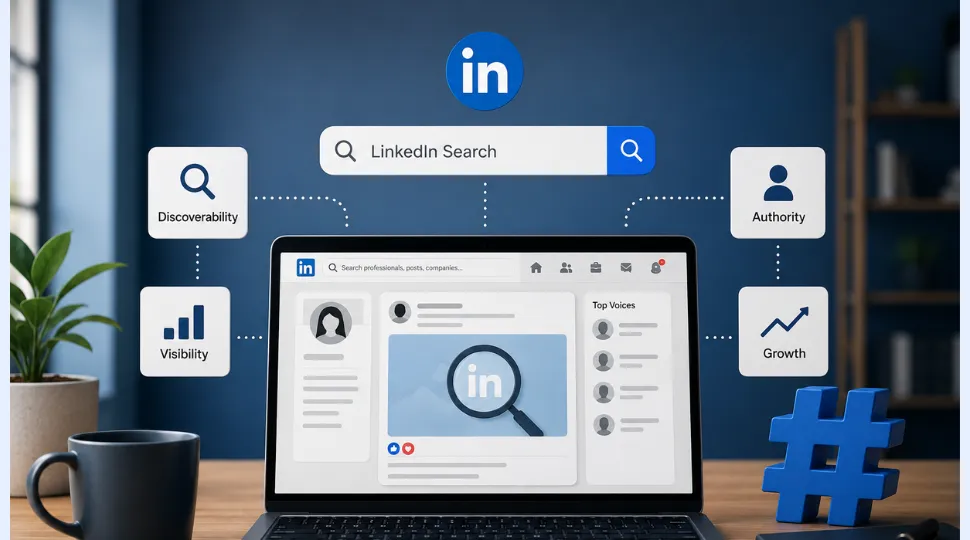
LinkedIn content should do more than win attention for a few hours after publishing. When posts, articles, profiles, and company pages are built around clear topics and search intent, they can continue helping people discover your expertise.
That is the core of LinkedIn SEO: making professional content understandable to people, LinkedIn search, external search engines, and increasingly AI-powered discovery systems.
LinkedIn now reports a community of more than 1.3 billion members, making professional discoverability increasingly competitive.
To better understand the ideas discussed in this article, consider strengthening your skills with a practical digital marketing course in Pune designed for real-world application.
What Is LinkedIn SEO?
LinkedIn SEO is the practice of optimizing profiles, pages, posts, and articles so they are easier to discover through LinkedIn search, external search engines, and AI-powered search experiences.
It combines keyword research, topical relevance, profile clarity, useful content, and consistent publishing.
LinkedIn confirms that public profiles can appear through search tools such as Google and Bing depending on visibility settings. LinkedIn also recommends using relevant keywords in company descriptions and creating SEO-driven long-form content to improve discoverability.
Why Search-Optimized LinkedIn Content Matters
Your Content Can Work Beyond the Feed
Feed reach is temporary. Search-oriented content can continue being discovered when someone searches for a problem, service, skill, professional role, or industry topic.
For example, a consultant who regularly publishes useful content about SaaS customer onboarding creates a clearer topical association than someone who publishes unrelated business advice every day.
Search Visibility Can Strengthen Authority
Search often reflects intent. Someone searching for "B2B lead generation strategy" is actively looking for information rather than casually scrolling.
The 2024 Edelman–LinkedIn research found that 73% of decision-makers consider thought leadership a more trustworthy basis for evaluating an organization's capabilities than conventional marketing materials.
LinkedIn also reported in 2025 that 82% of B2B buyers say creator content influences them, while nearly 80% engage with creator content monthly.
Feed-First Content vs Search-Built Content
| Feed-First Content | Search-Built Content |
|---|---|
| Focuses on immediate engagement | Supports engagement and future discovery |
| Broad or trend-led topic | Clear problem or search query |
| Vague curiosity hook | Clear, topic-rich opening |
| Isolated posts | Connected topic clusters |
How to Build LinkedIn Content for Search
1. Start With Search Intent
Identify questions your ideal audience genuinely asks:
How do I improve LinkedIn lead generation?
What is B2B attribution?
How can I reduce Google Ads CPL?
How should a company build thought leadership?
One post should answer one focused question well.
2. Build a Keyword Cluster
Choose one primary phrase and several natural variations.
For a LinkedIn lead generation post, related phrases could include:
LinkedIn lead generation strategy
B2B leads on LinkedIn
LinkedIn content strategy
Social selling
Avoid mechanically repeating one keyword. Semantic clarity matters more than keyword density.
3. Put the Topic Early
The opening should quickly explain what the content is about.
LinkedIn's June 2026 guidance for AI visibility recommends clean, keyword-rich opening lines, clear questions and direct answers, educational value, and consistent publishing.
Instead of:
"Most people are doing this wrong…"
Try:
"LinkedIn lead generation often fails because the content attracts engagement but not buyer intent."
The second version immediately gives readers and search systems useful context.
4. Add Evidence and Experience
Support important points with:
- Campaign observations
- Customer questions
- Screenshots
- Comparisons
- Research
- Real processes
In real-world campaigns, a marketer might explain why cost per lead changed after improving landing-page message match. A useful post explains the original problem, change made, metric reviewed, and limitations of the lesson.
LinkedIn Keyword Optimization
Use keywords naturally within:
- Profile headline and About section
- Company Page description
- Opening lines of relevant posts
- LinkedIn article titles
- Subheadings
- Skills and specialties
- Service descriptions
Key Principle
The objective is clarity, not repetition. Search-first content still needs to sound human.
If you prefer flexible learning from anywhere, an online digital marketing course can help you strengthen practical digital marketing skills while learning at your own pace.
Best Search-First LinkedIn Content Formats
Search-friendly LinkedIn content generally answers specific questions clearly.
Useful formats include:
- How-to posts for practical queries.
- Checklists for repeatable processes.
- Comparison posts for commercial research.
- Case breakdowns for experience and proof.
- LinkedIn articles for evergreen topics.
- Expert Q&A posts for conversational and AI search.
LinkedIn's 2026 AI-search guidance recommends structuring content around clear questions and direct answers and pairing posts with longer-form articles to strengthen topical authority.
How to Measure LinkedIn Search Visibility
Do not evaluate search-focused content using likes alone.
Track signals such as:
- LinkedIn search appearances
- Profile views
- Qualified comments
- Relevant inbound messages
- Target-industry follower growth
- Website traffic from LinkedIn
- Leads influenced by LinkedIn
- Performance of older evergreen posts
Key Takeaway
A common situation marketers encounter is a post receiving modest engagement but generating several relevant profile visits or sales conversations. That content may create more business value than a viral post attracting the wrong audience.
Common LinkedIn SEO Mistakes
Common mistakes include:
- Writing primarily for algorithms
- Publishing unrelated topics constantly
- Using vague hooks without context
- Keyword stuffing
- Making unsupported claims
- Copying competitors
- Ignoring audience search intent
- Measuring only likes and impressions
Visibility Settings
Also review your public visibility settings. LinkedIn states that switching public-profile visibility off can prevent that profile from being indexed by external search engines.
A Notable Marketing Quote
"Attention is the singular asset."
— Gary Vaynerchuk
The LinkedIn search lesson is simple: attention helps people notice you, while relevance helps the right people find you.
FAQs
1. Does LinkedIn SEO Really Work?
Yes, but treat it as discoverability optimization rather than a ranking guarantee. Relevant keywords, clear topics, complete profiles, useful content, and consistent expertise can improve your chances of appearing when people search for subjects connected to your work.
2. Can LinkedIn Content Appear on Google?
Public LinkedIn content and profiles can be discoverable outside LinkedIn, although indexing is never guaranteed. Public visibility settings, relevance, authority, and the search engine's own indexing decisions influence whether a LinkedIn result appears.
3. Where Should I Put Keywords on LinkedIn?
Prioritize your headline, About section, company description, specialties, article titles, and opening lines of relevant posts. Use natural variations instead of repeating the exact same phrase throughout your content.
4. How Many Keywords Should a LinkedIn Post Target?
Usually one main topic supported by several closely related phrases is enough. A focused post creates clearer topical relevance than one attempting to cover many unrelated keywords.
5. Are Hashtags Important for LinkedIn SEO?
Hashtags can provide additional topic context, but they should not replace clear language. State the actual subject within your post so readers and search systems do not depend on hashtags to understand it.
6. How Often Should I Publish Search-Focused LinkedIn Content?
Consistency matters more than publishing excessive content. LinkedIn's 2026 AI-search recommendations suggest publishing useful content around two to three times per week as a starting point while prioritizing quality and topical relevance.
Conclusion
LinkedIn is becoming more searchable, changing how professionals and brands should approach content. A strong post can earn immediate attention while also clearly communicating its topic, answering a useful question, and reinforcing expertise that remains discoverable later.
Focus on search intent, keyword clusters, useful explanations, genuine experience, and meaningful measurement. Track qualified profile visits, relevant conversations, website traffic, and leads rather than optimizing exclusively for reactions.
Professionals developing stronger SEO, social content, analytics, and audience-research skills can build practical foundations through a digital marketing course in Pune or digital marketing course in PCMC. An online digital marketing course provides flexible learning, while an Advanced Performance Marketing Course can deepen skills in paid distribution, tracking, optimization, and measurement that complement organic LinkedIn strategies.
Create for people first, but structure your expertise so search systems can understand, retrieve, and surface it.