




Why Digital PR Fundamentals Beat AI Tactics: What Marketing Leaders Should Focus On
Introduction
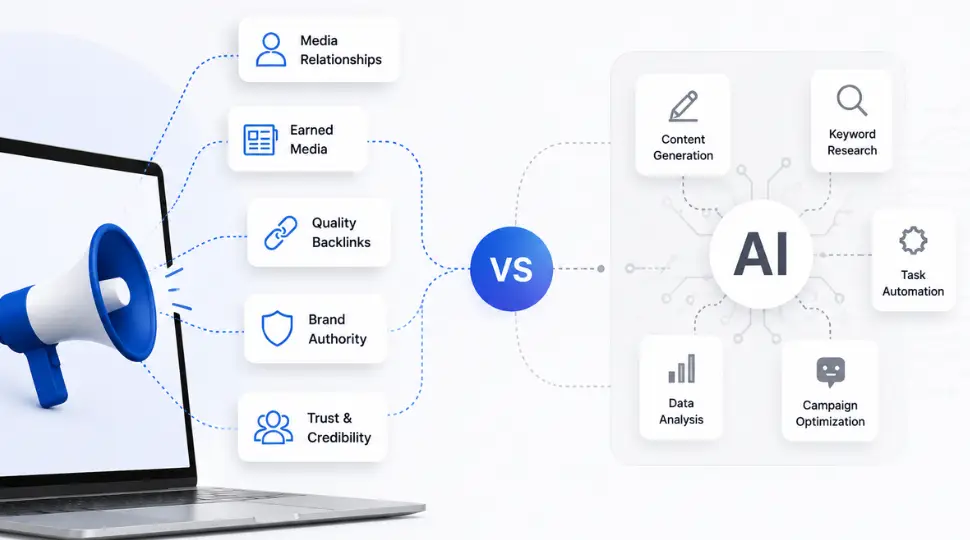
Artificial Intelligence has transformed the marketing industry by helping businesses create content, automate campaigns, and analyze customer behavior faster than ever before. However, while AI has become an essential productivity tool, it cannot replace the core principles that build long-term brand authority and trust. This is where Digital PR Fundamentals continue to outperform AI-driven tactics.
Marketing leaders who focus only on automation often miss the human relationships, credibility, and trust signals that search engines and customers value the most. Strong Digital PR creates lasting authority through quality media mentions, expert positioning, and high-value backlinks—elements that AI alone cannot generate authentically.
To better understand the ideas discussed in Digital PR Fundamentals, consider strengthening your skills with a practical digital marketing course in Pune designed for real-world application.
Whether you're a startup founder, SEO professional, digital marketer, or business owner, understanding why Digital PR remains a competitive advantage will help you create sustainable growth in an AI-driven world.
What Are Digital PR Fundamentals?
Digital PR is the practice of building online authority, trust, and visibility through media coverage, industry publications, influencer relationships, expert commentary, and valuable content.
Unlike traditional PR, Digital PR focuses heavily on improving online visibility while also supporting SEO performance.
Its primary objectives include:
- Building brand authority
- Earning high-quality backlinks
- Increasing organic traffic
- Improving brand awareness
- Strengthening online reputation
- Generating referral traffic
- Enhancing trust among customers
These fundamentals remain valuable regardless of changes in technology.
The Rise of AI in Digital Marketing
Artificial Intelligence has become one of the biggest marketing innovations of the decade.
Today marketers use AI for:
- Blog writing
- Email marketing
- Content ideation
- Keyword research
- Customer segmentation
- Predictive analytics
- Ad optimization
- Chatbots
- Data analysis
AI significantly reduces manual work and improves efficiency. However, AI is designed to assist marketers—not replace strategic thinking, creativity, or genuine relationship building.
Why AI Cannot Replace Digital PR
AI can generate thousands of articles, but journalists rarely publish AI-generated pitches without human insight.
Successful Digital PR depends on:
Human Relationships
Editors trust professionals they know. Journalists value experts who consistently provide useful insights instead of generic automated emails.
Emotional Storytelling
People remember stories—not algorithms. Great Digital PR tells stories that connect emotionally with readers.
Original Research
Original statistics, surveys, case studies, and expert interviews create newsworthy content. AI cannot independently conduct authentic research.
Industry Credibility
Thought leadership comes from experience. Customers trust brands that demonstrate expertise through real achievements, interviews, and published insights.
Digital PR vs AI Tactics
| Digital PR Fundamentals | AI Marketing Tactics |
|---|---|
| Builds long-term authority | Improves efficiency |
| Creates media coverage | Generates content |
| Earns quality backlinks | Suggests keywords |
| Builds journalist relationships | Automates repetitive tasks |
| Improves E-E-A-T | Supports productivity |
| Establishes brand trust | Enhances personalization |
The strongest marketing strategies combine both rather than replacing one with the other.
Core Digital PR Fundamentals Every Marketing Leader Should Master
1. Build Genuine Media Relationships
Journalists receive hundreds of pitches daily. Personalized outreach consistently performs better than mass-generated AI emails.
Best practices include:
- Understand the publication
- Personalize every pitch
- Offer unique insights
- Follow up professionally
- Respect editorial guidelines
2. Create Newsworthy Content
Not every blog becomes news. Digital PR focuses on creating stories worth publishing.
Examples include:
- Industry surveys
- Annual reports
- Consumer studies
- Data-driven insights
- Trend analysis
- Case studies
Original content naturally attracts backlinks.
3. Become an Industry Expert
Google rewards expertise. Marketing leaders should:
- Publish LinkedIn articles
- Speak at conferences
- Join podcasts
- Write guest blogs
- Share original opinions
Thought leadership strengthens Digital PR and SEO simultaneously.
4. Focus on Brand Reputation
Online reputation directly affects customer trust. Monitor:
- Reviews
- Brand mentions
- Social conversations
- Media coverage
- Customer feedback
Respond quickly and professionally.
5. Prioritize High-Quality Backlinks
Quality always beats quantity. Focus on earning links from:
- Industry websites
- Government websites
- Educational domains
- Trusted publications
- High-authority blogs
These backlinks significantly improve search visibility.
How Digital PR Improves SEO
Google increasingly rewards brands rather than isolated websites. Digital PR supports SEO by improving:
Brand Searches
The more people search your brand, the stronger your authority becomes.
High Authority Links
Quality backlinks remain one of Google's strongest ranking factors.
Topical Authority
Publishing consistent expert content positions your website as a trusted resource.
E-E-A-T Signals
Google values:
- Experience
- Expertise
- Authoritativeness
- Trustworthiness
Digital PR strengthens every one of these signals.
AI's Best Role in Digital PR
Instead of replacing PR professionals, AI should enhance productivity.
Effective AI use cases include:
- Content outlines
- Email drafting
- Trend analysis
- Headline suggestions
- Data summarization
- Competitor monitoring
- Sentiment analysis
The human team should still:
- Build relationships
- Approve messaging
- Conduct interviews
- Develop strategy
- Verify facts
- Maintain brand voice
This combination delivers the best results.
Common Mistakes Marketing Leaders Make
Many companies rely too heavily on AI and overlook the fundamentals.
Avoid These Mistakes
- Publishing low-quality AI content without editing
- Sending automated outreach to journalists
- Ignoring brand reputation
- Chasing backlinks instead of authority
- Producing content without original insights
- Prioritizing volume over quality
- Neglecting relationship building
These mistakes often reduce credibility over time.
Building a Future-Proof Digital PR Strategy
Marketing leaders should adopt a balanced framework.
Track:
- Brand mentions
- Referral traffic
- Backlinks
- Domain Authority
- Organic growth
- Share of Voice
- Media placements
Long-term success depends on consistent execution rather than short-term automation.
Real-World Example
Case Study: Digital PR vs AI-Only Strategy
Imagine two software companies launching similar products.
Company A uses AI to generate 100 blog posts in one month. The content is optimized but offers little originality.
Company B publishes an industry survey, interviews experts, creates a comprehensive report, and earns mentions from respected technology publications.
After several months, Company B typically gains:
- Stronger backlinks
- Higher brand searches
- Increased trust
- Better organic rankings
This happens because search engines recognize authoritative signals beyond content volume. This example highlights why Digital PR fundamentals continue to outperform AI-only strategies.
Expert Tips for Marketing Leaders
- Invest in original research every year.
- Build long-term relationships with journalists.
- Encourage executives to share expert insights.
- Use AI as a productivity assistant, not a replacement for strategy.
- Measure authority, not just traffic.
- Regularly audit brand mentions and backlinks.
- Focus on creating value that others naturally want to reference and share.
Frequently Asked Questions
1. Is Digital PR still important in the AI era?
Yes. AI improves efficiency, but Digital PR builds trust, authority, and high-quality backlinks that AI cannot authentically create.
2. Does Digital PR help SEO?
Absolutely. Digital PR earns authoritative backlinks, increases brand mentions, improves E-E-A-T signals, and strengthens organic search performance.
3. Can AI replace PR professionals?
No. AI assists with research, drafting, and analysis, but human expertise is essential for storytelling, relationship building, and strategic communication.
4. What is the biggest advantage of Digital PR?
Its ability to create long-term brand authority and trust while supporting sustainable SEO growth.
5. How can businesses combine AI and Digital PR?
Use AI for ideation, research, and content assistance while relying on experienced professionals for strategy, outreach, original research, and media relationships.
6. What makes a Digital PR campaign successful?
Successful campaigns combine newsworthy content, genuine media relationships, consistent expert positioning, and measurable outcomes that align with business goals.
Conclusion
Artificial intelligence is changing marketing rapidly, but it should be viewed as a powerful assistant rather than a complete replacement for human expertise. Digital PR Fundamentals remain the foundation of long-term brand authority because they emphasize authentic relationships, original insights, credible storytelling, and trust—qualities that continue to influence both customer perception and search engine rankings.
Organizations that balance AI-powered efficiency with strong Digital PR strategies are better positioned to earn authoritative backlinks, strengthen their E-E-A-T signals, and build lasting visibility in an increasingly competitive digital landscape. Marketing leaders who prioritize these fundamentals today will be better prepared for tomorrow's search ecosystem.
Whether you're exploring digital marketing classes in Pune, choosing an affordable digital marketing course in PCMC can help you build strong fundamentals without overextending your budget.
EEAT: Experience, Expertise, Authoritativeness & Trustworthiness
This guide is based on established Digital PR principles, industry best practices, and modern SEO strategies used by successful brands worldwide. The recommendations focus on practical implementation rather than theory, helping marketing leaders improve brand authority, media relationships, and organic search performance through credible, human-centered communication.
To ensure continued success, businesses should regularly test messaging, analyze audience feedback, monitor brand mentions, and refine their Digital PR strategy based on measurable performance indicators and evolving search engine guidelines.