




AI Search Readiness: Why Most Websites Will Fall Behind
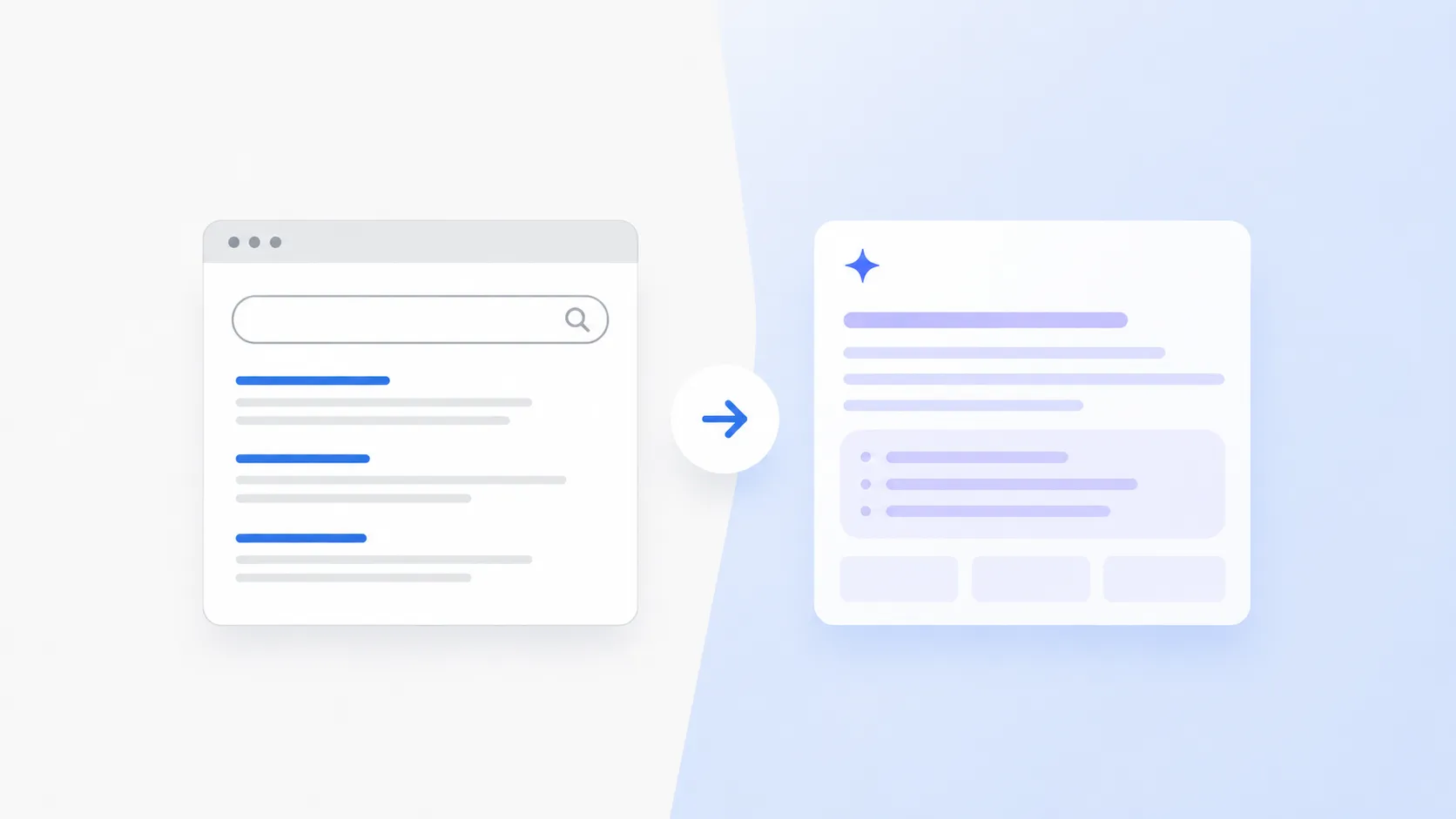
AI search readiness is becoming essential as platforms increasingly provide generated summaries, comparisons and direct answers instead of displaying only traditional blue links.
The claim that "90% of websites will not be ready" should not be treated as a verified universal statistic. It is better understood as a warning: many websites still have weak technical SEO, repetitive content, unclear authorship and limited evidence of real expertise.
Google states that existing SEO fundamentals remain relevant for AI Overviews and AI Mode. Pages must still be crawlable, indexed and eligible to appear in Search with a snippet.
To better understand the ideas discussed in AI search readiness, consider strengthening your skills with a practical digital marketing course in Pune designed for real-world application.
"AI is one of the most profound technologies humanity is working on."
— Sundar Pichai
What Is AI Search Readiness?
AI search readiness refers to how easily search engines and AI-powered discovery systems can access, understand, trust and reference information from a website.
Google's AI features can use "query fan-out," where multiple related searches are conducted to understand different parts of a complex question. This means one detailed search may involve several subtopics, comparisons and supporting sources.
An AI-ready website therefore needs more than keywords. It needs clear answers, supporting evidence, technical accessibility and information that adds something original to the topic.
Why Most Websites Are Not Ready for AI Search
1. Their Content Is Generic
Many websites publish rewritten versions of information already available on hundreds of other pages.
Google recommends creating valuable, non-commodity content that offers something useful beyond common knowledge. Automatically producing large numbers of pages without adding value may violate its scaled-content-abuse policies.
Useful originality can include:
- First-hand experience
- Original research
- Screenshots and demonstrations
- Customer questions
- Case studies
- Expert commentary
- Clear comparisons
- Industry-specific examples
2. The Website Has Weak Technical SEO
AI systems cannot reliably surface pages that search engines cannot crawl or index.
Common problems include:
- Important pages blocked by robots.txt
- Accidental noindex tags
- Broken internal links
- Duplicate URLs
- Missing canonical tags
- JavaScript-dependent content
- Slow mobile pages
- Poor website architecture
Google uses the mobile version of a website for indexing and ranking. It also recommends good Core Web Vitals, including an LCP within 2.5 seconds and an INP below 200 milliseconds.
3. There Is No Proof of Expertise
A page may make strong claims without explaining who wrote it, how conclusions were reached or where the information came from.
Strengthen E-E-A-T signals by adding:
- Detailed author profiles
- Relevant qualifications
- Editorial review details
- Publication and update dates
- References to reliable sources
- Original images and screenshots
- Genuine testimonials
- Transparent company information
For example, an article about Google Ads should include actual campaign observations, reporting screenshots or practical examples rather than repeating platform definitions.
4. Content Does Not Answer Complete Questions
Keyword-focused pages often mention a topic repeatedly without solving the reader's problem.
A stronger page answers related questions such as:
- What does the term mean?
- Why does it matter?
- How does it work?
- What mistakes should be avoided?
- How can success be measured?
- What should the reader do next?
Use descriptive H2 and H3 headings, concise explanations, examples and FAQs. However, Google says there is no requirement to divide every article into unusually small "AI-friendly" chunks. Content length and structure should serve readers first.
5. Important Entities Are Unclear
Search systems need to understand the relationships between a business, its services, authors, locations and products.
Use consistent names and details across:
- Website pages
- Google Business Profile
- Social profiles
- Industry directories
- Author profiles
- Product feeds
- Contact pages
Structured data can provide explicit information about page elements and may make pages eligible for rich results. However, Google confirms that no special schema is required specifically for AI Overviews or AI Mode.
How to Improve AI Search Readiness
Use this practical process:
Step 1: Complete a Technical Audit
Check indexing, crawlability, mobile performance, canonicalisation, XML sitemaps, internal links and Core Web Vitals.
Step 2: Audit Existing Content
Remove, merge or improve pages that are outdated, duplicated or written only to capture minor keyword variations.
Step 3: Add First-Hand Value
Include examples, expert opinions, original statistics, screenshots, videos, templates and lessons from real projects.
Step 4: Make Answers Easy to Understand
Place a direct explanation near the beginning of each section. Follow it with evidence, context and practical steps.
Step 5: Strengthen Trust Signals
Display authorship, business contact information, editorial policies, customer feedback and accurate source citations.
Step 6: Use Relevant Structured Data
Implement valid Article, Organization, LocalBusiness, Product, Breadcrumb or other relevant schema. Test the markup using Google's Rich Results Test.
How to Measure AI Search Visibility
Traditional rankings alone do not provide a complete picture.
Monitor:
- Search impressions and clicks
- Queries with increasing visibility
- Branded search demand
- Landing-page engagement
- Assisted conversions
- Mentions and citations in AI results
- Qualified leads and revenue
- Performance of updated content
Google recommends using Search Console to understand impressions, clicks, queries, pages and geographic performance. Its current guidance also refers site owners to the Generative AI performance report for analysing discovery through generative Search experiences.
Record screenshots before and after major content updates. This creates a clearer evidence trail for E-E-A-T and future performance reviews.
Conclusion
AI search readiness does not require chasing every new AEO or generative engine optimization tactic. It requires a technically accessible website, original expertise, clear answers and evidence that users can trust.
Whether you're exploring a digital marketing course in Thane or comparing digital marketing classes in Pune, choosing an affordable digital marketing course in PCMC can help you build strong fundamentals without overextending your budget.
FAQs
1. Is traditional SEO becoming irrelevant?
No. Google states that foundational SEO practices remain relevant because AI search features are connected to its existing Search ranking and quality systems.
2. Do I need a separate AI version of my website?
No special AI version is required for Google Search. Focus on crawlability, useful content, clear structure and strong user experience.
3. Does schema guarantee inclusion in AI answers?
No. Structured data helps search engines understand page information and can support rich-result eligibility, but it does not guarantee rankings or AI citations.
4. Should I create an llms.txt file?
Google says it does not use llms.txt for Search or its generative AI features. Creating one will neither improve nor harm Google visibility.
5. Can AI-generated content rank?
It can perform when it is accurate, original and genuinely useful. Publishing large volumes of automated content without added value may violate Google's spam policies.