




7 AEO Content Structure Rules to Get Cited by AI
Introduction
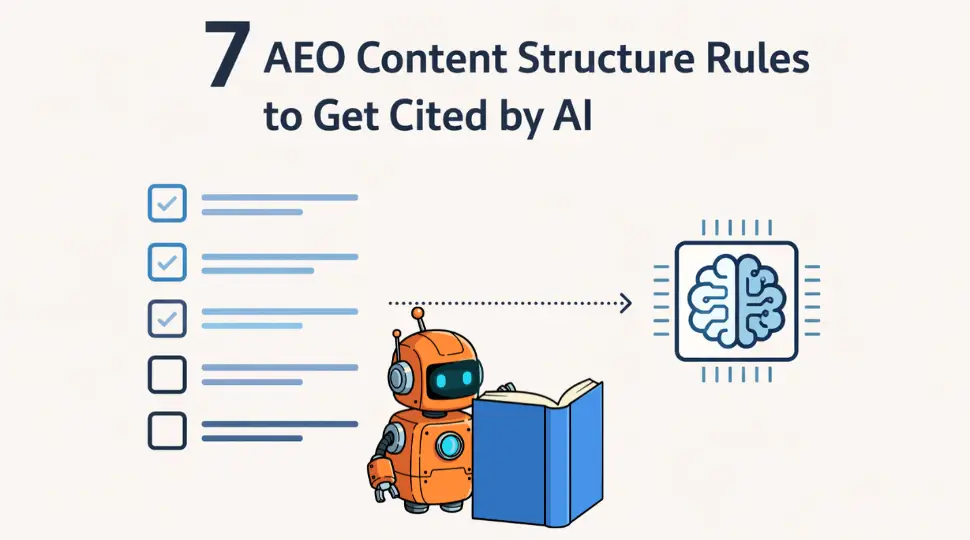
In the current environment of search, the days of using traditional SEO strategies such as keyword stuffing and building back links are over. The emergence of AI-based search has turned the emphasis on rankings into answer selection, so the AEO Content Structure Rules is what should grant visibility.
To gain a more accurate idea of the concepts presented in Anatomy of a High-Ranking Blog Post for SEO, you can sharpen your strategies with a real-life application digital marketing course in Pune.
AI does not rank pages, but it finds the correct answers. Unless your material is in an extractable format, it is not going to be cited, even on page one. This blog discusses the 7 AEO Content Structure Rules that can assist in getting your content selected, featured and trusted by AI systems.
What is AEO (Answer Engine Optimization)?
Answer Engine Optimization (AEO) refers to the process of formatting content in a way that allows AI tools such as ChatGPT, Google SGE, and voice assistants to simply harvest and produce your words as direct responses.
AEO Content Structure Rules Include:
- Clear, concise answers
- Structured formatting
- Intent-focused sections
- Easy-to-scan layout
AEO does not necessitate creativity or narrative as traditional SEO does.
Why Traditional Content Fails in AI Search
The vast majority of blog posts are aimed at humans rather than machines. They:
- Delay the answer
- Use long introductions
- Mix multiple ideas
- Lack structured formatting
Result:
• AI is not good at extracting specific answers
• Your content gets ignored
Rule 1: Answer First
What It Means:
Begin by giving an answer to the question, rather than lead to it.
Example:
Poor: Digital marketing has changed over the years and encompasses several strategies....
Optimized: Digital marketing refers to the utilization of the internet to market products and services.
Why It Works:
- AI places more emphasis on immediate clarity
- The quicker the extraction, the more chances of being cited
Rule 2: One Question = One Section
What It Means:
Each part must be dealing with only one query or intent.
Example Structure:
- What is AEO?
- Benefits of AEO
- Steps to implement AEO
Benefits:
- Enhances the segmentation of content
- Facilitates easier isolation of answers by AI
Rule 3: Use Explicit Headings
What It Means:
What is in your headings ought to be clearly stated.
Examples:
Weak Heading: "Let's Understand More"
Strong Heading: "The Good Things About AEO Content Strategy"
Best Practices:
- Use keyword-rich headings
- Keep them descriptive
- Avoid vague phrases
Rule 4: Keep Sections Short
What It Means:
Lengtheness of content is broken into small chunks.
Ideal Structure:
- 2-4 sentences per paragraph
- As many bullet points as possible
Why It Matters:
- AI scans, not reads
- Small parts enhance probabilities of extraction
Rule 5: Add Definition Blocks
What It Means:
Begin sections with simple definitions or explanations.
Example:
AEO Content Structure: This is the technique of structuring content in a way that increases its likelihood of being chosen by artificial intelligence systems.
Benefits:
- Acts as an "anchor" for AI
- Improves trust and clarity
Rule 6: Use Lists Wherever Possible
What It Means:
Turn paragraphs into outlines such as bullet points, numbered steps, and tables.
Example:
Steps to Implement AEO:
1. Identify user queries
2. Answer immediately
3. Structure content clearly
4. Use headings and lists
5. Optimize readability
Why It Works:
- Lists are easy to scan
- AI prefers structured data
Rule 7: Remove Fillers
What It Means:
Cut out the junk, padding and fluffing that do not add value.
Replace:
- Long introductions
- Repetitive explanations
With:
- Direct answers
- Clear insights
Key Principle: Signal > Noise
Real-World Example of AEO Optimization
Before Optimization:
- An explanation of digital marketing with no structure in a 1000 words long article
After Optimization:
- Concise headings such as 'What is Digital Marketing?'
- Bullet points for benefits
- Short paragraphs
- Direct answers
Result:
• Featured snippets
• AI citations
• Increased traffic
AEO vs SEO: Key Differences
| Factor | SEO | AEO |
|---|---|---|
| Focus | Rankings | Answer Selection |
| Content Style | Long-form | Structured |
| Priority | Keywords | Clarity |
| Format | Narrative | Modular |
| Goal | Traffic | Visibility in AI |
Best Practices for AI-Friendly Content
Focus on User Intent
Know what users are requesting and respond directly to it.
Use Structured Formatting
- Headings
- Lists
- Tables
Optimize for Featured Snippets
- Use definitions
- Add FAQs
- Include step-by-step guides
Maintain Readability
- Short sentences
- Simple language
- Clear formatting
Update Content Regularly
AI likes new, up-to-date information.
Conclusion
Content is not about who is first in the queue but rather about who is chosen as the solution. With these 7 AEO Content Structure Rules, you will be much more likely to be referenced by AI systems.
You might be looking at a digital marketing course in Thane, or you might be comparing digital marketing classes in Pune, but an affordable digital marketing course in PCMC will allow you to develop some solid fundamentals without stretching your budget.
"Content is king, but context is God."
— Gary Vaynerchuk
FAQs
1. What is AEO Content Structure Rules?
AEO Content Structure Rules are principles that aid in structuring content in a way that AI tools can easily extract and present it in the form of answers.
2. How is AEO different from SEO?
SEO is about ranking pages whereas AEO is about content being picked as an answer by AI.
3. Why is AEO important in 2026?
As AI-based search continues to increase, the only way to be seen is to be cited and not to be ranked.
4. Will AEO increase traffic on a site?
Yes, AEO can add prominence to AI answers, which will result in increased organic traffic.
5. Which is the most significant AEO rule?
The most important rule in AI extraction is known as answer first.