




YouTube AI Content Labels: How Automatic AI Detection Is Changing Video Transparency
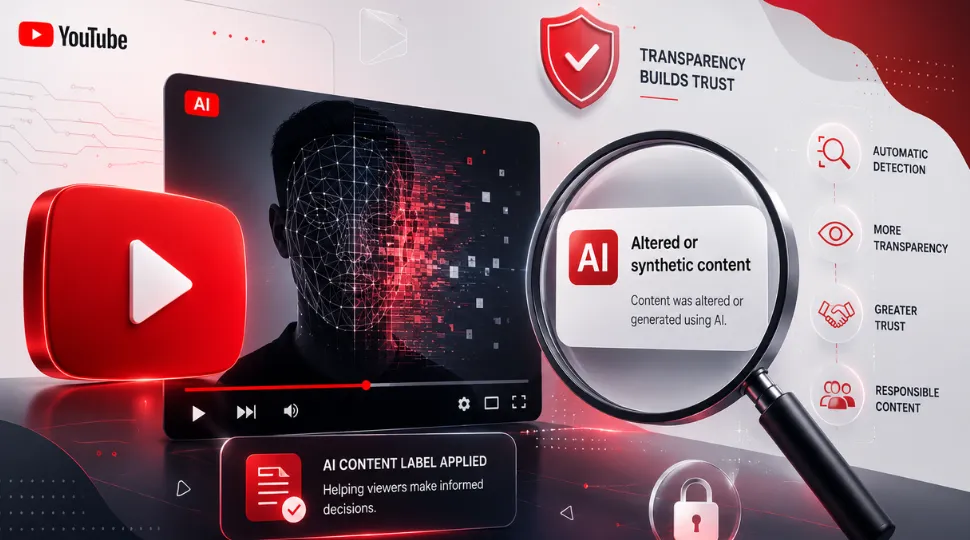
YouTube AI Content Labels represent an important step toward greater transparency in the age of generative AI. By introducing automatic detection and placing labels where viewers can easily see them, YouTube is helping users make informed decisions about the content they consume. For creators, the update reinforces the importance of responsible AI disclosure.
What Are YouTube AI Content Labels?
YouTube AI Content Labels are disclosures that inform viewers when artificial intelligence has been used to create or significantly alter video content.
Previously, creators were responsible for manually indicating when AI-generated content appeared in their videos. These disclosures were often hidden inside video descriptions, making them easy for viewers to overlook. According to YouTube's latest update, AI labels will now be more visible and automatically applied in certain situations.
The Goal Is Simple
- Increase transparency
- Help viewers understand what they're watching
- Reduce confusion around realistic AI-generated media
- Encourage responsible AI use among creators
When platforms communicate openly about AI usage, audiences are more likely to trust the content they consume and the creators they follow.
To master digital content strategy and stay ahead of platform updates, consider enrolling in a digital marketing course in Pune that covers YouTube marketing and AI content strategies.
Why YouTube Introduced Automatic AI Detection
Generative AI tools have improved dramatically over the past two years.
Today, creators can generate:
- Realistic human faces
- AI voice clones
- Synthetic news footage
- AI-generated environments
- Deepfake-style content
As these technologies become more convincing, platforms face growing pressure to help users identify synthetic media. YouTube states that viewer transparency is becoming increasingly important as AI-generated content becomes more common across the platform.
The update reflects a broader industry trend toward AI disclosure standards and responsible content creation.
How YouTube's AI Detection System Works
Automatic Detection of Photorealistic AI Content
The biggest change is that YouTube will no longer rely solely on creators to disclose AI usage.
The platform has introduced automated systems that can identify significant photorealistic AI-generated or AI-modified content. When such content is detected without creator disclosure, YouTube may automatically apply an AI label.
Detection Signals Include
- Internal AI detection technologies
- Metadata standards such as C2PA
- Signals from YouTube-owned AI tools
- Content analysis systems
If a creator forgets or chooses not to disclose AI usage, YouTube's systems can step in and add the label automatically.
Where AI Labels Will Appear on Videos
One of the most visible changes involves label placement.
Long-Form Videos
Previously, AI disclosures were buried within expanded video descriptions.
Now, AI labels will appear directly below the video player, making them immediately visible to viewers.
Benefits
- Easier visibility
- Greater transparency
- Reduced need to search video descriptions
YouTube Shorts
For Shorts, labels will appear as overlays directly on the video.
This is particularly important because short-form content often receives quick viewing decisions, leaving little opportunity for users to investigate content origins.
Impact on Content Creators
Increased Accountability
Creators can no longer depend entirely on self-reporting.
If YouTube's systems identify significant AI-generated elements, labels may be added automatically. This encourages creators to disclose AI usage accurately from the start.
Dispute Process Available
Creators who believe their content has been mislabeled can challenge the designation through YouTube Studio. However, some labels cannot be removed.
Examples include:
- Content created using YouTube's Veo tools
- Dream Screen-generated content
- Videos containing verified AI metadata through C2PA standards
These labels remain permanently attached.
Impact on Viewers and Audience Trust
Trust is one of the most valuable assets in digital content.
With AI-generated videos becoming increasingly realistic, viewers often struggle to determine whether a video reflects real events or synthetic creations.
Visible AI labels provide immediate context before viewers engage with content. According to YouTube, the objective is not to discourage AI use but to ensure audiences understand when AI has played a meaningful role in production.
Why Transparency Matters
Transparent labeling helps viewers:
- Make informed viewing decisions
- Identify altered media
- Recognize AI-generated scenarios
- Evaluate information credibility
This becomes especially important in categories such as:
- News
- Politics
- Finance
- Health information
AI Labels and YouTube Monetization
One of the biggest questions creators have is whether AI labels affect earnings.
YouTube has clarified that AI content labels do not directly impact:
- Video recommendations
- Search visibility
- Monetization eligibility
The labels exist solely for transparency purposes.
Indirect Performance Effects
While YouTube's algorithm may not penalize labeled content, audience behavior could influence performance.
For example:
- Lower click-through rates
- Reduced watch time
- Negative audience perception
These engagement signals may indirectly affect a video's reach and overall success.
Benefits of the New AI Transparency System
The updated labeling framework offers several advantages.
For Viewers
- Greater transparency
- Better context before watching
- Reduced misinformation risks
For Advertisers
- Improved brand safety
- Better understanding of content environments
- Increased trust in platform standards
For Creators
- Clearer disclosure expectations
- Improved audience trust
- Consistent labeling policies
Potential Challenges and Concerns
While the update is widely viewed as positive, several challenges remain.
False Positives
Automated systems are not perfect.
Some creators have already expressed concerns that legitimate videos could be incorrectly labeled as AI-generated. Community discussions suggest that detection accuracy will be closely watched as implementation expands.
Broad Label Definitions
Another concern involves the definition of AI content.
Questions creators are asking include:
- Does using one AI-generated image require labeling?
- What about AI-assisted editing?
- Should AI-generated music and visuals receive separate labels?
Many creators believe future labeling systems may need greater specificity.
What This Means for the Future of Video Content
The YouTube AI Content Labels update signals a broader shift toward AI transparency across digital platforms.
As AI-generated content becomes more sophisticated, platforms will likely adopt:
- Stronger verification systems
- Watermarking technologies
- Metadata standards
- Automated detection tools
Industry initiatives such as C2PA are already helping establish technical standards for AI content identification.
This update may serve as a blueprint for how social media platforms handle synthetic media in the coming years.
Best Practices for Creators Using AI
If you regularly use AI tools in content creation, consider the following best practices:
1. Disclose AI Usage Honestly
Always disclose significant AI-generated or AI-modified content.
2. Maintain Human Oversight
Review AI-generated outputs for accuracy and quality.
3. Focus on Original Value
Use AI as an enhancement tool rather than a replacement for creativity.
4. Monitor Viewer Feedback
Track audience reactions and engagement metrics after AI disclosures.
5. Stay Updated
YouTube's AI policies continue evolving. Regularly review official creator guidelines.
Conclusion
YouTube AI Content Labels represent an important step toward greater transparency in the age of generative AI. By introducing automatic detection and placing labels where viewers can easily see them, YouTube is helping users make informed decisions about the content they consume.
For creators, the update reinforces the importance of responsible AI disclosure. While labels do not directly affect monetization or recommendations, audience trust will likely become an increasingly important factor in content performance.
As AI-generated media continues to evolve, transparent labeling systems may become the standard across every major content platform.
Whether you're exploring a digital marketing course in Thane or comparing digital marketing classes in Pune, choosing an affordable digital marketing course in PCMC can help you build strong fundamentals in YouTube marketing and AI content strategy without overextending your budget.
"AI is probably the most important thing humanity has ever worked on."
— Sundar Pichai
Frequently Asked Questions
1. What are YouTube AI Content Labels?
They are disclosure notices that indicate when AI has been used to generate or significantly alter video content.
2. Does YouTube automatically detect AI videos?
Yes. YouTube now uses automated systems to identify significant photorealistic AI-generated content and can apply labels automatically.
3. Will AI labels reduce video rankings?
YouTube states that AI labels do not directly affect recommendations, rankings, or monetization.
4. Can creators remove AI labels?
Creators may dispute certain labels through YouTube Studio. However, labels tied to YouTube AI tools or verified AI metadata may be permanent.
5. Why is YouTube introducing automatic AI detection?
The goal is to improve transparency and help viewers understand when content has been generated or significantly altered using AI.