




Why Knowing SEO, Ads and Social Media Still Isn't Enough
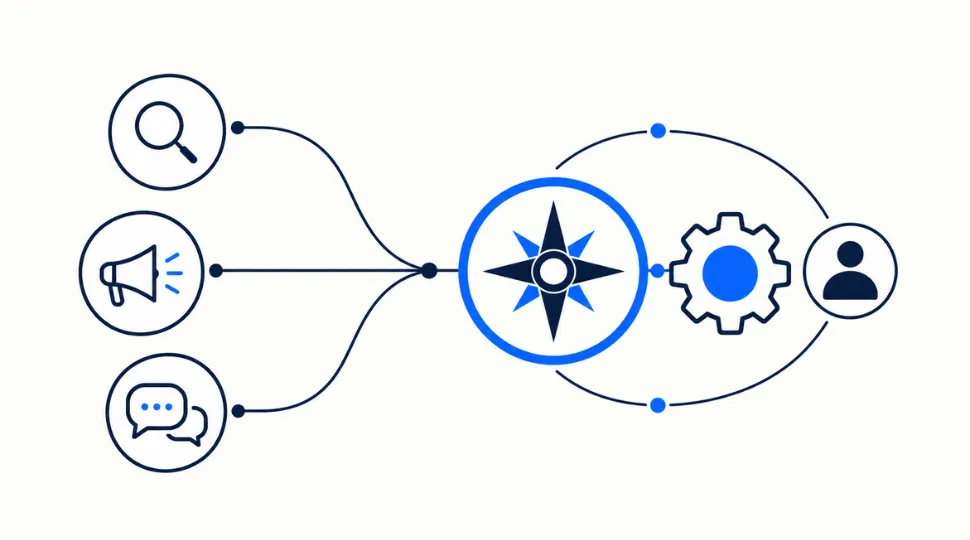
Learning SEO, Google Ads and social media gives you a useful foundation in digital marketing. You can research keywords, create campaigns and publish content. But what happens when the website receives traffic without enquiries, advertisements generate unsuitable leads, or social media engagement fails to produce meaningful business results?
These situations require more than platform knowledge. They require customer understanding, clear strategy, accurate measurement and the ability to diagnose problems.
If you are evaluating a digital marketing institute in Pune, look beyond the list of tools covered in its syllabus. Examine whether you will practise building campaigns, checking implementation, interpreting results and presenting recommendations.
To better understand the ideas discussed in this article, consider strengthening your skills with a practical digital marketing course in Pune designed for real-world application.
Key Takeaways
- SEO, advertising and social media need a clear customer need and business objective.
- Campaign performance depends on the offer, landing page, tracking and follow-up process.
- Lead quality and customer acquisition costs provide context that clicks and engagement cannot.
- Practical projects should demonstrate your decisions, execution and learning.
- Compare training programmes by their assignments, feedback and project requirements.
Why Platform Knowledge Is Only a Starting Point
Platform knowledge is important for running marketing tools, but there are also decisions to make relating to audience, messages, budgets and outcomes that matter. When the offer is vague, the audience is not right, or the landing page fails to answer the important questions, a technically correct campaign can still fail.
Making an ad doesn't tell you what it should say. Knowing how to research keywords doesn't tell you which page should target which search. These connections are explored through practical skills.
Suppose a training institute receives numerous enquiries but admits only a few students. Possible reasons may include inappropriate leads, inconsistent programme information, poor follow-up or inconvenient schedules. Adjusting campaign bids might solve one of those problems — it would not cure all of them.
Understand the Business Before Planning Marketing
The first step is to get to know the business, its customers and its goals. A local service provider that books consultation calls has different requirements than an online store that wants direct purchases. The constraints differ when a training institute is filling a scheduled batch versus a company marketing an evergreen product.
Define a useful objective
"Generate more leads" is too broad to guide every decision. A useful objective identifies the audience, the desired action and the constraint that matters most.
Understand costs and capacity
Understand the impact of pricing, margins, fulfilment and sales capacity on the campaign. A business can generate leads at low cost and then spend significant time qualifying them. An online store may report high advertising returns while carrying return and delivery costs. When these constraints are taken into account, marketing recommendations become far more useful. Ask what a customer costs the business and how many customers its team can actually serve.
Learn How Customers Make Decisions
Customer research gives insight into what people are interested in and what concerns them. Apply that knowledge to inform content, ads, landing pages and follow-up conversations.
Useful questions include:
- What problem is the customer trying to solve?
- What choices are they comparing?
- What is stopping them from deciding?
- What information do they need to make their decision?
- What would count as convincing evidence for the offer?
Understand different types of search intent
Someone searching "what is digital marketing?" needs an explanation. A person searching for digital marketing courses in Pune needs to know the programme content, schedule, fees and the practical learning opportunities involved. Someone searching "digital marketing course near me" may care most about location and travel details.
These searches should not receive the same answer automatically. Create content for the reader's specific intent.
Explain practical relevance
"Analytics included" indicates that a topic appears in a syllabus. "Practise checking enquiry tracking and interpreting campaign reports" explains what the learner will actually do. Descriptive explanations help customers judge the offer — and they help the business set consistent expectations.
Connect SEO, Ads and Social Media
SEO, advertising and social media should be parts of a unified customer journey. Their functions relate to the audience, the aim and the available resources.
Google's SEO Starter Guide outlines methods for making it easier for search engines to crawl, index and understand content. It also clarifies that following the advice does not guarantee indexing. With SEO, you must expect work to be done and measured in a realistic manner.
| Channel or asset | Practical contribution | Question to evaluate |
|---|---|---|
| SEO article | Answer an early learning question | Does it satisfy the reader's intent? |
| Social media content | Demonstrate projects and explain the programme | Does it provide useful evidence? |
| Paid advertisement | Present a relevant programme or batch | Does it attract suitable enquiries? |
| Landing page | Explain inclusions, schedules and next steps | Can visitors make an informed decision? |
| Counselling process | Resolve individual questions | Does the conversation match the advertised offer? |
Maintain continuity in the offer
If an ad advertises practical projects, explain those projects on the landing page. If a batch schedule is mentioned, visitors should be able to verify it. This consistency lets the customer know what they are getting — and lets the marketer see where the journey can improve.
Measure Outcomes Beyond Clicks and Leads
Useful measurement connects marketing effort to business results. Clicks are evidence of engagement; qualified enquiries and purchases represent evidence of commercial value. Choose metrics based on the goal, and follow up to see what each reported action means before drawing conclusions about performance.
In Google Analytics, a key event is defined as an event that is relevant to business success. Marketers need to decide which actions matter and ensure those actions are recorded properly.
| Metric | What it helps explain | Limitation |
|---|---|---|
| Impressions | How often content or ads appeared | Does not establish interest |
| Click-through rate | How often impressions produced clicks | Does not establish purchases |
| Cost per lead | Advertising cost per recorded lead | Does not establish lead quality |
| Advertising cost per customer | Ad spend relative to acquired customers | Excludes other acquisition costs |
| Return on ad spend | Attributed revenue relative to ad spend | Does not establish overall profit |
Example: A Hypothetical Campaign Comparison
Suppose two campaigns each spend ₹10,000. Campaign A produces 100 leads and 2 customers. Campaign B produces 40 leads and 5 customers. Campaign A's cost per lead is lower — ₹100 versus ₹250. But Campaign B's advertising cost per customer is much lower — ₹2,000 versus ₹5,000. Even after reviewing customer revenue, margins and reporting periods, you would still need further analysis before deciding which campaign to scale. The example illustrates why multiple metrics are needed to describe performance fully.
Measure outcomes completed offline
Google Ads provides options to measure website actions, calls and offline conversions. Consider these when an enquiry starts online but the purchase happens through a sales team. A WhatsApp click, a submitted enquiry and a completed sale are different actions — label them clearly in your reports.
Develop Problem-Solving and Testing Skills
When performance is not good, ask before changing settings: what is the weakest point in the customer journey?
- If there are few clicks, assess audience intent and message relevance.
- If clicks produce few enquiries, examine the page, the offer and the tracking.
- If enquiries don't turn into customers, consider qualification and follow-up.
These are starting points for diagnosis, not definitive answers.
Develop a testable hypothesis
A hypothesis connects an observation to a proposed explanation: "Visitors may not understand the actual outcomes of the programme, so adding a project section that explains the work could increase relevant enquiries." Identify the conditions and the metric that will show whether the result is conclusive.
A caution on testing
Do not change multiple unrelated variables at once — you won't know which change caused the result. Be cautious with conclusions drawn from small samples, uneven ad delivery or seasonal demand.
Build a Portfolio That Demonstrates Capability
A practical portfolio should explain what you developed, why you developed it and how you assessed it. Useful projects include:
- A summary of customer research
- An SEO content brief
- A landing page
- An advertising plan with creative variations
- A conversion measurement checklist
- A performance report
- A summary presentation of next steps
Explain the reasoning behind the work
Document the objective, intended audience, assumptions, implementation and evaluation for each project. If the outcome was unsatisfactory, describe your investigation and the next experiment you would run. That reasoning is more convincing than a screenshot.
Label simulations clearly. Sample dashboards and forecasts should not be presented as actual campaign results or client work.
Use AI With Informed Judgment
AI can assist with research organisation, drafting, creative development and report preparation. But its output has not been verified for accuracy and relevance on its own.
When reviewing an AI recommendation, ask:
- Does it reflect the real audience and the real offer?
- Are factual statements supported?
- Is important context missing?
- Is it feasible for the team to implement?
- How will we measure the outcome?
For instance, AI-generated copy may produce a catchy offer the business cannot back up. Recognising and correcting that statement requires subject knowledge. Learn with AI — don't just accept its suggestions.
Choosing a Digital Marketing Institute in Pune
When selecting a digital marketing institute in Pune, check the learning journey from explanation to implementation. Look for practical assignments, clear project requirements and constructive feedback. Discuss what you will build, how trainers evaluate it and whether you will practise interpreting results.
When comparing institutes, ask the same questions of every programme:
- Which projects will I complete?
- Which activities are "live" and which are simulated?
- How is the advertising budget handled?
- Will I practise conversion tracking?
- How often will trainers review my work?
- Will I present and defend recommendations?
- How can I add the work to my portfolio?
Examine the quality of feedback
When considering digital marketing classes in Pune, ask what happens after you submit an assignment. Useful feedback explains mistakes, identifies gaps and supports improvement — across audience selection, message relevance, implementation and interpretation.
Consider location alongside learning needs
Searching for a digital marketing course in Pune will show you the available options. Travel time and schedules matter, but so does whether the programme provides adequate time and opportunities to perform and evaluate work. If you prefer remote learning, explore an online digital marketing course that meets the same standards.
A Practical Framework for Developing Your Skills
Choose one manageable project and complete the following process:
Define: Identify the customer, objective, offer and constraints.
Build: Create the content, creative assets and page.
Implement: Publish or configure the work, then test it.
Measure: Review relevant actions and outcomes.
Improve: Make one change for a stated reason.
Present: Discuss your choices, outcomes and next steps.
Document assumptions throughout. If you don't have access to live data, describe what you would measure and what you would look for. A well-executed project shows both what you can do and what you still need to work on.
"Marketing is no longer about the stuff that you make, but about the stories you tell." — Seth Godin, as quoted on seths.blog.
The quote illustrates the importance of audience and communication decisions. Whatever channels you use, you must understand who you are reaching and why they would care about the offer.
Frequently Asked Questions
1. What should I look for in a digital marketing institute in Pune?
Look for practical assignments, clearly explained projects and constructive trainer feedback. Ask whether you will practise campaign planning, landing page development, tracking and reporting. A digital marketing institute in Pune should clarify which activities are live, which are simulated and how your work will be assessed. Compare these details with your goals and availability.
2. How do I choose the best digital marketing course in Pune for my needs?
Choose according to your starting knowledge, career goals, schedule and preferred learning format. When comparing options, review project requirements, trainer feedback and assessment methods. Request clear information about fees and inclusions. A programme's suitability depends on your needs and the learning opportunities it actually provides.
3. What should I check when searching for a digital marketing course near me?
Check location and travel time alongside programme content, practical work and feedback. An accessible institute makes regular attendance easier, but proximity alone does not establish suitability. Ask about schedules, assignment support and access to tools. If travel is difficult, compare online options using the same learning criteria.
4. Can I build a portfolio without an advertising budget?
Yes. You can create content briefs, website audits, landing pages, measurement plans and simulated advertising proposals without paying for ads. Explain which work you implemented and which remains a recommendation. Show your assumptions and evaluation plan. Do not claim advertising outcomes when no campaign ran.
5. Is learning SEO, ads and social media enough to start a career?
These skills provide a useful foundation, but readiness depends on the role and your ability to apply them. Practise customer research, implementation, measurement and reporting alongside your chosen channel. Develop depth in one area while understanding the connected skills needed to evaluate your work and explain your decisions.
Conclusion
SEO, advertising and social media become more useful when they connect with customer understanding, clear objectives and reliable measurement. These connections help you make informed decisions about messages, budgets and improvements.
Start with one complete project. Research the audience, build the assets, check implementation and evaluate the outcome. Document what the evidence supports and what still needs investigation.
When evaluating a digital marketing institute in Pune, compare project work and feedback. Assess a digital marketing course in Pune, a digital marketing course in PCMC or a digital marketing course in Surat against those requirements. For remote learning, review an online digital marketing course; for deeper advertising and measurement practice, examine an Advanced Performance Marketing Course.
Your capability becomes clearer when you can execute the work, explain the result and justify the next decision.