




SEO That Drives Revenue: Transform Traffic into B2B Pipeline
Introduction
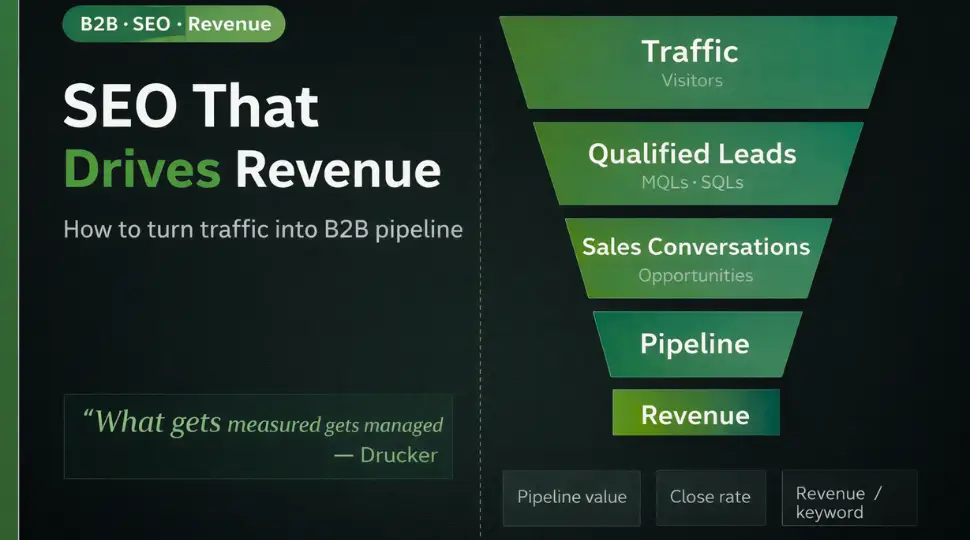
There are a lot of B2B companies that are not finding it difficult to attract traffic to their websites. Actually, they can already be ranked highly, attract visitors and experience steady growth every month. The actual task is once the click is made- transforming that traffic into qualified leads, sales conversation and revenue.
This is the point at which seo collapses. There are too many teams that are obsessed with rankings, impressions and vanity metrics and do not consider how buyers search, compare solutions and make decisions. The outcome is content that receives views but never fills pipeline.
If you want to get a better idea of the concepts presented in How AI Citations Work for SEO: The Future of Search Visibility, you might consider enhancing your abilities with hands-on digital marketing courses in Pune.
The most successful companies are applying the SEO in a different way. They focus content on buyer intent, bottom-of-funnel opportunities, and success is gauged by revenue impact, not traffic charts.
Here in this guide, you will find out how to create an SEO system that will transform search visibility to actual business expansion.
What Is Revenue-Driven SEO?
Revenue-based SEO is an approach of tying search optimization to business performance including:
Revenue-Driven SEO Focuses On:
- Qualified leads.
- Demo requests.
- Free trials.
- Sales opportunities.
- Customer acquisition.
- Revenue growth.
Rather than posing the question about the amount of traffic that we received, the more compelling question would be: What was the amount of pipeline created through SEO?
Key Insight: This transformation alters the way you select the key words, generate materials and gauge performance. Conventional SEO tends to focus on general informational keywords. Revenue-centric SEO emphasises on search prospects that determine purchasing decision.
Why Traffic Alone Is Not Enough
Most companies rejoice in traffic growth without inquiring whether the traffic is the appropriate audience.
For example:
- A SaaS company receives 50,000 visits a month.
- Bounce rate is high.
- Demo requests remain unchanged.
- There is no increase in sales pipeline.
This is normally due to the fact that the content arouses curiosity and not buying.
| Vanity Metrics | Business Metrics |
|---|---|
| Pageviews | SQLs (sales qualified leads) |
| Impressions | Demo bookings |
| Average position | Opportunity value |
| Social shares | Revenue influenced by SEO |
| Customer acquisition cost |
The Bottom Line
Traffic is fine--but only when it has some end worth going to.
Understanding the B2B Buyer Journey
B2B consumers seldom make a purchase after a single search. They pass through phases before deciding on something.
The 3 Core Stages
1. Awareness Stage
The buyer understands that he or she has an issue.
Searches may include:
- What to do to enhance sales reporting.
- Reason customer churn increases.
- Optimal automation methods of outreach.
2. Consideration Stage
They start to consider solutions.
Searches may include:
- CRM software comparison.
- Sales automation tools.
- Best reporting dashboards for teams.
3. Decision Stage
They are willing to select a vendor.
Searches may include:
- HubSpot pricing.
- Salesforce alternatives.
- Best CRM B2B SaaS.
- Request CRM demo.
Strategic Takeaway
The powerful seo strategy develops the content on each level and pays additional attention to high-conversion searches.
Start With Bottom-of-Funnel Intent
Among the quickest methods to enhance SEO ROI is to start with purchasing intent keywords. These are people who are nearest to action.
Bottom-Funnel Keyword Examples
- Optimal project management software for agencies.
- SEO agency pricing.
- CRM alternatives.
- Enterprise chatbot demo.
- Comparison of marketing automation platforms.
- Startup bookkeeping software.
Why This Works
A person who has typed "what is CRM" may be conducting a research. When a person is visiting the search engine with the query of "best CRM in manufacturing companies," he or she is probably going to make a purchase. That difference matters.
Action Tip
Check off your keywords list and note them as:
- TOFU (top of funnel).
- MOFU (mid funnel).
- BOFU (bottom of funnel).
Then give priority to BOFU content.
Build Content With a Clear Job to Do
Each page of your web site must serve a purpose. When content is there to rank, it does not usually convert. Rather, designate each page with a single role.
Three Roles of High-Performing Content
1. Attract
Material intended to attract new visitors.
Examples:
- Educational blog posts.
- Industry trend articles.
- Beginner guides.
- Definitions and explainers.
2. Nurture
Trust-building and evaluation-helpful content.
Examples:
- Case studies.
- Comparison pages.
- Use case pages.
- Webinars.
- Product walkthroughs.
3. Convert
Action-oriented content.
Examples:
- Pricing pages.
- Demo pages.
- Contact pages.
- ROI calculators.
- Free trial pages.
Key Principle: Once there is a defined role in content, your funnel becomes optimized.
Use 90-Day SEO Growth Cycles
SEO is viewed as a random publishing by many teams. A more effective model is the working in concentrated 90-days sprints. This generates momentum, responsibility and accelerated learning.
Example 90-Day SEO Roadmap
Month 1: Research & Planning
- Audit current performance.
- Identify revenue keywords.
- Review competitors.
- Fix technical blockers.
- Build content roadmap.
Month 2: Publish & Optimize
- Launch BOFU pages.
- Refresh underperforming pages.
- Improve CTAs.
- Add internal links.
- Update metadata.
Month 3: Measure & Improve
- Track leads generated.
- Review rankings.
- Analyze conversion rates.
- Doubles bet winners.
- Remove low-value tasks.
Implementation Note
Repeat every quarter. This is what makes SEO a repeatable growth-engine rather than a stab in the dark.
KPIs That Actually Matter
In case you desire executive buy-in, report on metrics leadership is concerned with.
| The Most Important SEO Metrics |
|---|
| Organic leads generated. |
| Organic traffic demo requests. |
| Conversion rate by landing page. |
| Pipeline value influenced by SEO. |
| Cost per acquisition from SEO. |
| Revenue from organic channel. |
| Customer lifetime value from organic customers. |
Helpful Supporting Metrics
- Rankings.
- Click-through rate.
- Traffic growth.
- Backlinks.
- Engagement time.
Apply supporting measures to diagnosis but not as the end in itself.
Common SEO Mistakes B2B Teams Make
Even teams that are good can end up wasting months on the wrong focus.
1. Pursuing Volume Keywords
Big search volume can be enticing, but not a guarantee of qualified traffic.
2. Ignoring Conversion Paths
When there is no next step to the blog post, visitors will move away.
3. Publication Without Intending to Purchase
The content should be aligned to the actual questions consumers would have prior to purchasing.
4. Measuring Only Rankings
Rankings are good, but revenue is better.
5. Slow Website Experience
Low mobile speed and experience may kill the conversions despite high rankings.
6. Weak Internal Linking
Relevant links allow users to move further into your funnel, as well as assist search engines in knowing relationships among the content.
Real Example of SEO Turning Into Pipeline
Consider an example of a B2B software company receiving 20,000 organic visits a month.
Before Strategy Changes:
- The majority of the traffic was through general blogs.
- Conversion rate: 0.4%.
- Few demo requests.
Since Switching to Bottom-Funnel SEO:
- Created comparison pages.
- Added case studies.
- Improved CTAs.
- Optimized pricing page.
- Targeted solution-specific keywords.
Six Months Later:
- Traffic grew only 15%.
- Demo requests increased 110%.
- Sales pipeline doubled.
This demonstrates that bigger traffic is beaten by better traffic.
EEAT: The Importance of Trust Signals in SEO
Google promotes useful and trustworthy content. That is, your pages ought to show actual expertise.
How to Strengthen EEAT
Experience
Demonstrate personal experience, actual examples and life lessons.
Expertise
Explain with clear data-supported explanations and frameworks.
Authoritativeness
Gain backlinks, references, and release thought leadership.
Trustworthiness
Make correct statements, provide clear contact information, safe pages, and clear messages.
Add Proof Elements Such As:
- Client testimonials.
- Case studies.
- Screenshots.
- Product demos.
- Expert quotes.
- Updated statistics.
- Author bios.
These indicators enhance the confidence of the users and the search engine.
Final Thoughts
Traffic is helpful, and traffic by itself does not expand a business. Revenue-oriented seo aligns the content with the buyer intent, bottom-funnel opportunity, and quantifies what actually matters, pipeline and sales.
With a purpose on every page and a plan on every quarter, SEO is among the surest growth channels in your marketing system.
Be it you are studying a digital marketing course in Thane or the best digital marketing classes in Pune, the best digital marketing course in PCMC will enable you to develop good basics without stretching your budget.
"What gets measured gets managed."
— Peter Drucker
FAQs
1. What is the length of pipeline that SEO can produce?
Most businesses start to move early in 3-6 months and show better results as time goes by.
2. Are paid ads or SEO better in B2B?
SEO and paid adverts are complimentary. Paid advertising generates immediate exposure, whereas SEO generates efficiency in long-term acquisitions.
3. What are the best converting keywords?
Commercial or transactional intent keywords tend to convert best e.g. comparison, pricing, alternatives and solution based searches.
4. Are small B2B companies able to compete with larger brands?
Yes. Smaller businesses have a chance to win by focusing on the intent to niche, produce better content, and be faster than larger organizations.
5. What is the frequency of content changes?
Check high-value pages quarterly and update old pages on a regular basis.