




Search Engine Optimization Mistakes to Avoid in 2026
Introduction
Although it has nothing to do with AI, backlinks, or Google algorithm changes, it is the greatest search engine optimization error I still observe in 2026.
It is much lower—and much worse.
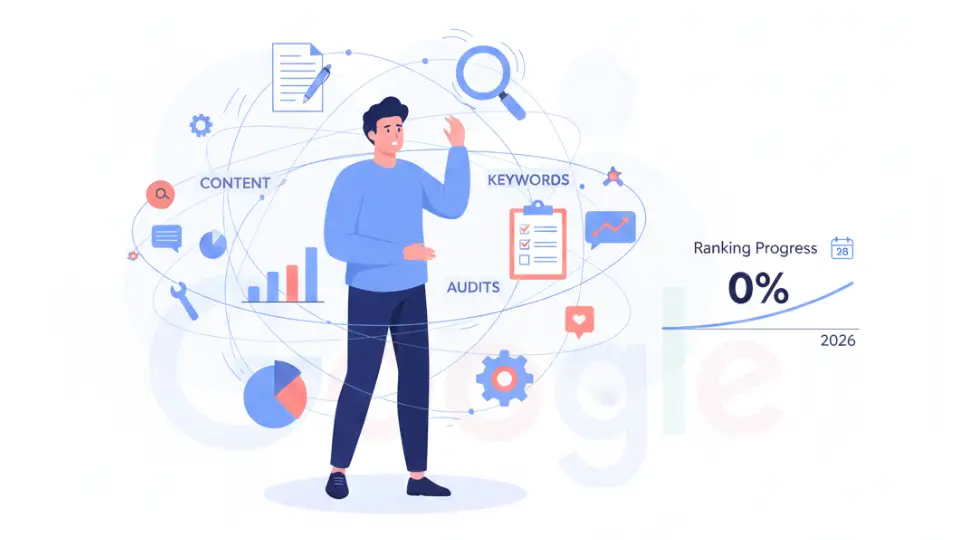
There are plenty of teams that are busy with SEO although they are disoriented. They post once a week, monitor tens of keywords, conduct audits on a regular basis, and spend money on various tools, but still their position in the search, their traffic, and their clicks do not increase.
When your SEO activities are tiring yet fruitless, this paper will make you find out why—and provide you with a clear, results-orientated SEO strategy that in fact works in 2026.
You are an average beginner or a working professional, and our digital marketing courses in Pune and a job-orientated digital marketing course in Thane will ensure you put into practice strategies that actually work.
Why SEO Fails in 2026 (Even When Teams Work Hard)
SEO does not fail because teams are lazy.
Indeed, the work of most SEO groups today is larger than ever:
- The production of large amounts of content.
- Tracking positions of keywords on a daily basis.
- Conducting quarterly SEO audits.
- Impression, click, and traffic tracking.
- Committing to various search engine optimization tools.
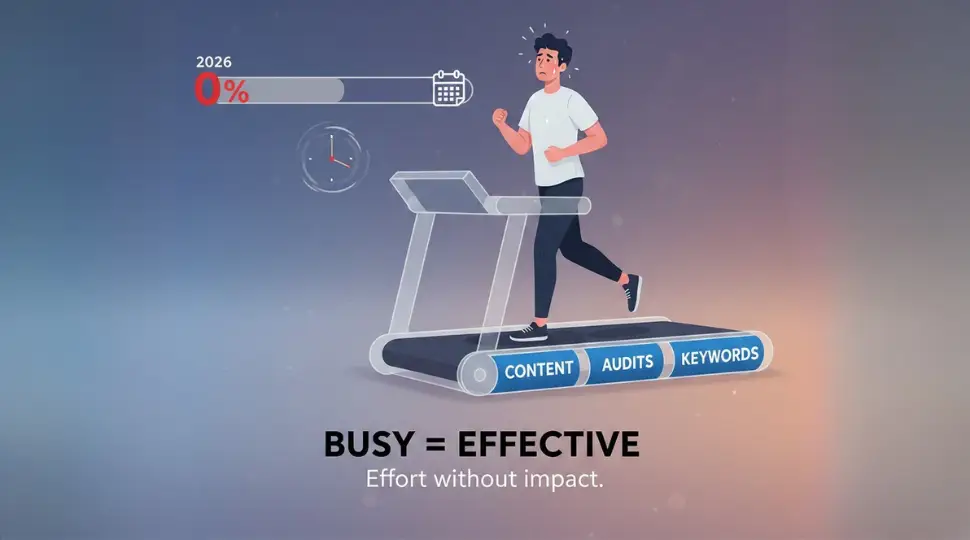
However, even with this, a lot of companies find it hard to deliver results out of search.
The problem isn't effort. The problem is lack of focus.
why-seo-fails-in-2026
The Real SEO Mistake: Activity Without Direction
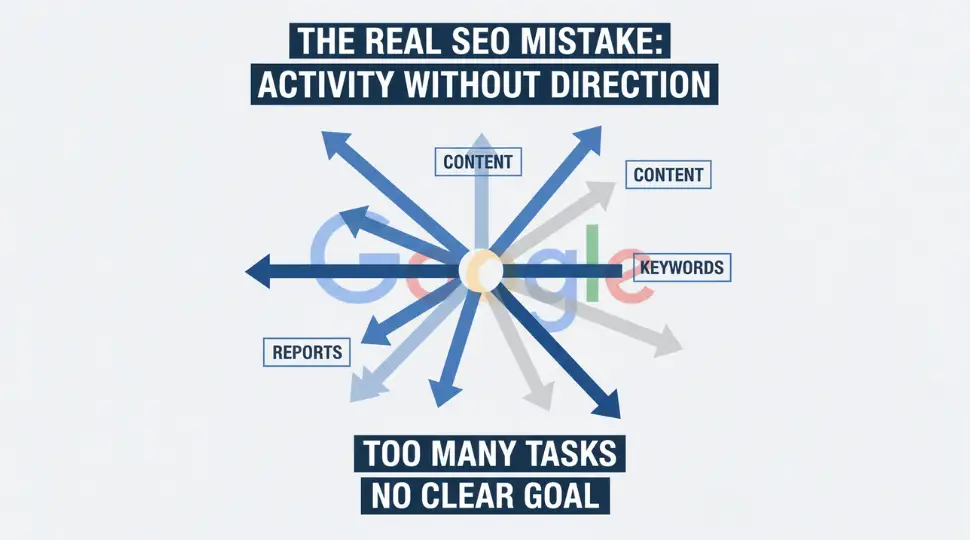
The greatest SEO error in the year 2026 will be to do everything without any proper planning.
SEO has become overwhelmed with tools, dashboards, reports, and checklists. In their attempt to accomplish everything, teams very often accomplish nothing.
And with no clear, stipulated priority:
- Content lacks purpose
- SEO metrics become noise
- Search intent is misconceived.
- Results stagnate
The success of SEO in the present day is not about how much you do but what you want to concentrate on.
the-real-seo-mistake
A Real Example: The Overworked SEO Team
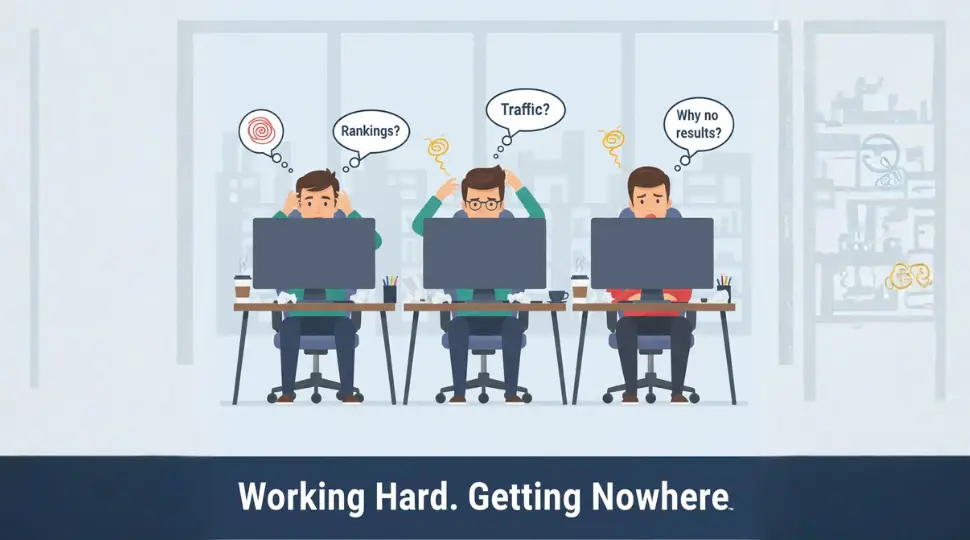
I had a conversation with a marketing team earlier this year, and they were burnt out.
They were:
- Publication of new content weekly.
- Tracking over 50 keywords
- Conducting an SEO audit 3 times a year.
- Three dissimilar paid SEO tools.
On the exterior things were all right.
However, when I questioned them on the reasons behind every activity, they had no definite answer.
- No single revenue goal.
- No priority page.
- No defined search intent.
Blameless movement-- directionless.
the-overworked-seo-team
Why Traditional SEO Checklists No Longer Drive Results
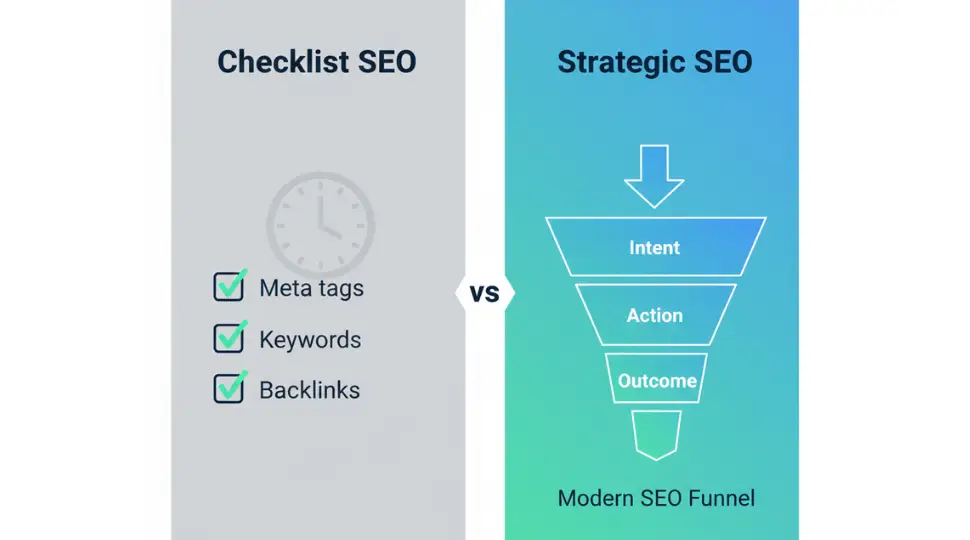
In 2026, checklist SEO is outdated.
This is the result of following generic best practices out of context:
- Traffic that is not converted randomly.
- Ranking of Keywords that do not matter.
- Algorithms-satisfying and user-unsatisfying content.
Contemporary search is goal-orientated, action-orientated and result-orientated.
SEO today is not about:
- Top-ranked in the number of keywords.
- Publishing the most content
- Using the most tools
It is a matter of deciding on one thing at a time.
why-traditional-seo-checklists-no-longer-drive-results
Step 1: Pick One Revenue Page (Not Ten)
The Benefits of Targeting a single page.
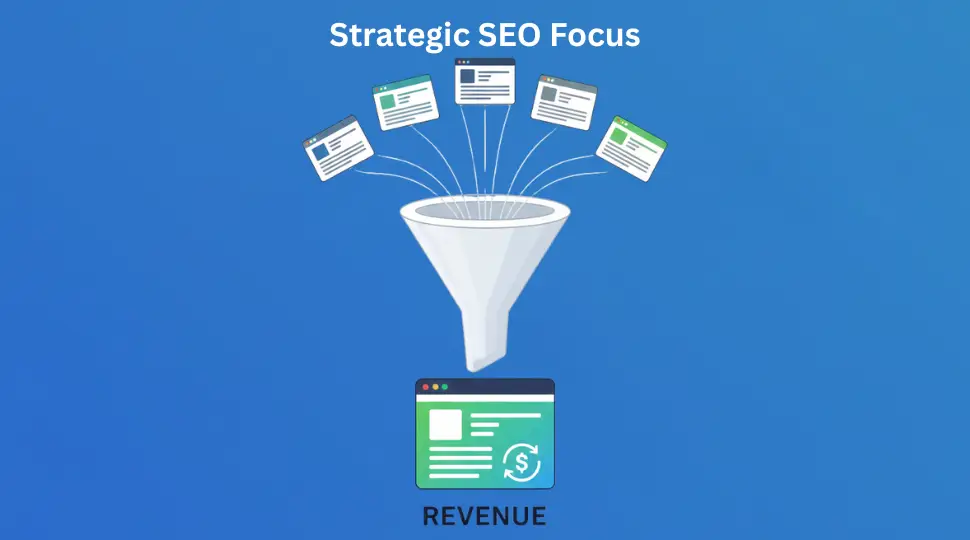
Rather than dividing your efforts among dozens of URLs, begin with one profit-oriented page.
This could be:
- A service page
- A product page
- A high-intent landing page
SEO is more efficient in cases where signals are focused.
pick-one-revenue-page
Finding the Right Page with GSC.
Go to Google Search console (GSC):
- Go to Search Results
- Filter by Queries
Set:
- Impressions > 1,000
- Between 6 and 20 is an average position.
These pages have already been made visible in the search. They just need refinement.
Concentrate on the job of polishing one page in two weeks – nothing more.
Step 2: Use GSC Data the Right Way
There are numerous teams who visit GSC but fail to utilise it strategically.
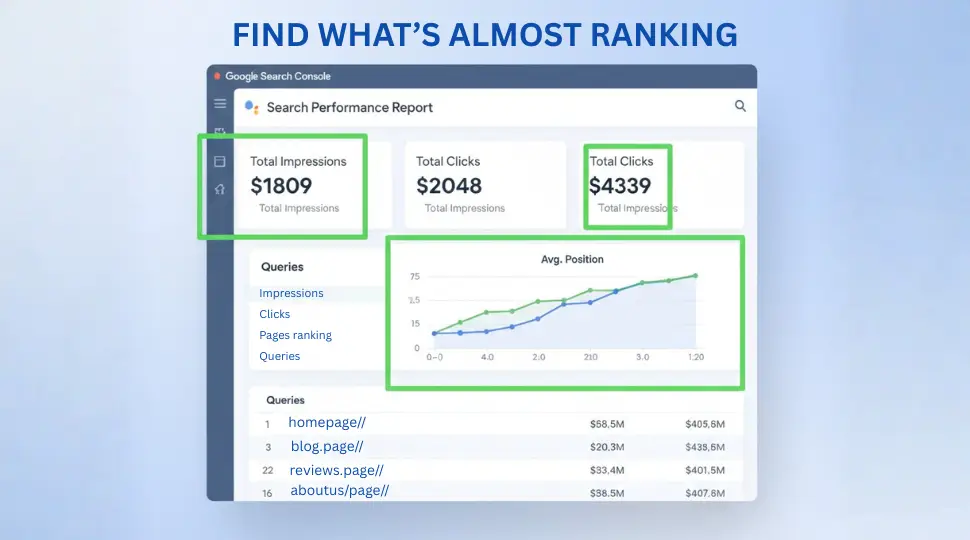
Rather than keeping track of everything, seek:
- High-impression queries that have low clicks.
- Pages that are on page 2 (position 6-20)
- Mismatched search intent
use-gsc-data-the-right-way
These insights tell you:
- What users are in fact searching.
- Where your content is not doing well.
- What can be changed in order to have better clicks in a short time?
GSC is not a reporting tool only; it is a decision-making tool.
Step 3: Define One Clear Search Intent
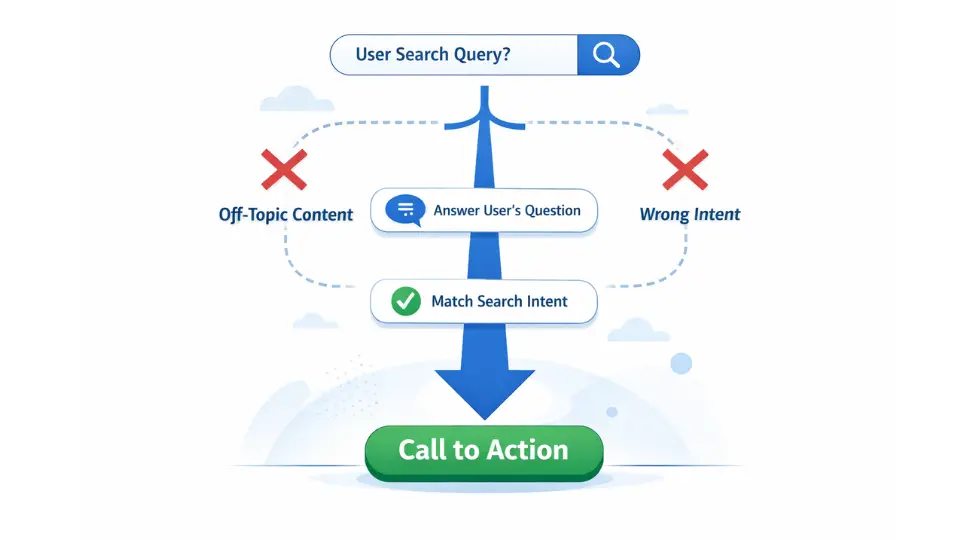
One main goal must be on each page.
Write it in a single sentence:
This page was created in order to answer [specific user question] and persuade [one particular action].
user-search-query
Examples:
- Find an answer to a search about pricing - Book a demo.
- Answer a how-to question – download a manual.
- Compare options - Ask a consultation.
When your content is an attempt to please many intents, both Google ranking and conversions are impacted.
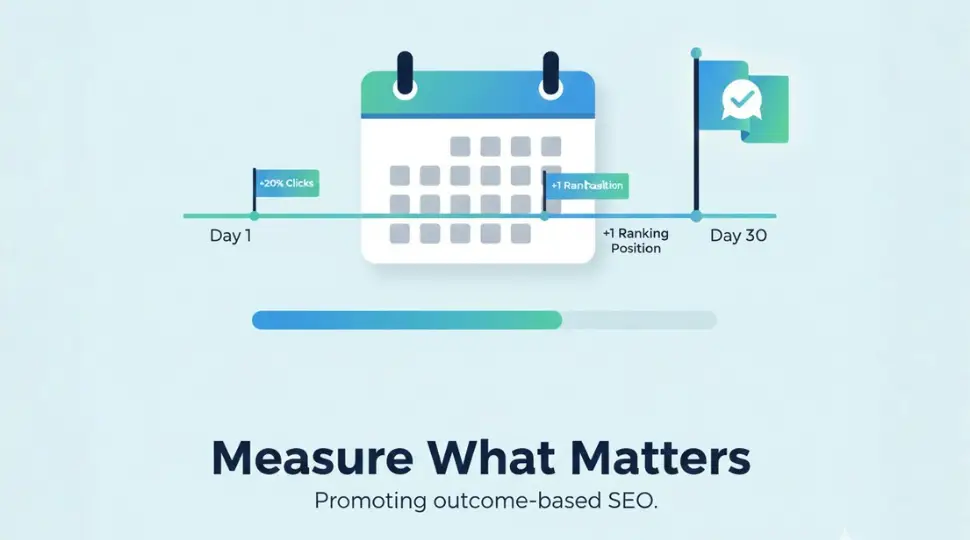
Step 4: Set a 30-Day SEO Outcome That Matters
Avoid vague goals like:
- "More traffic"
- "Better rankings"
- "Higher visibility"
seo-outcome-that-matters
Rather, describe a single quantifiable outcome:
- +20% clicks from search
- +10% improvement in CTR
- +1 ranking on a high-intent query.
Then ask:
What is the one little thing that I can do each day to push this metric?
Organic success cannot be achieved by tremendous changes but rather by micro-improvements performed on a regular basis.
Step 5: Focus on Actions That Drive Results
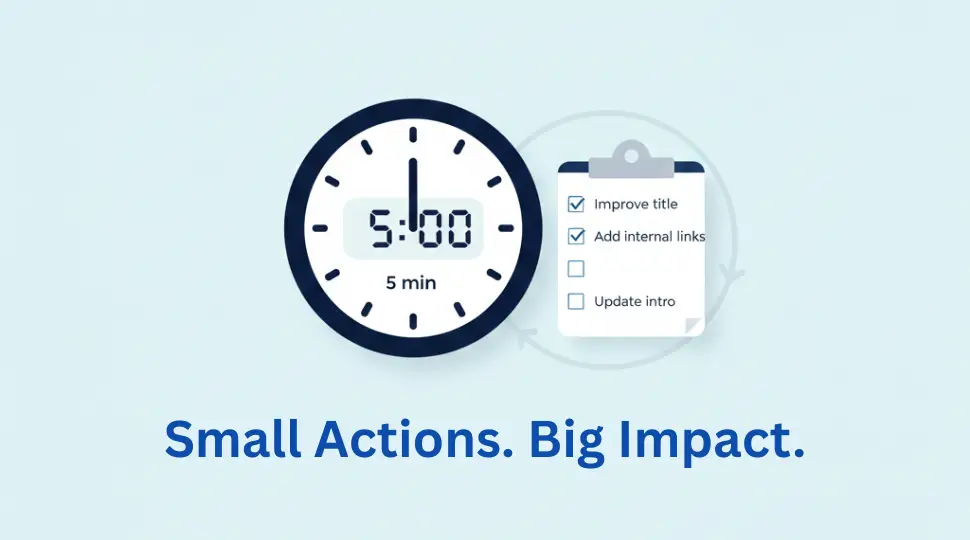
Proficient daily SEO practices (5-10 minutes):
- Write better title tags to enhance CTR.
- Enhance the first 100 words on intent match.
- Add in-house links to the priority page.
- Make headings clear with search words.
- Remove irrelevant content
Micro actions, which are performed regularly, grow exponentially compared to macro actions, which are haphazard.
focus-on-actions-that-drives-results
How This SEO Strategy Improves Google Ranking
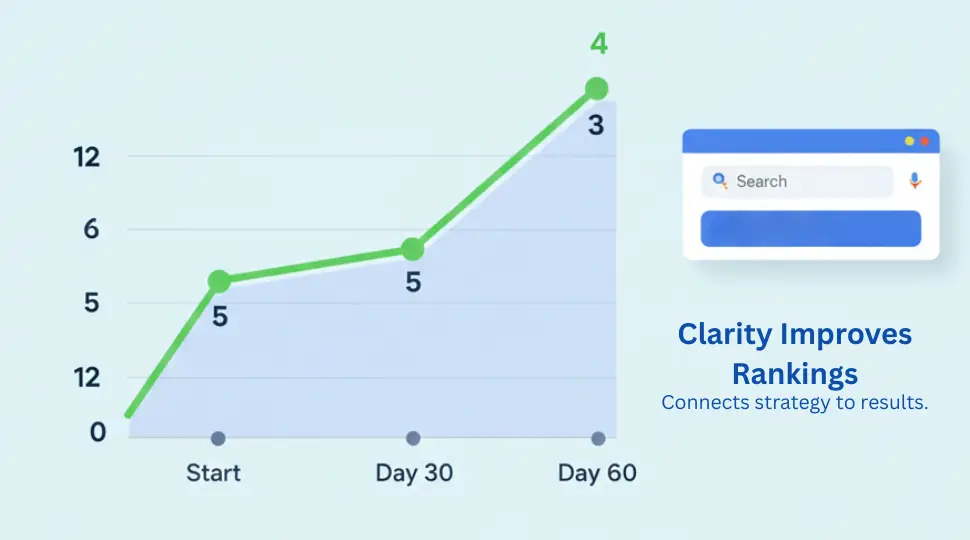
Such a narrow methodology is in line with the way search is done nowadays:
- Google punishes intent-to-treat.
- Ranking (clicks, engagement) depends on the behaviour of users.
- There is a higher relevancy signal in concentrated optimization.
You make better rankings by serving search intent better than the competitors as opposed to following the traffic.
how-seo-strategy-improves-google-ranking
When you want to get further, you can check 7 Underrated SEO Ranking Factors in 2026 as part of our advanced digital marketing course in the Pune curriculum.
Common SEO Myths to Stop Believing in 2026
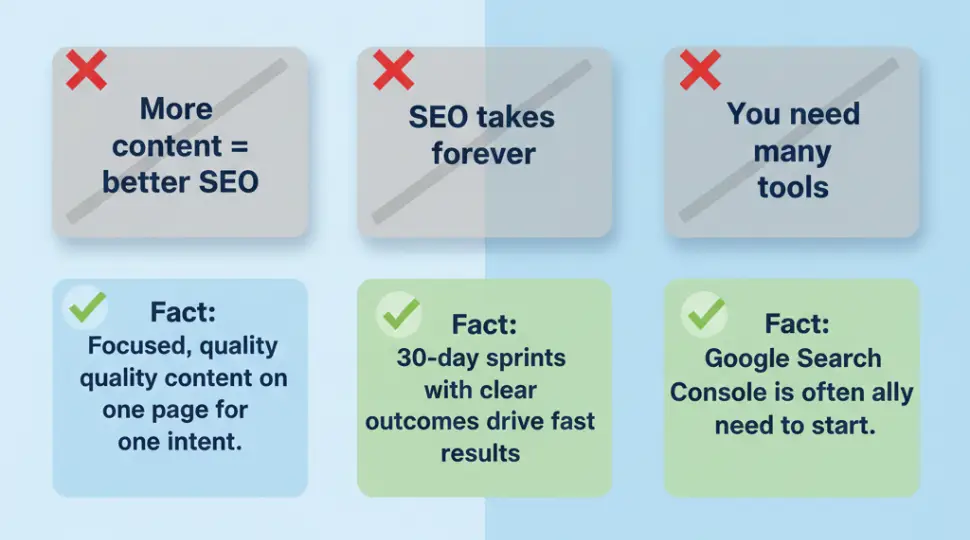
Myth 1: More Content = Better SEO
Better quality and purpose are better than quantity.
Myth 2: There are several SEO tools that you require.
There is one obvious plan that is better than 10 dashboards.
Myth 3: SEO Takes Forever
Concentrated SEO may be effective within a matter of weeks as opposed to months.
seo-myths-in-2026
SEO Best Practices for Sustainable Growth
In order to achieve long-term SEO success in 2026:
- Prioritize revenue pages
- Use GSC insights regularly
- Match content with actual search behaviour.
- Measure performance, not busyness.
- Review and refine every 30 days
SEO is no longer a case of doing everything.
It is about doing the right thing at all times.
seo-myths-in-2026
Final Thoughts: One Decision Beats Ten Busy Tasks
When SEO is cumbersome, baffling, or annoying, it is not necessarily due to it being difficult.
The reason is that no one gave it a priority. The most effective search engine optimization is achieved in 2026 through clearness, purpose, and concentration – not unending action. A single decision will never be less efficient than ten hectic tasks.
FAQs: Search Engine Optimization in 2026
Q1. Is SEO still relevant in 2026?
Yes. SEO is not gone; it is changing. There is no more need to stress intent-based optimization.
Q2. What is the time period for the SEO to yield results?
When optimized specifically, it can start delivering real results within 2-4 weeks.
Q3. Does Google Search Console suffice in SEO?
GSC is among the strongest free tools that can be used in terms of strategic decisions.
Q4. Should I optimize more than one page?
No. One with a high-impact page first, then ramp.
"AI is one of the most important things humanity is working on. It's more profound than electricity or fire."
— Sundar Pichai (CEO, Google)