




Marketing Automation Trends in 2026: The Future of Smarter Marketing
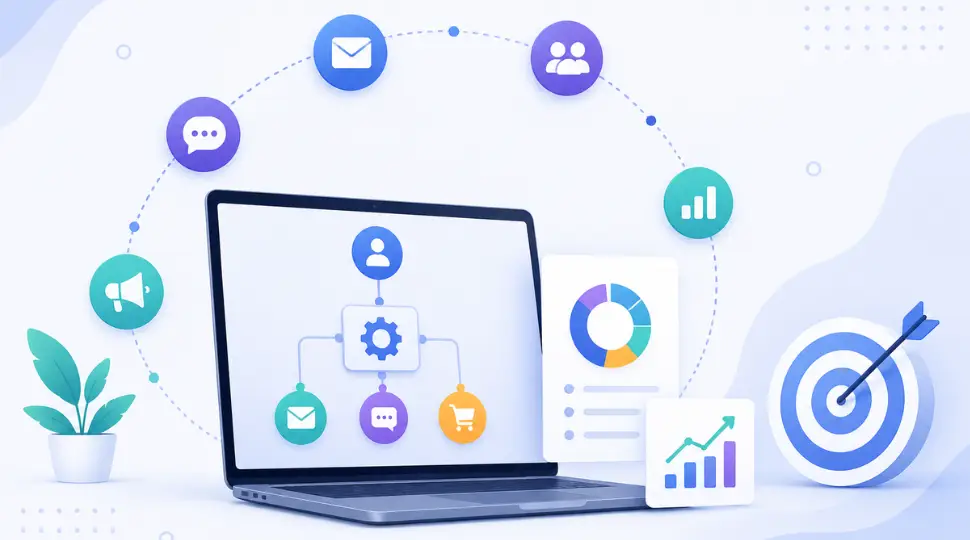
Marketing automation is evolving faster than ever. In 2026, businesses are leveraging AI, predictive analytics, and hyper-personalization to create smarter, more efficient marketing strategies. Understanding these trends is essential for staying competitive in the modern digital landscape.
Introduction to Marketing Automation in 2026
Marketing automation is the use of technology to streamline repetitive marketing tasks and enhance customer journeys with personalized communication and intelligent processes.
Automation in 2026 is more than just email marketing. Today's systems can gauge customer actions, forecast their next steps, tailor the material to their user persona and fine-tune marketing messages instantly. Reports in the industry reveal that a superior lead conversion rate and much better customer retention is often possible for organizations that implement advanced automation strategies.
In today's rapidly evolving landscape, businesses are moving beyond reactive marketing methods and embracing predictive and proactive customer engagement tactics as AI technologies continue to advance.
Why It Matters
Marketing automation in 2026 represents a fundamental shift from simple task automation to intelligent, AI-driven customer engagement. Organizations that adopt these advanced strategies gain significant competitive advantages in efficiency, personalization, and revenue growth.
To master these strategies in practice, consider enrolling in a digital marketing course in Pune that covers marketing automation tools and AI-driven campaign management.
Why Marketing Automation Matters More Than Ever
The way consumers expect things to be done has changed significantly. Customers now expect:
- Personalized recommendations
- Instant responses
- Seamless omnichannel experiences
- Relevant content
- Fast customer support
It's hard for a growing business to meet these expectations by hand!
Marketing automation helps businesses to:
- Save time and resources
- Improve lead nurturing
- Increase customer retention
- Enhance campaign performance
- Use marketing in a cost-efficient way
The more competitive the market, the more automation becomes a must-have.
Top Marketing Automation Trends in 2026
1. AI-Powered Marketing Automation
AI is the cornerstone of modern marketing automation solutions. AI tools can:
- Understand customers' buying habits and preferences
- Predict purchase intent
- Optimize campaign timing
- Personalize content recommendations
- Create audience segments in an automated way
Real-World Example
AI-driven automation for an e-commerce company can make product recommendations based on browsing history. Personalized offers targeting customers' interests can result in significantly higher conversion rates.
Why It Matters
AI minimizes manual work and enhances marketing accuracy, enabling companies to make informed decisions swiftly and at scale.
2. Hyper-Personalization at Scale
Generic marketing messages are losing effectiveness. Customers expect brands to understand their preferences and deliver tailored experiences.
Hyper-personalization combines:
- Behavioral data
- Purchase history
- Browsing activity
- Location data
- Real-time interactions
Example: Instead of sending the same email to thousands of subscribers, automation platforms create unique messages based on each customer's interests and previous engagement.
3. Predictive Analytics and Customer Insights
Predictive analytics is transforming how marketers understand customer behavior. Advanced automation tools now predict:
- Future purchases
- Customer churn
- Lead quality
- Lifetime customer value
- Best engagement timing
How It Works
Machine learning algorithms analyze historical customer data and identify patterns that indicate future actions, enabling proactive marketing decisions.
4. Conversational AI and Intelligent Chatbots
Chatbots have evolved significantly in recent years. In 2026, conversational AI can:
- Handle complex customer inquiries
- Recommend products
- Schedule appointments
- Qualify leads
- Provide personalized support
5. Omnichannel Customer Journey Automation
Customers interact with brands across multiple touchpoints. These channels include:
- Social media
- Websites
- Mobile apps
- SMS
- Messaging platforms
The Omnichannel Advantage
Automation platforms now coordinate messaging across all channels simultaneously, ensuring consistent customer experiences regardless of where interactions occur.
6. No-Code and Low-Code Automation Platforms
Businesses no longer need extensive technical expertise to build automation workflows. Modern platforms offer:
- Drag-and-drop builders
- Visual workflow creation
- Easy integrations
- Quick deployment
7. First-Party Data Strategies Become Essential
With increasing privacy regulations and the decline of third-party cookies, first-party data has become a valuable marketing asset.
Sources of First-Party Data
- Website interactions
- Customer surveys
- Email subscriptions
- Purchase history
- Loyalty programs
8. Automated Content Creation
AI-powered content generation is becoming an important component of marketing automation. Tools can assist with:
- Blog outlines
- Social media captions
- Product descriptions
- Email subject lines
- Advertisement copy
9. Voice Search and Marketing Automation
Voice assistants continue influencing how consumers search for information. Popular voice technologies encourage businesses to optimize for:
- Conversational queries
- Local search intent
- Natural language interactions
Automation Opportunities
Marketing platforms can automatically adjust content recommendations and campaign strategies based on voice search insights.
10. Real-Time Customer Engagement
Real-time engagement is now a competitive edge. Modern automation systems react immediately based on customer actions such as:
- Website visits
- Product views
- Cart abandonment
- Email clicks
- Mobile app interactions
Benefits of Marketing Automation in 2026
Organizations implementing advanced automation strategies can experience numerous advantages:
Increased Efficiency
Automation reduces repetitive tasks and allows teams to focus on strategic initiatives.
Better Customer Experiences
Personalized communication creates stronger relationships with customers.
Improved Lead Management
Automated lead scoring helps sales teams prioritize high-value prospects.
Enhanced Data Insights
Marketers gain deeper visibility into customer behavior and campaign performance.
Higher Revenue Growth
Optimized customer journeys contribute to improved conversion rates and customer retention.
Challenges Businesses Must Address
Data Privacy Compliance
Companies need to keep up with changing privacy laws and be transparent about which data they collect.
Integration Complexity
It can be technically challenging to connect multiple systems. Choosing platforms with robust API capabilities is essential.
Data Quality Issues
The reliability of data can impact the effectiveness of automation. Regular data cleaning and validation are critical.
Over-Automation Risks
Too much automation can lead to impersonal interactions with customers. The solution is to strike the right balance between automating and engaging with customers, while keeping relationships natural.
Best Practices for Successful Marketing Automation
1. Define Clear Objectives
Set clear, measurable objectives before you start implementing automation.
2. Map Customer Journeys
Know what points of contact and what interactions customers have at each stage.
3. Segment Audiences Effectively
Develop detailed audience segments for more precise personalization.
4. Continuously Test Campaigns
Improve processes by frequent A/B testing of messaging, timing, and creative elements.
5. Monitor Performance Metrics
Track KPIs such as conversion rates, customer retention, email engagement, ROI, and lead quality.
6. Maintain Human Oversight
Assist, don't automate strategic decision making. Human creativity and judgment remain irreplaceable.
Key Takeaway
Successful marketing automation in 2026 requires a balance between technology and human insight. The most effective strategies combine AI-powered efficiency with authentic human connection.
Future Outlook of Marketing Automation
The future of marketing automation will be driven by:
Advanced Artificial Intelligence
AI will become even more sophisticated in predicting customer behavior and automating complex decision-making processes.
Predictive Customer Experiences
Marketing will shift from reactive to fully predictive, anticipating customer needs before they arise.
Real-Time Personalization
Hyper-personalization will happen in milliseconds, adapting content and offers based on immediate context.
Privacy-Focused Marketing
First-party data strategies will dominate as privacy regulations tighten and third-party cookies disappear.
Unified Customer Data Platforms
CDPs will integrate all customer touchpoints into single, actionable profiles for seamless automation.
Autonomous Marketing Systems
Fully autonomous systems will manage entire campaigns with minimal human intervention.
The Bottom Line
As technology evolves, businesses will increasingly rely on intelligent automation to deliver exceptional customer experiences while maximizing operational efficiency. Organizations that embrace these innovations today will be better positioned for long-term success in an increasingly competitive digital marketplace.
Conclusion
The leading Marketing Automation Trends in 2026 highlight a future where AI, predictive analytics, hyper-personalization, and omnichannel engagement work together to create exceptional customer experiences. Businesses that invest in intelligent automation today can improve efficiency, increase conversions, and strengthen customer relationships in the years ahead.
Whether you're exploring a digital marketing course in Thane or comparing digital marketing classes in Pune, choosing an affordable digital marketing course in PCMC can help you build strong fundamentals in marketing automation without overextending your budget.
Organizations that focus on combining advanced automation technology with authentic human strategy will be best positioned for long-term success in the evolving digital marketing landscape.
"The best way to predict the future is to invent it."
— Alan Kay, Computer Scientist and Pioneer of Modern Computing
Frequently Asked Questions
1. What is marketing automation?
Marketing automation is the use of software and technology to automate marketing tasks, customer communications, lead nurturing, and campaign management.
2. Why is AI important in marketing automation?
AI enables automation platforms to analyze customer behavior, predict outcomes, personalize experiences, and optimize campaigns more effectively than manual processes.
3. What is hyper-personalization?
Hyper-personalization uses customer data, behavior, and AI insights to deliver highly customized experiences and marketing messages tailored to individual preferences.
4. How does predictive analytics help marketers?
Predictive analytics identifies patterns in customer data and forecasts future behavior, helping businesses make proactive marketing decisions rather than reactive ones.
5. Is marketing automation suitable for small businesses?
Yes. Modern no-code and low-code automation tools make marketing automation accessible and affordable for businesses of all sizes.
6. What role does first-party data play in marketing automation?
First-party data helps businesses personalize customer experiences while complying with privacy regulations and reducing reliance on third-party data sources.