




Google AI Overviews, Preferred Sources & Gmail Signals: What SEO Professionals Need to Know in 2026
Introduction
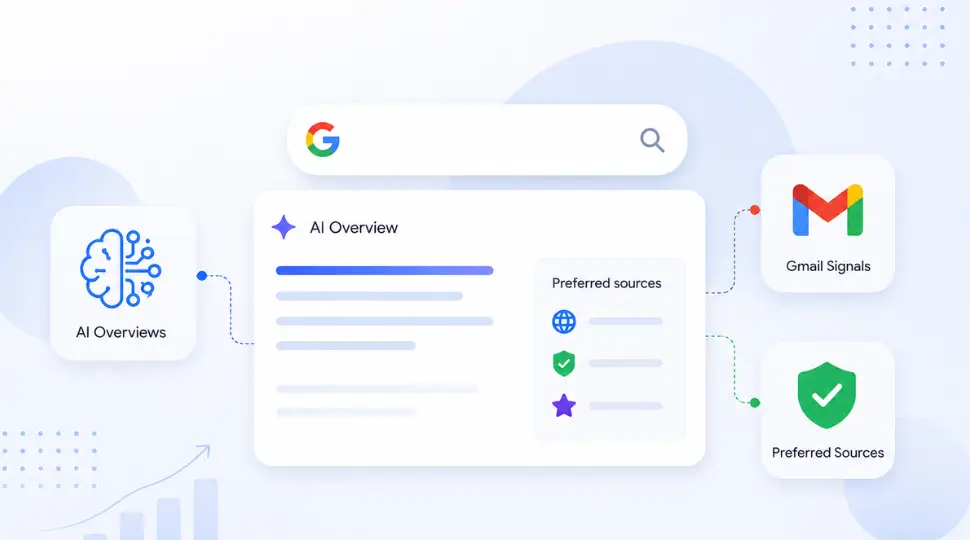
Search is evolving faster than ever, and Google's latest AI-driven updates are transforming how users discover information online. From Preferred Sources appearing inside AI Overviews to Gmail interactions influencing brand visibility, marketers must rethink their SEO strategies for the AI-first search era.
To better understand the ideas discussed in this article, consider strengthening your skills with a practical digital marketing course in Pune designed for real-world application.
Google's recent announcements reveal one clear trend: traditional rankings alone are no longer enough. Visibility inside AI-generated answers is becoming equally important.
The Rise of Google AI Overviews
Google's AI Overviews are changing the search landscape by offering users AI-driven answers straight in the search results. Google doesn't just show 10 blue links anymore, it now provides a summary of information from multiple sources.
This change opens new avenues for publishers and marketers to provide consumers with answers without having to visit each individual website.
Key Insight: AI-driven search experiences are becoming a significant part of Google's search landscape, highlighting their impact on information discovery and consumption. AI Overviews are now displayed for many informational queries, and are growing in numbers around the world, according to industry research.
Why This Matters
Businesses that previously focused solely on ranking positions must now consider:
- AI citation opportunities
- Brand recognition
- Source authority
- User trust signals
- Content quality and expertise
Google is gradually moving from a search engine to an answer engine.
Preferred Sources Expands into AI Search
Google's biggest rollout for the last few years is the introduction of AI Overviews and AI Mode, which are both part of the company's Preferred Sources.
Before, Preferred Sources primarily impacted the Top Stories and traditional search experience. Now users have the option to select sites they trust and wish to be displayed on AI-generated search results.
Key Insight: As of yet over 345,000 unique sources are Preferred Sources already selected by users, Google said. The number has increased significantly since the feature was made available to more users. Source: Search Engine Journal.
How Preferred Sources Work
Users can:
- Select websites they trust.
- Mark them as preferred.
- Receive visible labels when those sites appear in AI-generated answers.
- See more content from trusted publishers within AI search experiences.
For publishers, this introduces a new visibility signal that is influenced by audience loyalty rather than solely algorithmic rankings.
Why Preferred Sources Matter for SEO
Traditional SEO focused heavily on:
- Rankings
- Backlinks
- Keywords
- Technical optimization
While these factors remain important, Preferred Sources introduce a new layer of personalization.
New SEO Reality
Google increasingly rewards:
- Brand Recognition: Users who actively seek out your content create stronger trust signals.
- Audience Loyalty: Publishers with engaged audiences may gain additional visibility within AI-generated results.
- Trust and Authority: Being selected as a Preferred Source indicates credibility and relevance.
- Direct Relationships: Email subscribers, returning visitors, and community members may become even more valuable assets.
For SEO professionals, this means investing beyond rankings and building long-term brand equity.
Gmail Signals and AI Mode Brand Visibility
Another significant result was in the study of the Google Personal Intelligence feature. Brands linked to their user's personal data ecosystem were more likely to be mentioned in AI Mode recommendations, the study revealed.
The one that had the most impact was Gmail interactions out of all the personal signals tested.
What This Means
Gmail's interactions with users may increase the likelihood that the brand will be recommended by the AI, especially if the brand is used frequently. The more often users interact with a brand in Gmail, the more likely Google is to feature that brand in its AI-generated recommendations.
Examples include:
- Newsletter subscriptions
- Promotional emails
- Customer communications
- Brand engagement history
Key Insight: This is not to say that Gmail directly influences rankings. It does point to the increasing importance of the personalised search experience, however.
Implications for Marketers
Email marketing is no longer just a retention channel. It may increasingly support:
- Brand visibility
- AI search exposure
- Customer trust
- Personalized recommendations
Businesses with strong email marketing programs could benefit from increased exposure inside AI-powered search environments.
Sundar Pichai's Comments on AI Overview Quality
During a recent interview, Google CEO Sundar Pichai acknowledged that some AI Overview responses have been "more opinionated than they should be."
This statement is important because it confirms that Google continues refining AI-generated answers.
Key Takeaways
Google recognizes that:
- AI-generated summaries are not perfect.
- Improvements are still being made.
- Accuracy remains a priority.
- User trust is critical.
For publishers and businesses, this means AI search remains an evolving landscape with continuous changes ahead.
The Growing Importance of Brand Trust in AI Search
Trust is one of the big themes that has been appearing throughout Google's updates.
Being found is no longer the only aspect of SEO. It's about trust that allows them to be quoted.
What Trust Looks Like in AI Search
These are the qualities that brands can exhibit to be successful:
- Experience: Real-life experience and know-how.
- Expertise: Content created by subject matter experts.
- Authoritativeness: Industry recognition and trusted websites.
- Trustworthiness: Clear information, accurate information, and a positive user experience.
Key Insight: These principles are in line with Google's EEAT guidelines. The future belongs to brands with multiple audience touchpoints.
How SEO Professionals Should Adapt
A major theme emerging from Google's updates is trust. The future of SEO is no longer just about being found. It's about being trusted enough to be cited.
What Trust Looks Like in AI Search
Brands that succeed often demonstrate:
- Experience: Real-world expertise and practical knowledge.
- Expertise: Content created by subject matter experts.
- Authoritativeness: Recognition from industry peers and trusted websites.
- Trustworthiness: Transparent information, accurate content, and positive user experience.
The future belongs to brands with multiple audience touchpoints.
Key Takeaways for Businesses
Google's latest updates reveal several important trends:
| Trend | Impact |
|---|---|
| AI Overviews continue expanding. | Visibility inside AI-generated answers is becoming critical. |
| Preferred Sources now influence AI-generated answers. | Audience loyalty creates competitive advantages. |
| Gmail engagement may impact AI Mode visibility. | Email marketing supports brand visibility in AI search. |
| Brand trust is becoming a major ranking factor. | EEAT principles matter more than ever. |
| Audience loyalty creates competitive advantages. | Direct relationships with users drive visibility. |
The Bottom Line
The businesses that win in 2026 will be those that build trusted brands rather than simply chase rankings.
Conclusion
Google's recent changes in AI search feature shows that rankings aren't the only way to be visible. New variables affecting how users are finding brands online are debuting with Preferred Sources, Gmail engagement and AI-generated answers.
Trust, authority, audience relationships, and content quality are the key factors marketers need to consider as AI search continues to evolve. Brands that are built will have a better chance of being seen in Google's AI-driven ecosystem.
If you are thinking of enrolling in a digital marketing course in Thane or digital marketing classes in Pune, then you can find a cheaper digital marketing course in PCMC which will help you build strong fundamentals without going out of your pocket.
"The best marketing doesn't feel like marketing."
— Tom Fishburne
FAQs
1. What are Google Preferred Sources?
Preferred Sources are sites that users can choose when they trust. Google might then feature or give more weight to those sources in its AI Overviews and AI Mode.
2. Are Preferred Sources a factor in SEO?
Not directly. Yet they can enhance the visibility within AI-generated search experiences, potentially driving more traffic and brand visibility.
3. What impact will Gmail have on AI Mode visibility?
Brands with which users are familiar from Gmail might show up more often in personalized AI suggestions.
4. Is AI Overviews going to replace the traditional search results?
Not entirely. AI-driven answers are increasingly becoming a larger part of Google's search experience, although there are still traditional results.
5. What does AI search mean for marketers?
Marketers should prioritize EEAT, building brand authority, email marketing, and audience engagement, as well as producing valuable content that will be cited.