




Digital Marketing in 2026: From Data to Real Growth
Introduction
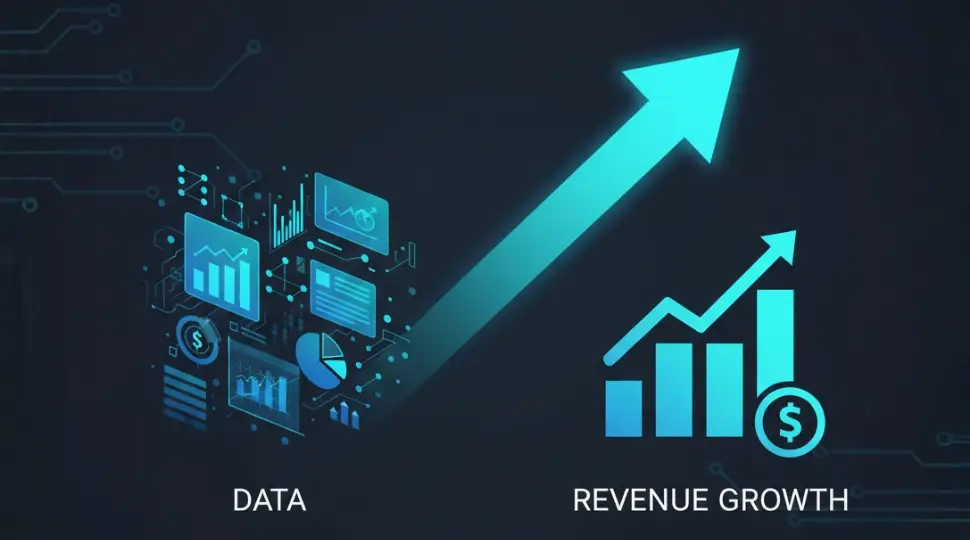
The digital marketing in 2026 does not involve gathering more data, or pursuing the newest buzzwords in AI. It is about gaining clarity, clarity in decision making, clarity in measuring performance, and clarity in business impact.
The modern day marketers are perched upon giant amounts of data in CRM systems, CDPs, Meta Business Suite, Google Ads, YouTube Ads, social sites such as Instagram and Facebook, and infinite customer touchpoints. Nevertheless, in spite of such abundance, a lot of teams continue to trouble themselves with transforming data into the meaningful.
The game has not changed its goal; it is no longer access to information but rather translation of insight into action. In this blog, we shall discuss how AI, analytics, and platform intelligence can allow contemporary digital marketing teams to bridge the gap without creatively adding layers to the problem.
To understand how platforms are evolving, explore our detailed guide on Instagram Algorithm Strategies 2026: How AI, Brand Authority & Intent Will Drive Growth, and see how a digital marketing course in Pune can help you apply these insights in real campaigns.
The State of Digital Marketing in 2026
The field of digital marketing has grown fast during the past ten years. The use of automation, AI, machine learning, and real-time analytics has changed the connection that a brand has with audiences.
And yet this development has caused a paradox:
- More platforms
- More dashboards
- More metrics
- More reports
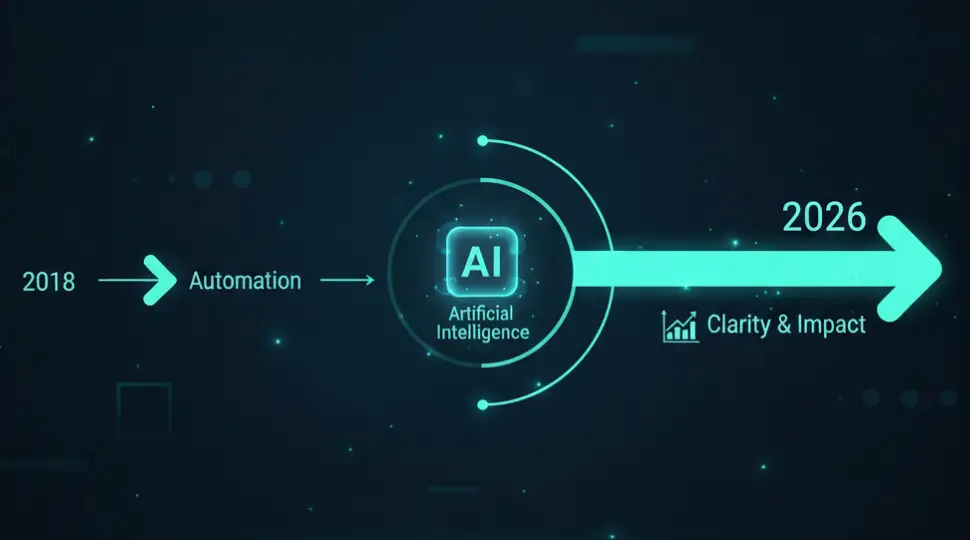
The state of digital marketing in 2026
Probably not more sound decisions.
In 2026, the marketing teams that will be high performers are not characterized by the quantity of data they gather, but the way they analyze and implement data.
The Reason More Data Is Not the Answer.
The Data Overload Problem
Modern marketers deal with:
- CRM and customer lifecycle information.
- CDP-based audience insights
- Performance measures of meta ads.
- Google Ads covers the search, discovery and demand gen.
- Instagram and Facebook interaction data.
- YouTube Ads view through and retention statistics.
The issue isn't scarcity. It's signal dilution.
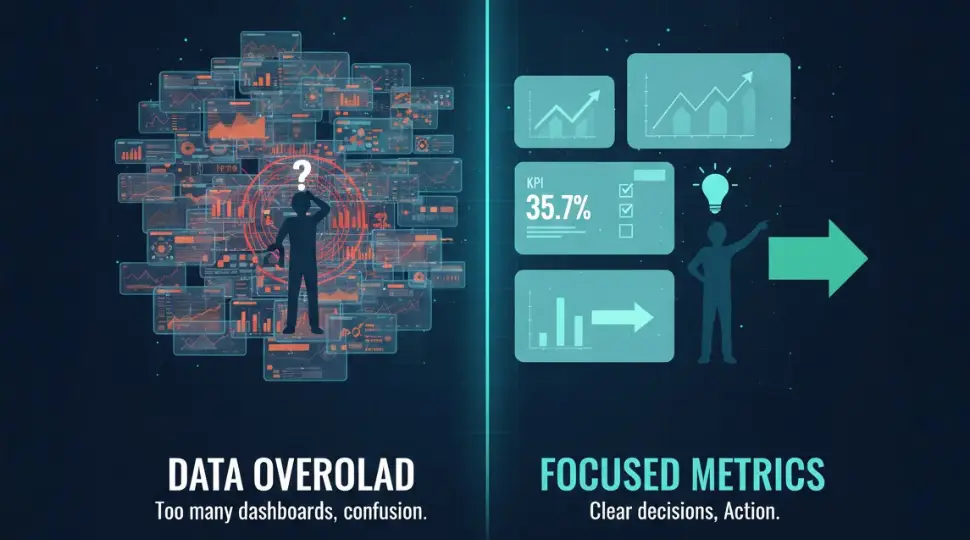
Why more data is not the answer in digital marketing 2026
The Real Gap: Translation
Most teams get stuck here:
Data → Dashboards → Confusion
What is lacking is an orderly direction:
Information → Wisdom → Intervention → Business Effect.
Data is noise until it results in action.
The New Marketing Funnel: From Signals to Revenue
Conventional funnels emphasized a lot on impressions and clicks. Funnels in 2026 are outcome-driven and signal-based.
The Modern Funnel resembles the following:
Signal Collection
- Interactional patterns of users on platforms.
- Search and content content consumption intent cues.
Insight Generation
- Analytics and statistics based pattern recognition.
- AI-assisted trend detection
Action Activation
- Budget shifts
- Creative optimization
- Audience refinement
Business Impact
- Revenue growth
- Retention improvement
- Brand equity
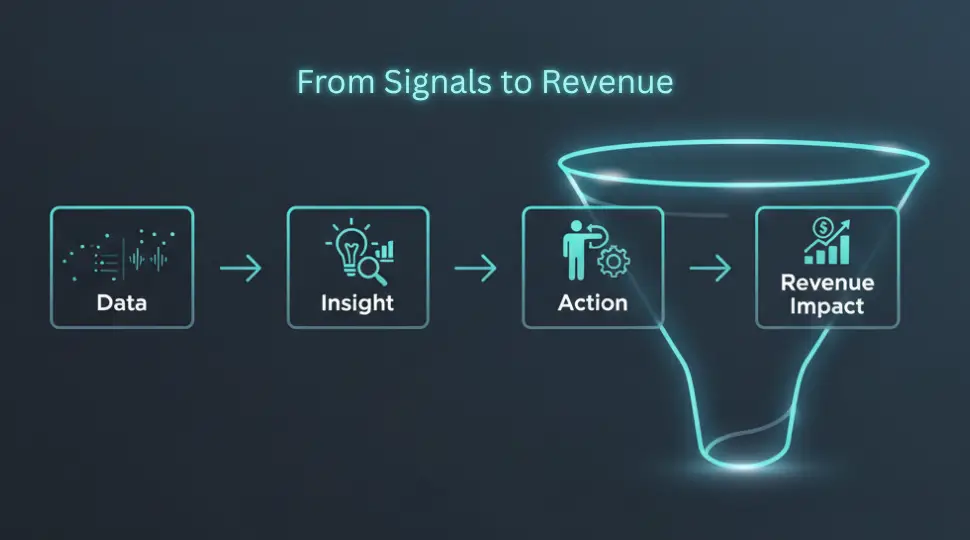
The new marketing funnel from signals to revenue in 2026
How AI Is Redefining Digital Marketing Strategy
Redefining Digital Marketing Strategy with AI.
The use of AI in online marketing is no more of an experiment: it is a given.
What AI Actually Does Well in 2026
AI helps marketers:
- Link dispersed information across systems.
- Predict performance trends
- Determine high intent audiences.
- Run real time optimized campaigns.
However, AI does not substitute strategy- it enhances transparency.
AI Is Not the Strategy
Winning teams use AI to:
- Reduce manual analysis
- Point out anomalies on reports.
- Subsurface clues that human beings would overlook.
They continue to be dependent on human judgment to make decisions what matters.
Platform-Wise Breakdown of Data-Driven Marketing
Meta Ads & Meta Business Suite
Meta Business Suite has turned out to be a strong centralization of data.
Key strengths in 2026:
- Cross-platform knowledge (Facebook + Instagram).
- Artificial intelligence in creative suggestions.
- Premium audience segmentation.
Best practice: Pay attention to lift and not ROAS. The meta ads are most effective when they are paired with the full-funnel approach.
Instagram and Facebook Marketing Intelligence.
Instagram and Facebook are not only social sites anymore, but commerce engines.
Key metrics to track:
- Engagement-to-conversion ratio
- Saves and shares (intent signals)
- Video retention
Instagram video performance in the short form has become a profound force in downstream conversions.
Google Ads: Discovery and Gen. Search and Demand.
Google Ads in 2026 is intent-first.
Search Campaigns
- Capture high-intent users
- Most suitable to bottom-funnel conversions.
Discovery Campaigns
- Combine consciousness with mild will.
- Efficient in the middle of funnel nurturing.
Demand Gen Campaigns
- AI-driven prospecting
- Cross-platform presence (YouTube, Gmail, Discover)
| Campaign Type | Funnel Stage | Goal |
|---|---|---|
| Search | Bottom | Conversions |
| Discovery | Mid | Intent Building |
| Demand Gen | Top | Awareness & Demand |
Pro tip: Do not analyze the channels of Google Ads separately. Cohesive reporting divulges the actual conversion path.
"AI doesn't replace human intelligence; it amplifies it."
— Satya Nadella, CEO, Microsoft
YouTube Ads/Video Intelligence.
During awareness and consideration, YouTube ads take the centre stage.
Metrics that matter:
- Watch time
- View-through conversions
- Brand lift studies
YouTube is not an option anymore, it is the basis of scalable awareness.
Awareness vs Demand: Rethinking Funnel Strategy
Most brands continue spending too much on bottom- funnel campaigns.
The 2026 Reality:
- Awareness builds demand
- Performance is maintained by demand.
- Optimization is a killer of growth.
Internet marketing strategies are best balanced when:
- Awareness (reach, recall) campaigns.
- Demand creation (demand campaigns)
- Search and retargeting (conversion capture)
Metrics That Matter in 2026
Vanity metrics are fading.
Measures That Do Make a Difference.
- Incremental revenue
- Blended Customer acquisition cost.
- Retention rate
- Lifetime value
- Conversion velocity
Metrics to Deprioritize
- Isolated CTR
- Platform-only ROAS
- Interaction with no business background.
| Business Metrics | Vanity Metrics |
|---|---|
| LTV | Likes |
| CAC | Impressions |
| Retention | CTR |
Analytics, Statistics & Reports That Drive Decisions
Even Smarter Reporting Frameworks.
The teams with high performance depend on:
- Unified dashboards
- Weekly insight summaries
- Action-oriented reports
Reports should include:
What happened? Instead of asking: What happened?
Why did it happen?
What should we do next?
The Role of Statistics
Statistics assist in justifying decisions:
- Trend significance
- Cohort behavior
- Attribution confidence
Real-World Examples of Data-to-Impact Marketing
Example 1: Demand Gen E-commerce Brand Scaling.
A D2C brand combined:
- YouTube Ads for awareness
- Mid-funnel discovery campaigns.
- Search on high intent capture.
Result:
- 32 percent assisted conversion growth.
- Lower blended CAC
A business to business software with meta ads and analytics.
With the changed emphasis on leads to qualified pipeline, the brand:
- Refined Meta audiences
- Aligned CRM and ad data
Result:
- Improved sales-marketing coordination.
- Higher close rates
How Winning Teams Operate Differently in 2026
Winning the digital marketing teams:
- Connect marketing to revenue groups.
- Use AI for insight, not ego
- Measure impact extrinsic to platforms.
- Always focus on being simple.
They do not consider data as a reporting burden but as a tool of decisions.
Common Mistakes Marketers Still Make
- Chasing every new feature
- Over-trusting automation
- Ignoring awareness metrics
- It can be reported without recommendations.
Best Practices for Sustainable Digital Marketing Growth
- Develop centralized analytics platforms.
- Make strategic campaigns.
- Examine weekly, but not monthly, review reports.
- Scale with confidence, test slowly.
Final Thoughts: Clarity Is the New Competitive Advantage
In 2026, there is no longer any digital marketing of more dashboards or more boisterous AI claims. It is all about insight, clarity of decision and clarity of effect.
Once your marketing plan can be used to continually transform data into insight, the insight into action, and the action into quantifiable business growth, then you are already beating the curve. That is not merely good marketing, but winning marketing.
Whether you're comparing a digital marketing course in Thane or exploring digital marketing classes in Thane, choosing an affordable digital marketing course in Thane can help you build practical, industry-ready skills.
FAQs
Q1. Is AI mandatory for digital marketing in 2026?
AI is not mandatory, but teams using AI-driven insights outperform those relying on manual analysis.
Q2. Which platform delivers the best ROI?
There is no single winner. Performance depends on funnel alignment across Meta ads, Google Ads, and YouTube Ads.
Q3. Are awareness campaigns still valuable?
Yes. Awareness fuels demand and reduces long-term acquisition costs.