




Customer-Centric Marketing Strategies That Actually Drive Business Growth
Introduction
Customers today have more choices, greater access to information and higher expectations than ever before. They do not simply compare products and prices; they evaluate how well a brand understands their needs, communicates with them and supports them throughout the buying journey.
This is why customer-centric marketing strategies have become essential for sustainable business growth. Instead of beginning with the question, “What do we want to sell?”, customer-centric businesses ask, “What problem is the customer trying to solve?”
That shift changes everything from content creation and advertising to customer service, product development and retention.
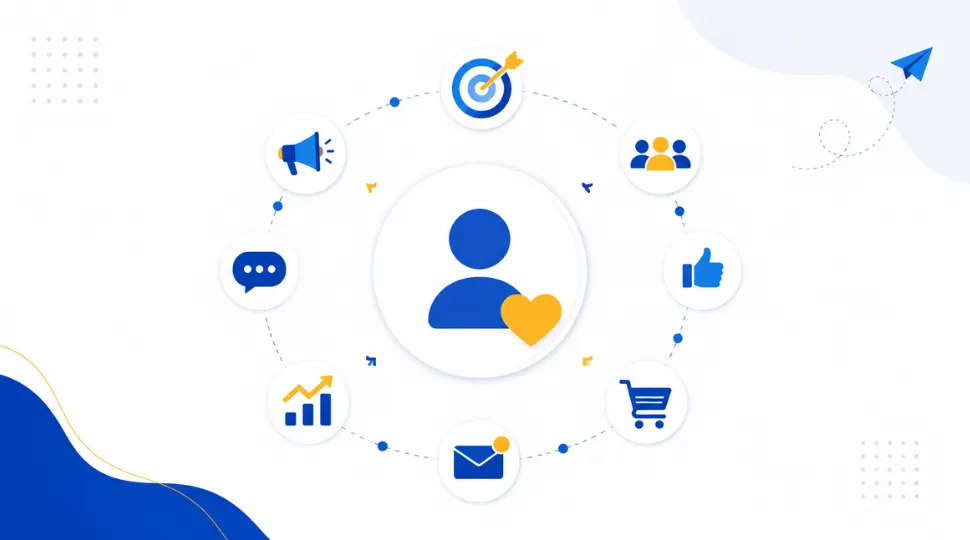
Customer-centric marketing is the practice of prioritising customers’ needs and interests across every interaction with a business. It aims to create relevant experiences that encourage satisfaction, loyalty, repeat purchases and recommendations.
If you're looking to implement these strategies professionally, partnering with a results-driven digital marketing agency like Digitize Brand can help accelerate your business growth through data-driven marketing solutions.
This guide explains how customer-centric marketing works, why it matters and which practical strategies businesses can use to improve engagement, conversion and long-term customer value.
Table of Contents
- What Is Customer-Centric Marketing?
- Why Customer-Centric Marketing Matters
- Traditional Marketing vs Customer-Centric Marketing
- Benefits of a Customer-Centric Strategy
- Customer-Centric Marketing Strategies That Work
- How to Build a Customer-Centric Marketing Framework
- Customer-Centric Marketing Across Digital Channels
- Important Metrics to Track
- Common Customer-Centric Marketing Mistakes
- Best Practices for Businesses
- Latest Customer-Centric Marketing Trends
- Future Outlook
- Actionable Implementation Checklist
- Frequently Asked Questions
- Conclusion
What Is Customer-Centric Marketing?
Customer-centric marketing is an approach in which every marketing decision is based on a clear understanding of the customer.
It involves learning about customers’:
- Problems and pain points
- Needs and expectations
- Buying motivations
- Online behaviour
- Preferred communication channels
- Previous interactions
- Product usage
- Feedback and objections
A customer-centric company does not view marketing as a one-time process for generating sales. It considers the entire relationship, including awareness, evaluation, purchase, onboarding, support, retention and advocacy.
Product-Centric vs Customer-Centric Thinking
A product-centric company focuses on product features and attempts to persuade customers to buy.
A customer-centric company first understands what customers are trying to achieve and then explains how the product can help them reach that outcome.
For example, a skincare brand may promote a moisturiser by talking only about ceramides, hyaluronic acid and packaging. A customer-centric campaign would connect those ingredients to problems such as dry skin, damaged skin barriers, irritation and discomfort.
The second approach is usually more relevant because it translates features into customer value.
Why Customer-Centric Marketing Matters
Modern customer journeys are rarely linear. People may discover a business through Instagram, compare alternatives on Google, watch reviews on YouTube, visit a website several times and finally contact the company through WhatsApp.
Google describes modern consumer journeys as dynamic behaviours involving searching, streaming, scrolling and shopping rather than a simple step-by-step funnel.
Businesses must therefore understand customer intent across multiple touchpoints.
Customer expectations are also increasing as technology improves. Salesforce reports that 73% of customers expect better personalisation as technology advances.
At the same time, customers expect brands to use their data responsibly. Personalisation without relevance feels intrusive, while personalisation built around genuine value can strengthen trust.
Traditional Marketing vs Customer-Centric Marketing
|
Area |
Traditional Marketing |
Customer-Centric Marketing |
|
Main focus |
Products and sales |
Customer needs and outcomes |
|
Communication |
One-way promotion |
Two-way conversation |
|
Audience |
Broad demographic groups |
Behavioural and intent-based segments |
|
Campaign goal |
Immediate transactions |
Customer lifetime value |
|
Content |
Product-led |
Problem- and solution-led |
|
Data usage |
Campaign reporting |
Journey and experience improvement |
|
Personalisation |
Basic or limited |
Contextual and behaviour-driven |
|
Success measurement |
Leads and sales |
Acquisition, satisfaction, retention and loyalty |
|
Customer feedback |
Collected occasionally |
Integrated continuously |
|
Relationship |
Transactional |
Long-term |
Traditional marketing is not always ineffective. Mass-reach advertising can still build awareness. However, businesses achieve stronger results when broad communication is supported by personalised journeys and customer feedback.
Benefits of Customer-Centric Marketing Strategies
1. Higher Customer Retention
Customers are more likely to stay with a company when they feel understood, supported and valued.
Salesforce reports that when companies meet customer expectations, 88% of customers are more likely to purchase again.
Retention is important because existing customers already understand the product, brand and purchasing process. Businesses can communicate with them more efficiently through replenishment reminders, loyalty benefits, useful content and relevant recommendations.
2. Better Customer Experience
Customer-centric marketing removes friction from the buying journey.
This could involve:
- Making product information easier to understand
- Reducing unnecessary form fields
- Improving mobile page speed
- Offering clearer pricing
- Providing faster support
- Showing useful reviews
- Sending relevant onboarding content
A better experience can improve both customer satisfaction and conversion rates.
3. More Relevant Marketing Communication
Customer-focused businesses do not send the same message to everyone.
They create messaging based on:
- Customer awareness level
- Purchase history
- Website behaviour
- Industry or business type
- Location
- Interests
- Previous engagement
- Funnel stage
This makes campaigns feel more useful and less like generic advertising.
4. Stronger Customer Loyalty
Customers become loyal when brands consistently deliver value, not merely when they offer discounts.
Loyalty may be strengthened through good products, reliable support, transparent policies, personalised recommendations and meaningful post-purchase communication.
5. Improved Marketing ROI
Personalisation can improve the efficiency of marketing investment. McKinsey reports that effective personalisation can reduce customer acquisition costs by as much as 50%, increase revenue by 5% to 15% and improve marketing ROI by 10% to 30%.
These figures should not be treated as guaranteed outcomes. Actual results depend on data quality, execution, market conditions, product-market fit and campaign maturity.
6. Better Products and Services
Customer feedback often reveals gaps that internal teams overlook.
Repeated complaints, support questions and search queries can help businesses:
- Improve product features
- Clarify instructions
- Create new service packages
- Correct confusing website content
- Identify unmet market needs
- Improve onboarding and delivery
Customer-Centric Marketing Strategies That Work
1. Conduct Meaningful Customer Research
Customer-centric marketing begins with research rather than assumptions.
Use multiple sources to understand what customers actually think:
- Customer interviews
- Website surveys
- Sales call recordings
- Support tickets
- Product reviews
- Social media comments
- Search queries
- CRM notes
- Website analytics
- Customer satisfaction surveys
- Competitor reviews
Ask Better Research Questions
Avoid only asking customers whether they liked a product.
Ask questions such as:
- What problem were you trying to solve?
- What made you start searching for a solution?
- What alternatives did you consider?
- What nearly stopped you from buying?
- What information helped you decide?
- What result did you expect?
- What was confusing during the buying process?
- What could improve your experience?
The exact language customers use can later improve landing pages, advertisements, emails and sales conversations.
2. Develop Evidence-Based Buyer Personas
Buyer personas are useful when they are based on real customer data.
A practical persona should include:
- Customer role
- Industry
- Business size
- Main goals
- Key challenges
- Buying triggers
- Common objections
- Preferred platforms
- Decision criteria
- Content preferences
- Purchase timeline
Avoid creating fictional personas based only on age, gender and broad interests. Demographics may provide context, but customer intent and behaviour usually offer stronger marketing insights.
B2B Persona Example
A performance marketing agency may identify two different buyers:
Startup founder: Wants rapid lead generation, has limited internal expertise and worries about wasting ad spend.
Marketing manager: Needs predictable reporting, qualified leads, internal approval and clear attribution.
Both may need the same service, but their objections, decision process and preferred content can differ significantly.
3. Map the Complete Customer Journey
Customer journey mapping helps businesses understand what customers need at each stage.
Awareness Stage
The customer recognises a problem but may not know the solution.
Useful content includes:
- Educational blogs
- Short videos
- Social media posts
- Industry reports
- Problem-focused advertising
Consideration Stage
The customer compares approaches, providers or products.
Useful content includes:
- Comparison pages
- Case studies
- Testimonials
- Webinars
- Product demonstrations
- Detailed guides
- Frequently asked questions
Decision Stage
The customer is ready to act but needs confidence.
Useful elements include:
- Transparent pricing
- Consultation calls
- Guarantees
- Reviews
- Free trials
- Clear implementation timelines
- Secure payment options
Retention Stage
The customer has purchased and now expects value.
Useful communication includes:
- Onboarding sequences
- Product education
- Usage tips
- Progress reports
- Customer support
- Replenishment reminders
- Renewal communication
Advocacy Stage
Satisfied customers may recommend the company.
Businesses can encourage advocacy through:
- Referral programmes
- Review requests
- Customer communities
- Loyalty benefits
- User-generated content campaigns
- Case study invitations
4. Segment Customers by Behaviour and Intent
Basic demographic targeting is often too broad.
Businesses can build more useful segments based on actions such as:
- First-time website visitors
- Returning visitors
- Product page viewers
- Cart abandoners
- Previous customers
- High-value customers
- Inactive customers
- Email subscribers
- Repeat purchasers
- Trial users
- Customers who requested support
Each segment should receive communication suited to its context.
For example, a person who abandoned a cart may need reassurance about delivery, return policies or product quality. A repeat customer may respond better to replenishment reminders or complementary product recommendations.
5. Personalise Experiences Without Becoming Intrusive
Personalisation is more than inserting a customer’s first name into an email.
Effective personalisation may include:
- Showing products based on browsing behaviour
- Recommending relevant educational content
- Changing landing page messaging by audience segment
- Sending reminders based on product usage cycles
- Providing location-specific information
- Adjusting offers based on lifecycle stage
- Personalising onboarding sequences
Fast-growing companies generate a greater share of their revenue from personalisation than slower-growing companies, according to McKinsey’s research.
However, personalisation must be transparent and respectful. Businesses should collect only necessary data, explain its purpose, obtain appropriate consent and protect customer privacy.
6. Build an Omnichannel Customer Experience
Customers expect connected experiences across search, social media, websites, email, WhatsApp, mobile applications and offline interactions.
An omnichannel strategy does not mean being active everywhere. It means creating consistency across the channels your customers genuinely use.
For example, a customer who submits a website enquiry should not have to explain the same requirement repeatedly to different departments.
To improve omnichannel experiences:
- Connect lead sources with the CRM.
- Maintain shared customer notes.
- Standardise essential brand messaging.
- Track customer interactions across channels.
- Ensure offers and policies remain consistent.
- Define response-time standards.
- Make it easy for customers to switch channels.
Customer journeys feel seamless when marketing, sales and customer support share context.
7. Create Content Around Customer Problems
Many companies create content around their own products instead of customers’ questions.
A customer-centric content strategy should answer:
- What problem is the customer experiencing?
- Why is it happening?
- What solutions are available?
- What mistakes should be avoided?
- How can alternatives be compared?
- What results are realistic?
- What should the customer do next?
Customer-Centric SEO Example
Instead of publishing only a page titled “Our SEO Services,” an agency could create content such as:
- Why is my website traffic declining?
- How long does SEO take to show results?
- SEO vs Google Ads: Which should a small business choose?
- Why is my website ranking but not generating leads?
- How do I measure SEO ROI?
These topics match genuine customer concerns while creating natural pathways to service pages.
8. Use Voice-of-Customer Messaging
Voice-of-customer messaging uses the words and phrases customers naturally use to describe their problems.
These phrases can be collected from:
- Reviews
- Testimonials
- Survey responses
- Sales calls
- Search queries
- Chat conversations
- Community discussions
- Support requests
Suppose customers repeatedly say, “We are getting leads, but they are not serious.” That phrase may be stronger than a generic headline such as “Improve Lead Quality.”
Customer language can make marketing messages feel more familiar and relevant.
9. Align Marketing, Sales and Customer Support
Customer-centricity fails when departments work independently.
Marketing may promise one outcome, sales may communicate another and support may lack the context to fulfil either promise.
Build alignment by sharing:
- Customer personas
- Qualification criteria
- Campaign messaging
- Common objections
- Sales insights
- Support issues
- Retention data
- Customer feedback
- Churn reasons
HubSpot describes customer-centric alignment between sales and marketing as a way to create a consistent customer experience across the buying process.
Regular cross-functional reviews can reveal where customer expectations are being created, met or broken.
10. Improve the Post-Purchase Experience
Marketing should not stop after a conversion.
A strong post-purchase journey may include:
- Welcome communication
- Clear next steps
- Setup instructions
- Training videos
- Delivery updates
- Product usage guidance
- Progress reviews
- Support access
- Feedback requests
- Renewal reminders
Post-purchase communication reduces confusion and helps customers achieve the result they expected.
For an agency, this may involve onboarding documents, access checklists, campaign timelines, reporting schedules and clearly defined responsibilities.
For an ecommerce company, it may involve order updates, usage instructions, care information and replenishment reminders.
11. Build a Continuous Customer Feedback System
Do not collect feedback only once a year.
Create a consistent system using:
- Post-purchase surveys
- Customer satisfaction scores
- Net Promoter Score
- Review monitoring
- Support-ticket categorisation
- Customer interviews
- Cancellation surveys
- Social listening
- Sales feedback
The most important step is closing the feedback loop.
Tell customers what was changed, why it was changed and how it improves their experience. This shows that feedback is not merely being collected for reporting.
12. Use AI to Support, Not Replace, Customer Understanding
AI can help businesses analyse large volumes of customer data, detect patterns and recommend next actions.
Practical applications include:
- Customer segmentation
- Churn prediction
- Recommendation engines
- Sentiment analysis
- Lead scoring
- Chatbot support
- Content recommendations
- Email timing optimisation
- Next-best-action modelling
McKinsey reports that AI-powered next-best-experience programmes can potentially improve satisfaction, increase revenue and reduce service costs when implemented effectively.
However, AI-generated interactions should still be monitored by humans. Sensitive complaints, complex problems and emotional conversations often require empathy and judgement that automation alone may not provide.
How to Build a Customer-Centric Marketing Framework
Step 1: Define the Customer Outcome
Identify what success means from the customer’s perspective.
Do customers want more leads, clearer skin, faster delivery, easier accounting, improved skills or lower operating costs?
Step 2: Collect Customer Data
Combine quantitative and qualitative information from analytics, CRM records, surveys, reviews and conversations.
Step 3: Identify Important Segments
Group customers by intent, behaviour, needs or lifecycle stage.
Step 4: Map Key Touchpoints
List every important interaction from first discovery to repeat purchase.
Step 5: Identify Friction
Find areas where customers become confused, delayed, disappointed or inactive.
Step 6: Prioritise Improvements
Start with issues that affect both customer experience and business performance.
Step 7: Create Relevant Campaigns
Build content, advertising and automation around customer context.
Step 8: Test and Measure
Use A/B testing, cohort analysis and customer feedback to evaluate results.
Step 9: Share Insights Across Teams
Ensure that marketing, sales, product and support teams learn from the same customer information.
Step 10: Improve Continuously
Customer expectations change. Review the strategy regularly instead of treating it as a one-time project.
Customer-Centric Marketing Across Digital Channels
SEO
Use search intent to understand what customers want at different funnel stages. Build content clusters around customer problems instead of publishing disconnected keyword-focused articles.
Google Ads
Match keywords, ad copy and landing pages to the customer’s immediate intent. Avoid sending every visitor to the homepage.
Meta Ads
Create different messages for cold audiences, engaged users, website visitors and existing customers.
Email Marketing
Segment subscribers and send content based on interests, behaviour and lifecycle stage.
Social Media
Use comments, polls, direct messages and social listening to understand customer sentiment rather than treating social platforms only as broadcasting channels.
Website Experience
Improve navigation, mobile usability, page speed, calls to action, forms, trust signals and product information.
Marketing Automation
Automate repetitive actions while preserving context. Automation should make communication more timely, not make the customer feel ignored.
Metrics to Measure Customer-Centric Marketing
|
Metric |
What It Measures |
|
Customer Acquisition Cost |
Cost of acquiring a new customer |
|
Conversion Rate |
Percentage of visitors who complete an action |
|
Customer Lifetime Value |
Total expected value of a customer relationship |
|
Repeat Purchase Rate |
Percentage of customers who buy again |
|
Retention Rate |
Percentage of customers who remain active |
|
Churn Rate |
Percentage of customers who leave |
|
Net Promoter Score |
Likelihood of customer recommendations |
|
Customer Satisfaction Score |
Satisfaction after an interaction |
|
First Response Time |
Speed of initial customer support |
|
Resolution Time |
Time required to solve customer problems |
|
Engagement Rate |
Interaction with content and communication |
|
Revenue per Customer |
Average revenue generated by each customer |
Do not evaluate customer-centricity through only one metric. A campaign may generate strong short-term revenue while damaging long-term trust through irrelevant communication or poor service.
Common Customer-Centric Marketing Mistakes
Collecting Data Without Using It
Businesses often have analytics, CRM data, reviews and survey results but fail to turn them into decisions.
Over-Personalising Communication
Using personal information unnecessarily can make customers uncomfortable. Personalisation should provide clear value.
Focusing Only on Acquisition
A business cannot claim to be customer-centric if it spends heavily on new leads but neglects onboarding, support and retention.
Treating Every Customer the Same
Different customer segments have different needs, objections and levels of awareness.
Automating Poor Processes
Automation cannot fix unclear policies, weak messaging or broken customer journeys. It may simply make poor experiences happen faster.
Ignoring Negative Feedback
Complaints can reveal valuable operational problems. Removing or dismissing them prevents improvement.
Using Vanity Metrics
Likes, impressions and traffic can be useful, but they should not replace metrics connected to customer outcomes and business value.
Best Practices for Customer-Centric Marketing
- Start with customer problems, not marketing channels.
- Combine behavioural data with direct customer conversations.
- Make promises that operations can realistically fulfil.
- Keep messaging consistent across departments.
- Review customer journeys regularly.
- Prioritise mobile-friendly experiences.
- Explain how customer data is collected and used.
- Personalise only when it improves relevance.
- Measure retention as well as acquisition.
- Make feedback easy to provide.
- Share customer insights across teams.
- Test improvements before scaling them.
“The aim of marketing is to know and understand the customer so well the product or service fits them and sells itself.” — Peter Drucker
This quote captures the core principle of customer-centric marketing. Effective marketing is not simply about increasing promotional pressure. It is about developing such a strong understanding of customer needs that the message, offer and experience naturally become more relevant.
Latest Customer-Centric Marketing Trends
AI-Powered Personalisation
Businesses are increasingly using AI to determine the most relevant message, channel, timing and offer for each customer.
First-Party Data Strategies
As privacy expectations rise, companies are placing greater value on data collected directly through websites, CRM platforms, purchases, surveys and customer interactions.
Responsible first-party data strategies should create a two-way value exchange in which customers receive a better experience in return for the information they willingly share.
Two-Way Brand Communication
Salesforce reports that 83% of marketers recognise the move towards personalised, two-way messaging, although only one in four are satisfied with how effectively they use data to support those interactions.
Predictive Customer Journeys
Instead of waiting for customers to complain or leave, businesses are using predictive models to identify likely needs, churn risks and next actions.
Human-Centred AI
As AI-generated content becomes common, brands will need a stronger point of view, human creativity and trustworthy communication to remain distinctive. HubSpot’s 2026 marketing research highlights trust, relevance and clear brand perspective as important growth drivers in an AI-saturated market.
Future Outlook
The future of customer-centric marketing will combine technology with empathy.
AI will make it easier to analyse behaviour, personalise journeys and automate decisions at scale. However, customer trust will depend on how responsibly businesses use these capabilities.
Successful brands will likely be those that can:
- Use customer data transparently
- Create genuinely relevant experiences
- Connect online and offline interactions
- Respond quickly without losing empathy
- Balance automation with human support
- Measure long-term customer value
- Turn feedback into visible improvements
Technology will improve the speed and precision of marketing, but customer understanding will remain the foundation.
Actionable Customer-Centric Marketing Checklist
Use this checklist to assess your current strategy:
- We have clearly defined customer segments.
- Our personas are based on real data.
- We understand major customer pain points.
- We have mapped the complete customer journey.
- Our content answers genuine customer questions.
- Our landing pages match campaign intent.
- Our CRM records customer interactions accurately.
- Marketing, sales and support share customer insights.
- We personalise communication responsibly.
- We have a consistent feedback system.
- We measure retention and lifetime value.
- Our website is mobile-friendly.
- Our post-purchase experience is documented.
- We have identified the main sources of customer friction.
- We regularly test improvements.
Conclusion
Customer-centric marketing is not a single campaign, tool or personalisation tactic. It is a business-wide approach that begins with understanding customers and continues through every stage of their relationship with a brand.
The most effective customer-centric marketing strategies combine research, segmentation, journey mapping, relevant content, responsible personalisation, connected communication and continuous feedback.
Businesses should begin by identifying one meaningful source of customer friction. Improving that experience can produce better results than launching another generic campaign.
Whether you're improving your SEO, scaling Google Ads, launching Meta campaigns, or building a stronger online presence, working with an experienced digital marketing agency like Digitize Brand can help turn your marketing goals into measurable business growth.
Digitize Brand helps businesses build marketing systems around real customer behaviour, measurable performance and long-term growth. A focused strategy can help you attract the right audience, create better experiences and convert customer insights into practical marketing decisions.
Frequently Asked Questions
1. What is a customer-centric marketing strategy?
A customer-centric marketing strategy places customer needs, expectations and experiences at the centre of marketing decisions. It focuses on building long-term relationships rather than only generating immediate sales.
2. Why is customer-centric marketing important?
It helps businesses improve relevance, customer satisfaction, retention, loyalty and marketing efficiency. It can also reveal opportunities to improve products, services and customer support.
3. What is an example of customer-centric marketing?
An ecommerce brand sending product recommendations based on previous purchases and usage needs is one example. The recommendation should help the customer rather than simply promote the highest-priced item.
4. How do you build a customer-centric strategy?
Begin by researching customers, creating evidence-based personas, mapping their journey, identifying friction, segmenting audiences and creating relevant communication for each lifecycle stage.
5. What is the difference between customer-centric and product-centric marketing?
Product-centric marketing focuses mainly on features and sales. Customer-centric marketing begins with customer problems and explains how a product or service creates a desired outcome.
6. How does customer data support customer-centric marketing?
Customer data helps businesses understand behaviour, preferences, purchase history, engagement and pain points. It can support better segmentation, personalisation and customer journey optimisation.
7. How can small businesses become more customer-centric?
Small businesses can begin by speaking directly with customers, reviewing feedback, improving response times, simplifying the buying process and creating content around common customer questions.
8. Is personalisation the same as customer-centric marketing?
No. Personalisation is one component of customer-centric marketing. A company may personalise advertisements while still providing poor support or an inconvenient customer experience.
9. Which metrics measure customer-centricity?
Useful metrics include customer satisfaction, retention rate, repeat purchase rate, customer lifetime value, churn rate, Net Promoter Score, response time and resolution time.
10. How does customer-centric marketing improve retention?
It improves retentioan by ensuring that customers receive relevant communication, dependable service, useful support and ongoing value after the initial purchase.
11. Can AI improve customer-centric marketing?
Yes. AI can help with segmentation, recommendations, lead scoring, sentiment analysis and predictive journeys. Human supervision is still important for accuracy, empathy and responsible data use.
12. What role does a digital marketing agency play?
A digital marketing agency can help businesses research audiences, analyse customer journeys, improve campaigns, connect marketing channels, implement tracking and build data-driven acquisition and retention strategies.
Conclusion
Customer-centric marketing is one of the most valuable skills in modern digital marketing. By understanding customer needs, using data effectively, and creating personalized experiences, marketers can build stronger relationships and achieve better business results.
If you want to master these practical strategies through real-world projects, a digital marketing course in Pune , digital marketing course in Thane , or an affordable digital marketing course in PCMC from Digital Trainee can help you develop industry-ready skills and build a successful career in digital marketing.