




AI Judgment Layer: Why Strategic Thinking Matters More Than AI Automation
Introduction
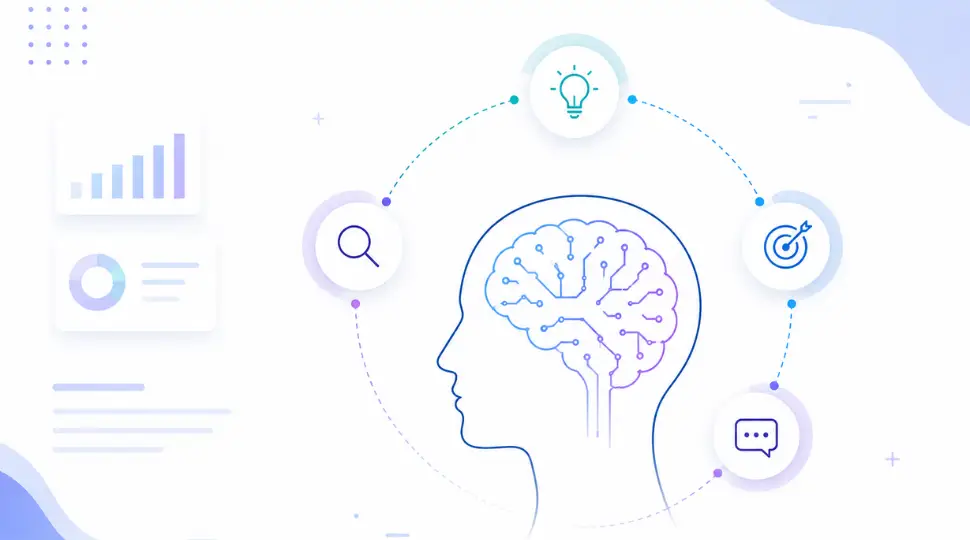
The biggest opportunity in AI is no longer generating more content. It is making better decisions. As artificial intelligence becomes deeply embedded in every marketing workflow, professionals who rely solely on automation risk being outpaced by those who use AI for strategic thinking.
The AI Judgment Layer represents a shift from using AI as a content factory to using it as a decision-making partner. To understand how this concept applies to modern marketing, you can sharpen your skills with a digital marketing course in Pune that focuses on real-world strategy and AI integration.
This guide explores what the AI Judgment Layer is, why it creates more value than execution-layer automation, and how marketers and SEO professionals can build judgment-layer workflows into their daily operations.
What Is the AI Judgement Layer?
The AI Judgment Layer refers to the strategic use of artificial intelligence for:
- Decision-making
- Critical thinking
- Evaluating options
- Scenario planning
- Problem-solving
- Strategic discussions
Instead of simply generating content or summarizing information, professionals use AI as a thought partner to improve the quality of decisions.
The Six Ways People Use AI Today
Research examining real-world AI usage identified six primary modes of interaction:
| AI Mode | Description | Examples |
|---|---|---|
| Writing | Content creation and drafting | Blog creation, email drafting, ad copy generation, social media content |
| Identifying | Research and information retrieval | Research summaries, topic explanations, data interpretation, information retrieval |
| Deciding | Evaluating choices and scenarios | Strategic planning, resource allocation, risk assessment |
| Ideating | Generating strategic ideas | Opportunity discovery, trend forecasting, gap analysis |
| Talking | Conversation and rehearsal | Client meeting prep, sales practice, objection handling |
| Critiquing | Reviewing and evaluating work | Campaign review, strategy assessment, weakness identification |
Most users spend the majority of their time in the first two categories. While these activities improve productivity, they mainly operate at the execution level.
Key Insight: Research shows that content creation and information retrieval remain the most common organisational AI use cases.
Understanding the Execution Layer
The execution layer focuses on producing outputs.
Examples include:
- Writing articles
- Creating reports
- Generating social posts
- Summarizing documents
- Producing marketing assets
These tasks are valuable, but they are becoming increasingly automated. As AI models continue improving, the ability to generate content quickly becomes less of a competitive advantage because everyone has access to similar tools.
Characteristics of Execution-Layer Work:
- High volume
- Repeatable processes
- Easy automation
- Short-term productivity gains
Organizations that rely solely on execution-layer AI may improve efficiency but struggle to create long-term differentiation.
Why the Judgment Layer Creates Real Value
The judgment layer involves applying human expertise alongside AI insights.
This includes:
- Evaluating risks
- Challenging assumptions
- Exploring alternatives
- Making strategic decisions
- Identifying hidden opportunities
Unlike content generation, judgment cannot be fully automated. This is where experience, context, and critical thinking combine with AI capabilities.
Key Insight: Studies suggest that organizations achieving the greatest AI success are redesigning workflows around decision-making rather than simply automating existing tasks.
The Four High-Value AI Modes
1. Deciding Mode
Deciding mode uses AI to evaluate choices and test assumptions.
Example: An SEO manager may ask:
- Which content categories deserve more investment?
- Which keywords offer the greatest visibility opportunity?
- Should resources be allocated toward SEO or AI search optimization?
Instead of providing a direct answer, AI can help compare scenarios and highlight potential blind spots.
Benefits:
- Better strategic decisions
- Reduced bias
- More structured thinking
- Improved resource allocation
2. Ideating Mode
Many professionals use AI for content ideas. However, true ideation goes much deeper.
Strategic Ideation Questions:
- What authority gaps exist within our industry?
- Which customer concerns remain unanswered?
- What topics are competitors dominating?
- How can we create unique expertise signals?
This approach uncovers opportunities that traditional keyword research may overlook.
Example: A digital marketing agency could use AI to identify emerging AI search trends before competitors target them.
3. Critiquing Mode
Critiquing mode turns AI into a reviewer rather than a creator.
Questions AI Can Help Evaluate:
- Is this content persuasive enough?
- Are there weaknesses in our strategy?
- What objections might customers have?
- Where are our messaging gaps?
This process helps identify issues before campaigns go live.
Why It Matters: Internal teams often develop blind spots. AI can provide a neutral perspective that highlights overlooked weaknesses.
4. Talking Mode
Talking mode treats AI as a conversation partner.
Practical Uses:
- Client meeting preparation
- Sales presentation practice
- Leadership communication rehearsal
- Objection handling exercises
For example, an SEO consultant can simulate a difficult client conversation regarding declining organic traffic and prepare responses in advance. This improves confidence and communication effectiveness.
AI Judgment Layer in SEO and Digital Marketing
The AI Judgment Layer is becoming increasingly important in modern search marketing.
| Traditional SEO Approach | Modern AI-Enhanced SEO Approach |
|---|---|
| Keyword research | Entity analysis |
| Content production | Authority gap identification |
| Link building | Search intent forecasting |
| Technical optimization | Competitive scenario modeling |
| — | AI search visibility planning |
As search engines increasingly incorporate AI-generated experiences, marketers need stronger judgment skills to determine where visibility opportunities exist.
Real-World Examples
Imagine two digital marketers.
Marketer A
Uses AI to:
- Write blogs
- Create captions
- Generate email drafts
Marketer B
Uses AI to:
- Analyze competitor positioning
- Predict emerging trends
- Identify content gaps
- Critique campaigns
- Prepare strategic presentations
Key Insight: Both use the same AI tools. However, Marketer B gains significantly greater strategic value because they operate within the judgement layer.
How Businesses Can Build Judgment-Layer Workflows
Step 1: Audit Current AI Usage
Track AI activities for one week. Categorize them into:
- Writing
- Identifying
- Deciding
- Ideating
- Critiquing
- Talking
Step 2: Increase Strategic Usage
Aim to dedicate more AI sessions toward:
- Decision support
- Opportunity discovery
- Strategic planning
Step 3: Create Review Loops
Before launching any campaign:
- Ask AI to critique it
- Challenge assumptions
- Identify weaknesses
Step 4: Use Scenario Planning
Prompt AI with multiple business scenarios.
- Best-case outcomes
- Worst-case outcomes
- Competitive responses
- Budget constraints
Step 5: Train Teams
Teach employees how to:
- Ask better questions
- Interpret AI outputs
- Validate recommendations
- Make informed decisions
Common Mistakes to Avoid
Using AI Only for Content Generation
Many businesses stop at blog creation and copywriting.
Accepting AI Outputs Without Validation
AI recommendations should support judgment, not replace it.
Ignoring Context
The best AI outcomes come from providing detailed business information.
Focusing on Speed Alone
Efficiency matters, but strategic thinking creates sustainable growth.
The Future of AI-Powered Decision Making
The future belongs to professionals who combine AI efficiency with human judgment.
As AI becomes increasingly capable of handling routine tasks, organizations will place greater value on:
- Strategic thinking
- Creativity
- Critical analysis
- Leadership
- Decision-making
The professionals who master the AI Judgment Layer will be positioned to lead rather than simply execute.
Conclusion
The biggest opportunity in AI is no longer generating more content. It is making better decisions.
Organizations that continue using AI solely for writing and automation may achieve short-term efficiency gains, but those that embrace the AI Judgment Layer will unlock long-term strategic advantages.
The future belongs to professionals who can combine human expertise with AI-powered reasoning, critique, ideation, and decision-making.
Whether you are exploring a digital marketing course in Thane or comparing digital marketing classes in Pune, choosing an affordable digital marketing course in PCMC can help you build strong fundamentals without overextending your budget.
Businesses that master the AI Judgment Layer today will be better prepared for the next generation of search, marketing, and digital transformation.
"The best way to predict the future is to create it."
— Peter Drucker
FAQs
1. What is the AI Judgment Layer?
The AI Judgment Layer refers to using AI for strategic thinking, decision-making, analysis, and critical evaluation rather than simple content generation.
2. Why is the AI Judgment Layer important?
It helps professionals create unique value, improve decisions, and develop competitive advantages that cannot be easily automated.
3. How does the AI Judgment Layer help SEO?
It supports authority gap analysis, strategic planning, AI search optimization, content prioritization, and competitive intelligence.
4. Is AI replacing human judgment?
No. AI enhances human judgment by providing insights, perspectives, and analysis, but final decisions still require human expertise.
5. What industries benefit most from the AI Judgment Layer?
Marketing, SEO, consulting, finance, technology, operations, and leadership roles benefit significantly from judgment-layer AI workflows.