




AI Ad Strategy: Why Your Data Determines Advertising Success
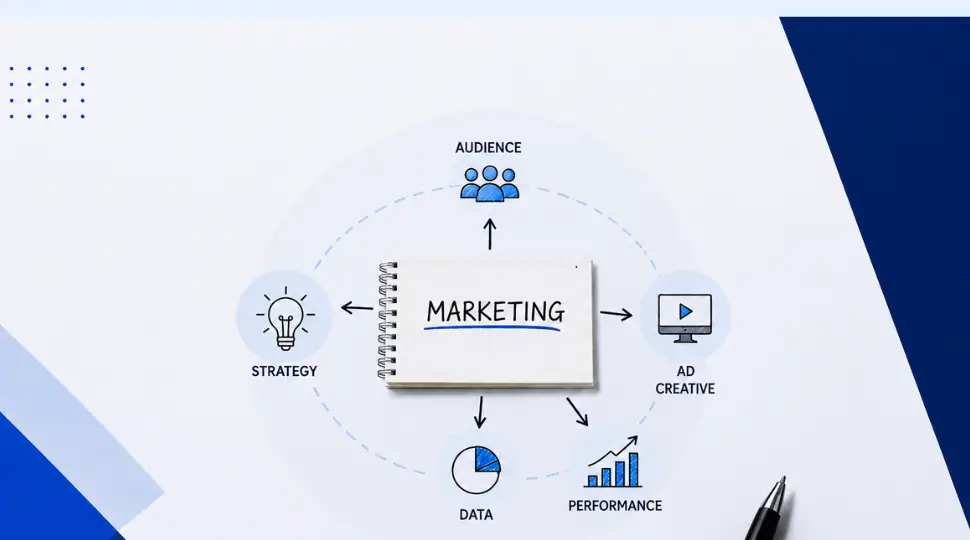
According to industry reports, millions of advertisers now use AI-driven campaign automation, making data quality one of the most important competitive advantages in digital marketing. Successful brands understand that AI isn't replacing strategy—it is magnifying it.
What Is an AI Ad Strategy?
An AI Ad Strategy refers to the use of artificial intelligence and machine learning technologies to automate and optimize advertising campaigns.
Modern AI advertising platforms can:
- Analyze user behavior
- Predict purchasing intent
- Optimize bidding automatically
- Improve audience targeting
- Generate creative variations
- Allocate budgets dynamically
Instead of manually adjusting campaigns, marketers provide goals and data while AI handles execution.
However, automation does not eliminate the need for strategic thinking. AI systems still require accurate signals to make effective decisions.
Why This Matters
AI Ad Strategy is transforming how businesses approach digital marketing. Understanding how to leverage AI effectively while maintaining data quality is essential for modern advertisers who want to stay competitive.
To better understand the ideas discussed in this article, consider strengthening your skills with a practical digital marketing course in Pune designed for real-world application.
Why AI Advertising Depends on Data Quality
AI Learns from the Information You Provide
AI models operate by identifying patterns in data. When data quality is strong, AI can make highly accurate decisions.
Examples of valuable data include:
- Purchase history
- Customer lifetime value
- CRM records
- Conversion tracking
- Website engagement metrics
- Customer demographics
When this information is incomplete or inaccurate, AI optimizes for the wrong outcomes.
Think of AI as a Formula 1 race car. Even the fastest vehicle cannot win if it's given incorrect directions.
The "Garbage In, Garbage Out" Principle
One of the oldest concepts in data science remains true today:
Poor data produces poor results.
Businesses often assume AI will fix campaign inefficiencies automatically. In reality, automation simply accelerates existing patterns.
- If your conversion tracking is flawed, AI will optimize toward flawed conversions.
- If your customer data is outdated, AI will target the wrong audience.
This phenomenon has been described as "accelerated inefficiency" in modern advertising.
The Hidden Danger
Automation optimizes for what it can measure. If your data quality is poor, the system will naturally make decisions based on incomplete or incorrect information — amplifying mistakes rather than fixing them.
The Rise of Automated Advertising Platforms
Google Performance Max
Google's Performance Max campaigns use AI to automate:
- Audience targeting
- Bidding
- Creative combinations
- Channel selection
The platform uses machine learning across:
- Search
- YouTube
- Display
- Discover
- Gmail
- Maps
Recent updates have introduced audience exclusions and improved reporting to address transparency concerns.
Meta Advantage+
Meta's Advantage+ campaigns automatically optimize:
- Audience selection
- Placements
- Budget allocation
- Creative delivery
Meta reports significant improvements in return on ad spend for advertisers using AI-powered optimization, though performance heavily depends on first-party data quality.
TikTok Smart+
TikTok has rapidly expanded AI automation through Smart+ campaigns.
The platform leverages behavioral signals and machine learning to improve campaign efficiency while reducing manual management requirements.
Platform Comparison
| Platform | AI Features | Data Dependency |
|---|---|---|
| Google Performance Max | Cross-channel automation, audience targeting, creative optimization | High - requires strong conversion tracking |
| Meta Advantage+ | Automated audience selection, placement optimization | High - relies on first-party data quality |
| TikTok Smart+ | Behavioral signal analysis, machine learning bidding | Medium-High - behavioral data focused |
The Hidden Risks of Poor Data
Misaligned Targeting
One of the biggest risks is inaccurate audience targeting.
For example:
A business may accidentally target existing customers with acquisition campaigns due to poor CRM integration.
This leads to:
- Wasted ad spend
- Inflated conversion metrics
- Reduced growth opportunities
Attribution Errors
Many marketers still rely heavily on last-click attribution.
However, AI-driven customer journeys are becoming increasingly complex.
Studies suggest traditional attribution models may fail to capture a significant portion of conversions influenced by automated systems.
Over-Reliance on Automation
Automation can create a false sense of confidence.
Without human oversight, marketers may:
- Ignore declining lead quality
- Miss reporting inaccuracies
- Overlook customer experience issues
- Optimize toward vanity metrics
Critical Warning
AI systems are only as good as the data they receive. Poor data quality doesn't just reduce performance — it can actively misdirect your entire advertising strategy and waste significant budget.
First-Party Data: The New Competitive Advantage
Why First-Party Data Matters
As privacy regulations continue to evolve, businesses are losing access to many third-party tracking capabilities.
This makes first-party data increasingly valuable.
Examples include:
- Email subscribers
- Customer purchase history
- CRM records
- Loyalty program data
- Website user behavior
First-party data helps AI systems understand real customer value rather than relying on assumptions.
Creating a Strong Data Foundation
Businesses should prioritize:
Accurate Conversion Tracking
Ensure all meaningful business actions are tracked correctly.
CRM Integration
Connect advertising platforms directly with customer relationship management systems.
Data Hygiene
Regularly remove:
- Duplicate records
- Inactive contacts
- Incorrect information
Customer Segmentation
Organize audiences based on:
- Purchase frequency
- Lifetime value
- Product interests
- Engagement levels
Best Practice
Investing in first-party data infrastructure is one of the highest-ROI activities for modern advertisers. Clean, structured data enables AI to perform at its full potential.
Human Expertise vs. AI Automation
AI Cannot Replace Strategic Thinking
AI can process vast amounts of information faster than humans.
What it cannot do effectively is:
- Understand business context
- Create brand positioning
- Interpret market shifts
- Develop creative strategy
- Define long-term objectives
Human marketers remain essential for these responsibilities.
The Role of Marketing Professionals
Successful marketers focus on:
- Defining business goals
- Establishing measurement frameworks
- Improving data quality
- Evaluating AI recommendations
- Maintaining brand consistency
The best results occur when human expertise and machine intelligence work together.
Key Insight
AI is a powerful tool, but it requires human guidance to deliver meaningful business outcomes. The most successful advertisers combine data-driven automation with strategic human oversight.
How AI Impacts Campaign Performance
Positive Outcomes
When properly implemented, AI can:
- Improve efficiency
- Increase ROAS
- Reduce manual workload
- Scale campaigns faster
- Discover hidden audience opportunities
Potential Challenges
Businesses may encounter:
- Reduced transparency
- Black-box decision making
- Attribution complexity
- Data dependency
- Limited reporting visibility
Understanding these limitations is critical for sustainable success.
Performance Impact
Studies show that advertisers with strong data foundations see up to 30% better performance from AI-powered campaigns compared to those with poor data quality. The difference is not the AI itself — it's the data feeding it.
Building a Data-Driven AI Ad Strategy
Step 1: Define Business Objectives
Focus on meaningful outcomes:
- Revenue
- Qualified leads
- Customer acquisition
- Lifetime value
Avoid optimizing solely for clicks.
Step 2: Audit Your Data Sources
Review:
- Analytics setup
- CRM integrations
- Conversion tracking
- Audience data
Step 3: Improve Data Accuracy
Regularly validate:
- Event tracking
- Conversion values
- Lead quality metrics
Step 4: Feed Better Signals to AI
Provide platforms with:
- Offline conversions
- Customer lifetime value
- High-quality audience segments
Step 5: Continuously Monitor Performance
Even automated campaigns require ongoing oversight.
Review:
- Lead quality
- Revenue attribution
- Customer acquisition costs
- Return on ad spend
Common Mistakes Businesses Make
Mistake 1: Trusting Automation Blindly
AI should assist decisions, not replace accountability.
Mistake 2: Ignoring Data Quality
Poor data remains one of the biggest reasons campaigns fail.
Mistake 3: Optimizing for Vanity Metrics
Clicks and impressions do not always translate into revenue.
Mistake 4: Failing to Align Marketing and Sales Data
Disconnected systems often create misleading performance reports.
Mistake 5: Neglecting Human Oversight
Strategic guidance remains essential for long-term growth.
Focus on Data Quality First
Many advertisers focus on bidding strategies and creative optimization while neglecting the foundation of all AI performance: data quality. Without clean, accurate data, even the most advanced AI cannot deliver results.
Future Trends in AI Advertising
Several developments are shaping the future:
Greater Use of First-Party Data
Privacy-first marketing will continue driving adoption.
AI-Powered Predictive Analytics
Platforms will become better at forecasting customer behavior.
Enhanced Creative Automation
AI-generated ad creatives will become increasingly sophisticated.
AI Search and Advertising Integration
AI search experiences are changing how brands gain visibility online, requiring stronger data and trust signals across channels.
The Bottom Line
The future of advertising belongs to businesses that combine AI automation with strong data foundations and human strategic oversight. Those who invest in data quality today will have the competitive advantage tomorrow.
Conclusion
Artificial intelligence is transforming digital advertising, but automation alone does not guarantee success. The quality of your data, strategic planning, and human expertise ultimately determine campaign outcomes.
Businesses that invest in accurate tracking, clean customer data, and meaningful performance metrics will gain the greatest advantage from AI-powered advertising. Rather than asking whether AI will replace marketers, the better question is whether marketers are providing AI with the right information to succeed.
Whether you're exploring a digital marketing course in Thane or comparing digital marketing classes in Pune, choosing an affordable digital marketing course in PCMC can help you build strong fundamentals without overextending your budget.
"The future is already here — it's just not evenly distributed."
— William Gibson

Frequently Asked Questions
1. What is an AI Ad Strategy?
An AI Ad Strategy uses artificial intelligence to automate campaign management, targeting, bidding, and optimization.
2. Why is data important in AI advertising?
AI relies on data to make decisions. Better data results in more accurate targeting and stronger campaign performance.
3. Can AI replace digital marketers?
No. AI enhances efficiency, but strategic planning, creativity, and business decision-making still require human expertise.
4. What is first-party data?
First-party data is information collected directly from your customers, such as CRM records, website behavior, and purchase history.
5. Which platforms use AI advertising?
Google Performance Max, Meta Advantage+, TikTok Smart+, LinkedIn, and many other advertising platforms use AI-driven automation.